

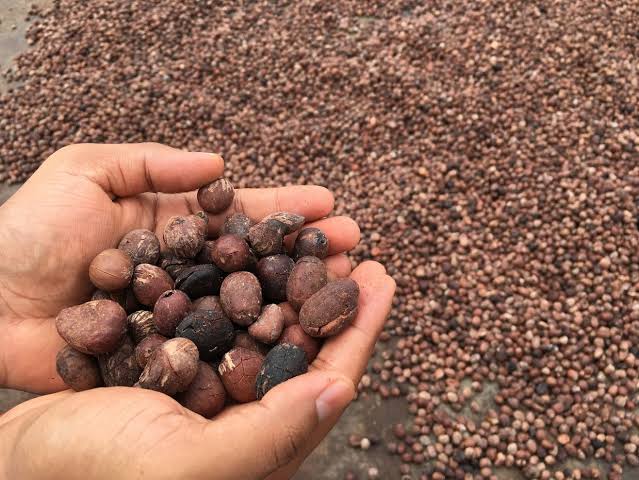
The federal government has described President Bola Tinubu’s suspension of raw shea nut exports as a transformative step to position Nigeria as a global leader in the shea industry.
Gatekeepers News reports that Mohammed Idris, Minister of Information and National Orientation, stated this in Minna on Tuesday at the 20th Institute of Chartered Accountants of Nigeria (ICAN) Northern Zonal Accountants’ Conference.
On August 26, Tinubu approved a six-month temporary ban on the export of raw shea nuts.
Speaking through Jibrin Baba Ndace, Director-General of the Voice of Nigeria, Idris said the move is “not a mere experiment but a bold, forward-looking measure” designed to unlock rural economic potential.
“By insisting that more of our shea be processed locally, the president is ensuring that Nigeria, which accounts for over 50 percent of the world’s shea production, does not remain a supplier of raw materials but becomes a global leader in high-value shea products,” Idris said.
He noted that Niger State, the hub of shea production in Nigeria, will benefit significantly through increased investment, job creation, and improved foreign exchange earnings.
The minister praised the National Shea Products Association of Nigeria (NASPAN) for backing the policy, which he said aligns with Tinubu’s broader economic renewal agenda.
Idris explained that the shea initiative is anchored on accountability, inclusivity, and national re-orientation. He also highlighted ongoing reforms under the Renewed Hope Agenda, including fiscal discipline, infrastructure renewal, digital transformation, and youth empowerment.
Flagship projects such as the Lagos–Calabar coastal superhighway, the Badagry–Sokoto superhighway, and the rehabilitation of the eastern rail corridor, he said, demonstrate equitable resource distribution under Tinubu’s administration.
He further cited fiscal reforms like the Treasury Single Account (TSA) and the Government Integrated Financial Management Information System (GIFMIS) as measures restoring discipline in public finance.
According to him, Nigeria’s improvement in Transparency International’s Corruption Perceptions Index — from 145th in 2023 to 140th in 2024 — reflects ongoing progress.
“The removal of fuel subsidy and the unification of the exchange rate have delivered a decisive blow against long-standing avenues of waste and abuse of public funds,” Idris added.
He urged accountants and professionals across sectors to support the government’s push for accountability and transparency as a foundation for sustainable development.