Federal Government has announced plans to invest N12 billion in research projects aimed at strengthening Nigeria’s digital economy and promoting innovation-driven governance.
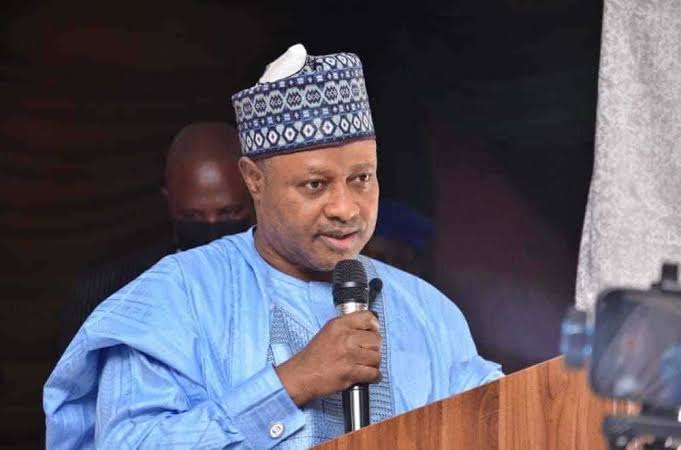
Gatekeepers News reports that Minister of Communications and Digital Economy, Bosun Tijani, disclosed this on Tuesday during the opening ceremony of the 18th International Conference on Theory and Practice of Electronic Governance (ICEGOV) held in Abuja.
The four-day conference, themed “Shaping the Future of Digital Governance Through Cooperation, Innovation and Inclusion,” was organised by the National Information Technology Development Agency (NITDA).
Tijani said that the initiative reflects the government’s commitment to harnessing research and technology for sustainable development.
He explained that international platforms like ICEGOV help countries explore emerging technologies and design policies that suit their social and economic realities.
The minister said, “The Nigerian government is not just doing this as a show because immediately after ICEGOV last year, we funded over 55 research projects.”
“At the minute, we are putting together about N12 billion to fund further research projects that are focused on the digital economy.”
According to him, the funds will be directed toward three research clusters across six universities — one dedicated to artificial intelligence (AI), another to connectivity, and the third to digital skills and literacy.
He said, “We are setting up three research clusters of six universities, each one focused on artificial intelligence, another focus on the biggest issue in our nation today, which is connectivity, where we are investing significantly.”
“Thirdly, because of our population, we are also funding another research cluster that is focused on digital skills and literacy.”
Tijani stressed that digital technology has become fundamental to national progress and should be seen as a tool for societal transformation rather than just economic growth.
He noted that societies cannot develop without embracing digital technologies which are essential for modern governance and social inclusion.
Also speaking, Elsa Estevez, Chairman of the ICEGOV Steering Committee, emphasised the need for global collaboration in addressing the ethical and social risks associated with artificial intelligence.
Estevez said, “In the past years, we were profoundly affected by digitally driven innovations, and we often adapt them without much reflection and such innovations dramatically change the way we interact, socially, work, build and complement our capacities.”
“We need to ensure that innovations are not just technological, but human-centered and contributing to better societies.”
She urged governments to protect public digital spaces through regulation and awareness campaigns to combat misinformation and political manipulation.
The chairman added, “For inclusion, governments, states need to listen and moderate discussions about public affairs, shape political agendas to respond to uncovered needs, secure the digital space of discussions on fake speech, fake news and political manipulation.”
In his remarks, Kashifu Inuwa, Director-General of NITDA, revealed that the federal government plans to integrate digital literacy and skills into Nigeria’s school curricula by 2026.
He said, “In Africa, we have a very young population, our citizens are digitally native and they are all online, therefore governments need to meet them where they are.”
“We have so many initiatives in Nigeria based on the ministry’s knowledge policy, we have the digital literacy framework, where we are working on integrating digital literacy into our formal education.”
Inuwa added that with the approval of the Ministry of Education and the directive of President Bola Tinubu, digital literacy will become a formal part of Nigeria’s education system next year.
He said, “As of today, we have the approval in collaboration with the ministry of education and directive of the president that by next year, we should have digital literacy and skills integrated into our formal education.”
Inuwa also noted that the government is implementing measures to improve the digital competence of public servants to enhance service delivery in the public sector.