

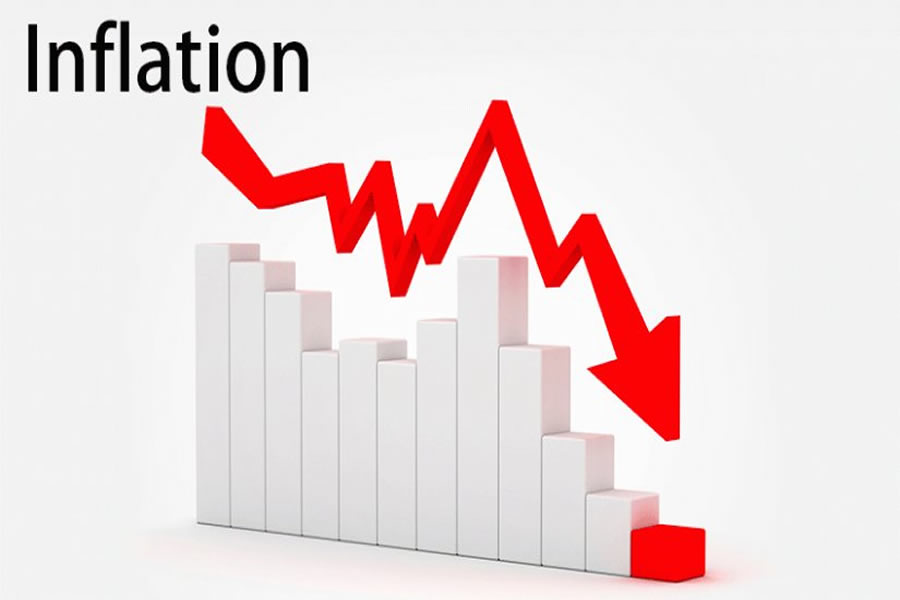
Nigeria’s inflation has continued its downward trajectory as National Bureau of Statistics (NBS) reported that headline inflation fell to 16.05 percent in October 2025.
Gatekeepers News reports that the figure, released on Monday through the bureau’s latest Consumer Price Index (CPI), marks the seventh straight month of decline.
According to the NBS, the October 2025 inflation rate, when compared with the previous year, was 17.82% lower than the rate recorded in October 2024 (33.88%).
The agency explained that the drop reflects a year-on-year slowdown based on the CPI’s updated base year of November 2009 = 100.
However, the report showed a slight increase in monthly inflation. The NBS noted that headline inflation for October stood at 0.93%, which is 0.21% higher than the 0.72% recorded in September.
It added, “This means that in October 2025, the rate of increase in the average price level was higher than the rate of increase in the average price level in September 2025.”
Food inflation also eased significantly on an annual basis. The bureau recorded food inflation at 13.12 percent year-on-year, describing it as 26.04 percent lower than the 39.16 percent posted in October 2024.
But on a monthly scale, food inflation rose slightly to -0.37%, moving 1.21% higher than the -1.57% seen in September. The NBS attributed this change to price increases in items such as fresh onions, oranges, pineapples, shrimp, unshelled groundnuts, vegetables including ugu and okazi leaves, and meat varieties like goat meat, cow tail, and liver.
For the twelve months ending October 2025, the average food inflation rate stood at 21.96%, representing a 16.16-point decline from the 38.12% recorded over the same period in 2024.
Across states, year-on-year food inflation was highest in Ogun (20.85%), Nasarawa (19.96%), and Ekiti (19.70%). The slowest increases were seen in Akwa Ibom (3.98%), Katsina (4.15%), and Yobe (4.29%). On a month-to-month basis, food prices rose the most in Bauchi (6.77%), Abuja (5.11%), and Niger (4.84%).
This gradual easing of inflation, which began in April, has shaped recent monetary decisions. At its September Monetary Policy Committee meeting, the Central Bank of Nigeria cut the benchmark interest rate to 27 percent, marking its first reduction in five years as inflation continued to fall.