

Northern leaders, comprising governors and traditional rulers, have reiterated their support for the swift adoption of state policing, insisting that Nigeria’s centralised security structure is no longer capable of addressing the country’s growing security challenges.
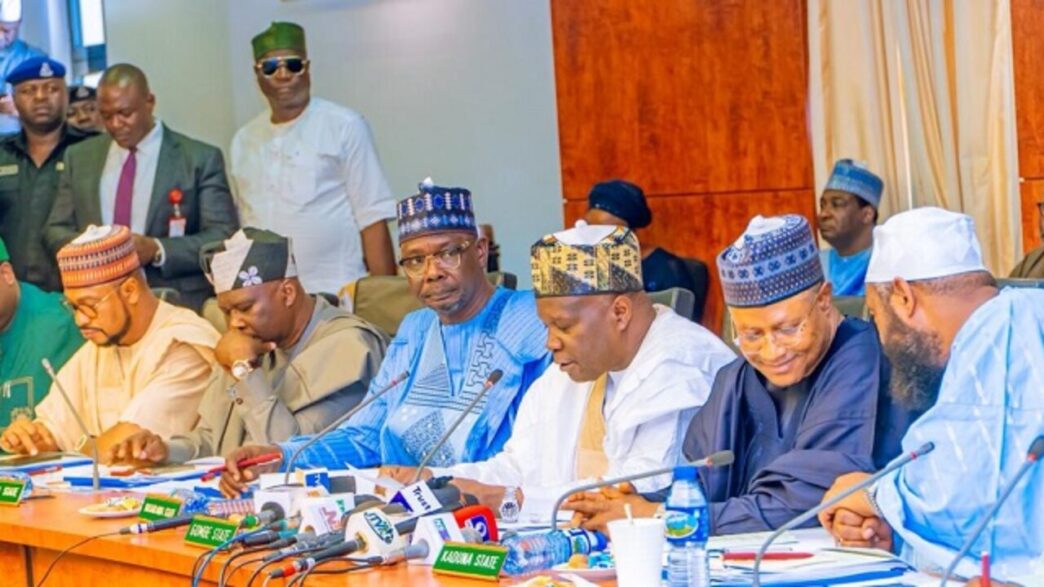
Gatekeepers News reports that the leaders made the declaration on Monday during a crucial meeting in Kaduna, where they discussed the worsening insecurity and socioeconomic pressures confronting the region. They warned against divisive narratives that undermine national cohesion at a time when unity is urgently needed.
Hosted by Kaduna State Governor Uba Sani and chaired by Gombe State Governor Inuwa Yahaya, the meeting took place amid escalating threats, including banditry, kidnapping, farmer-herder conflicts, and disruptions to livelihoods across the North.
Governor Sani, in his welcome remarks, stressed that the current policing model cannot effectively cover a population of over 200 million people, especially with vast ungoverned spaces and fewer than 400,000 police officers nationwide. He said northern governors continue to operate a peer-review security system, sharing intelligence and comparing strategies to secure their communities.
“The imperative of state police cannot be overemphasized,” he said. “Nigeria’s centralised policing model can no longer meet present demands. Many rural communities are left without meaningful protection.”
Governor Yahaya, who chairs the Northern Governors’ Forum, described the region’s security crisis as multifaceted and affecting citizens across religious and ethnic lines. He commended President Bola Ahmed Tinubu for decisive steps taken to strengthen national security but urged that international partnerships must respect Nigeria’s sovereignty.
He cautioned leaders against promoting one-sided narratives that fuel division, noting that insecurity is deeply rooted in underdevelopment, illiteracy, lack of opportunities, climate pressures, and environmental degradation.
“To return the North to a path of stability, we must invest massively in human capital, infrastructure, and socioeconomic opportunities,” he said, highlighting almajiri education and out-of-school children as key priorities.
Yahaya reaffirmed the Forum’s commitment to state policing reforms and urged federal and state lawmakers to fast-track the enabling constitutional amendments.
Traditional rulers, led by Sultan of Sokoto Saad Abubakar, raised concerns about the region’s prolonged insecurity, poverty, and economic stagnation. The Sultan urged governors to listen to constructive criticism and engage more frequently with traditional leaders across the North.
He warned that dismissing credible feedback could hinder efforts to address the region’s security and development challenges.
Governors from Kaduna, Gombe, Niger, Zamfara, Nasarawa, and Bauchi attended the meeting, alongside their deputies and prominent traditional rulers from across the region.