

The Revenue Mobilisation Allocation and Fiscal Commission (RMAFC) has disclosed that total gross inflows into the Federation Account amounted to N66.42 trillion between 2023 and October 2025.
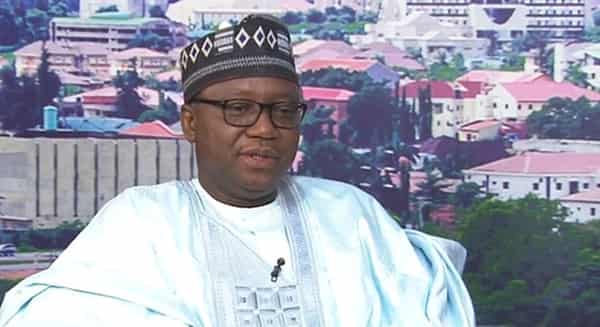
Gatekeepers News reports that the Chairman of RMAFC, Dr Mohammed Bello Shehu, made this known on Monday while speaking at the opening of a two-day national stakeholders’ discourse on enhancing fiscal efficiency and revenue growth under the Nigeria Tax Act, organised by the commission.
Dr Shehu said the steady rise in revenue inflows reflects the impact of economic reform programmes implemented by the current administration.
A breakdown of the figures shows that the Federation Account received N11.93 trillion in gross revenue in 2023, which rose significantly to N21.43 trillion in 2024.
“On the other hand, the 10 months’ accruals into the Federation Account in the period of January to October 2025 were N23.06 trillion,” he said.
According to him, the sustained growth in inflows is driven by fiscal reforms, improved coordination among revenue agencies, stronger audits, digital tracking systems and enhanced fiscal discipline.
“The continued growth in the inflows is due to fiscal reforms, tracking and coordination among revenue agencies, stronger audits, digital tracking, and fiscal reforms,” he said.
Dr Shehu noted that these measures have expanded the revenue pool available for distribution to the Federal, State and Local Governments, while reducing dependence on oil revenues.
He said the trend signals progress towards a more resilient, diversified and sustainable public finance system, even though many Nigerians are yet to feel the full benefits.
Highlighting recent macroeconomic indicators, the RMAFC chairman said inflation has declined consecutively over four months.
“Inflation rate has consecutively dropped in the last four months (July, 21.88; August, 20.21; September, 18.02 and October, 16.05 per cent),” he said.
He added that the exchange rate has remained relatively stable over the same period.
“The exchange rate (Naira/USD) equally remains stable in the same period (July, N1,534; August, N1,528; September, N1,465 and October, N1,428),” he said.
Dr Shehu said Nigeria’s Gross Domestic Product (GDP) has continued to grow, largely driven by the services sector, which now accounts for more than half of total GDP.
“Oil still represents over 90 per cent of export earnings and a large part of government revenue, yet it contributes less than 10 per cent to the overall GDP, showing that the economy is moving away from relying solely on oil production,” he said.
He explained that the national discourse was convened to enable stakeholders, including organised labour, to better understand the implementation of the new Tax Act.
“The commission, pursuant to its function to monitor the accruals to and disbursement of revenue from the Federation Account, will remain steadfast in safeguarding the federation’s revenue profile,” he said, adding that RMAFC would intensify monitoring, deploy forensic audits, strengthen collaboration with sub-national governments on non-oil revenue mobilisation and deepen transparency in revenue reporting.
He stressed that accountability, transparency and compliance remain critical, noting that a well-structured tax system is fundamental to national development.
In his keynote address, the Chairman of the Presidential Fiscal Policy and Tax Reforms Committee, Taiwo Oyedele, urged Nigerians to embrace the new tax laws, insisting that claims that citizens would pay more taxes were misleading.
He said about 85 per cent of Nigeria’s resources are assigned to states and local governments, noting that five of the eight major revenue sources — personal income tax, property tax, stamp duty, value added tax and land — belong entirely to states and local governments.
According to Oyedele, the remaining three revenue sources — corporate income tax, customs duties, and petroleum and solid minerals revenues — are shared among the three tiers of government.
He said fiscal federalism should focus on optimising existing revenue sources rather than introducing new taxes or reallocating revenue.
Oyedele also called for an end to multiple taxation, stressing that regulatory authority does not automatically translate to taxing power.
“Responsibilities and revenue should match. There should be equitable sharing of revenue among all tiers of government and between states and local governments,” he said.