

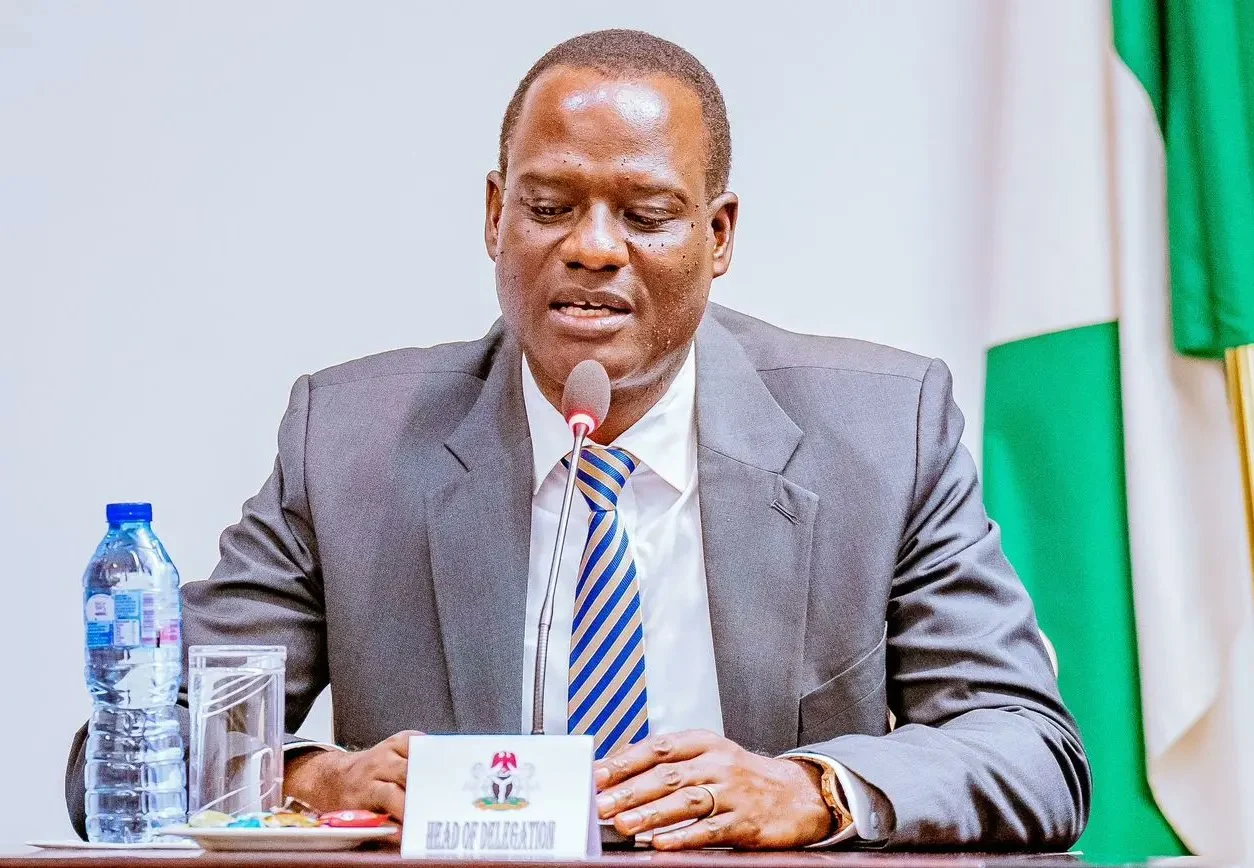
Chairman of the Presidential Fiscal Policy and Tax Reforms Committee, Taiwo Oyedele, has outlined the consequences Nigerians may face if the newly enacted tax laws are not implemented by January 1, 2026, warning that workers and businesses would continue to bear heavy tax burdens.
Gatekeepers News reports that Oyedele spoke on Monday during an appearance on Channels Television’s The Morning Brief, amid calls by former Vice President Atiku Abubakar, the Labour Party’s 2023 presidential candidate Peter Obi, and several civil society organisations for the suspension of the laws’ implementation.
According to Oyedele, failure to implement the reforms would mean that 98 per cent of workers would remain overtaxed.
“The implication of not implementing the new tax laws by January 1, 2026, is that the bottom 98 per cent of workers remain overtaxed,” he said.
He added that businesses would continue to suffer from multiple taxation and miss out on critical exemptions.
“Businesses will miss out on exemptions and will continue to pay multiple taxes, creating large burdens. Minimum taxes continue to apply on low and small unprofitable businesses, while hidden VAT continues to make prices of basic consumption like food, healthcare and education go up,” Oyedele explained.
Rather than calling for outright suspension, he advised that concerns about the laws should be addressed through amendments where necessary.
“So, we need to be clear about what we are asking for,” he said.
“That is why I keep saying that even if it is established that there have been substantial alterations to what the National Assembly passed, my view will be to identify those provisions… and then go ahead to implement the law as passed by the NASS, while you address the issues as to how they got in there in the first place.”
Oyedele acknowledged that even the version passed by the National Assembly requires some corrections.
“I will say to you that regarding the one passed by NASS, even my committee and I have noted areas where we need to go back through Mr President to request amendments to those laws, because there were issues with referencing and definition,” he said.
He also addressed the controversy over alleged discrepancies between the tax laws passed by the National Assembly and the versions later gazetted. A member of the House of Representatives, Abdulsamad Dasuki, had raised concerns that lawmakers’ rights were breached because the gazetted laws did not reflect what was debated and approved.
“Before you can say there is a difference between what was gazetted and what was passed, we have what has not been gazetted. We don’t have what was passed,” Dasuki had said.
“The official harmonised bills certified by the clerk, which the National Assembly sent to the President, we don’t have a copy to compare.”
Commenting on the issue, Oyedele said he contacted the House Committee regarding a contentious Section 41(8), which reportedly required a 20 per cent deposit.
“I know that particular provision is not in the final gazette, but it was in the draft gazette,” he said, adding that the draft was circulated before the committee formally met.
“What is out there in the media did not come from the committee set up by the House of Representatives. I think we should allow them do the investigation,” Oyedele added.
President Bola Tinubu recently signed the four tax reform bills into law, describing them as the most comprehensive overhaul of Nigeria’s tax system in decades. The laws, which faced stiff opposition from some northern lawmakers before their passage, are scheduled to take effect on January 1, 2026.
The reforms include the Nigeria Tax Act, Nigeria Tax Administration Act, Nigeria Revenue Service (Establishment) Act, and the Joint Revenue Board (Establishment) Act, all to operate under a single authority, the Nigeria Revenue Service.