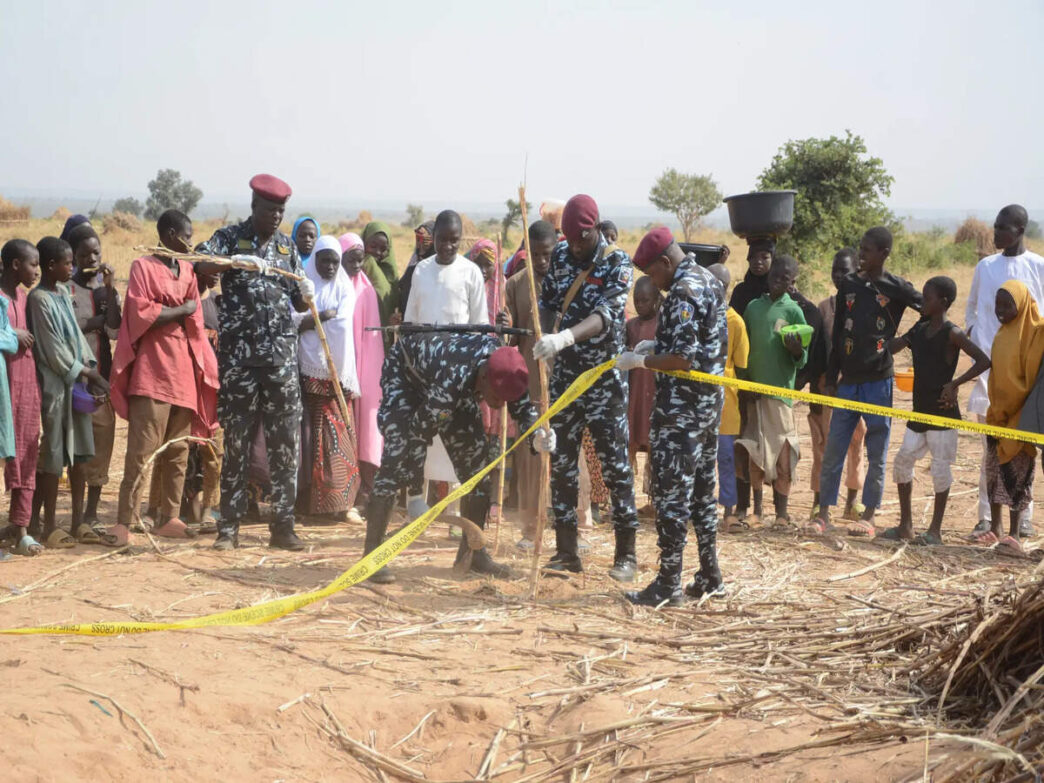
Nigeria has indicated that further military strikes against jihadist groups are likely following a Christmas Day bombardment by United States forces in the north of the country, which Abuja described as a joint operation with the Nigerian military.
Gatekeepers News reports that the West African nation is grappling with overlapping security crises, including a long-running jihadist insurgency in the northeast that began in 2009, as well as widespread banditry and mass kidnappings in the northwest.
In a statement on Friday, Nigeria’s military said its forces, working alongside the United States, “conducted precision strike operations against identified foreign ISIS-linked elements” in northwest Nigeria.
The strikes come amid heightened security cooperation between Abuja and Washington following diplomatic tensions sparked by comments from former US President Donald Trump, who had characterised violence in Nigeria as the mass killing of Christians — a claim rejected by the Nigerian government and independent analysts.
“It’s Nigeria that provided the intelligence,” Foreign Affairs Minister Yusuf Tuggar told Channels Television, revealing that he had spoken with US Secretary of State Marco Rubio ahead of the bombardment.
Asked whether additional strikes were expected, Tuggar said: “It is an ongoing thing, and we are working with the US. We are working with other countries as well.”
Targets Unclear
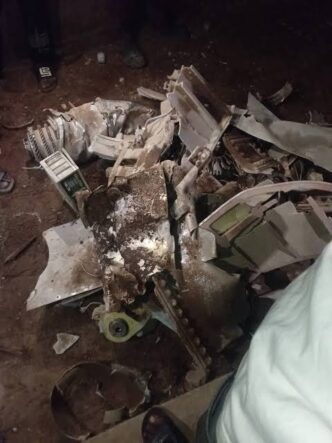
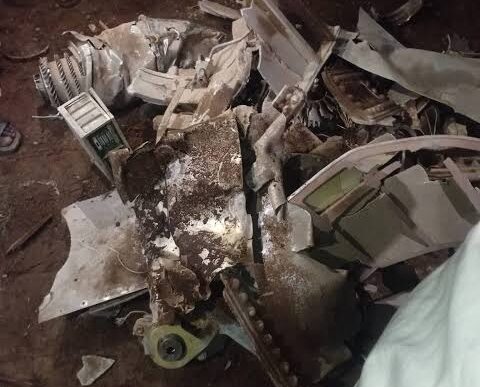
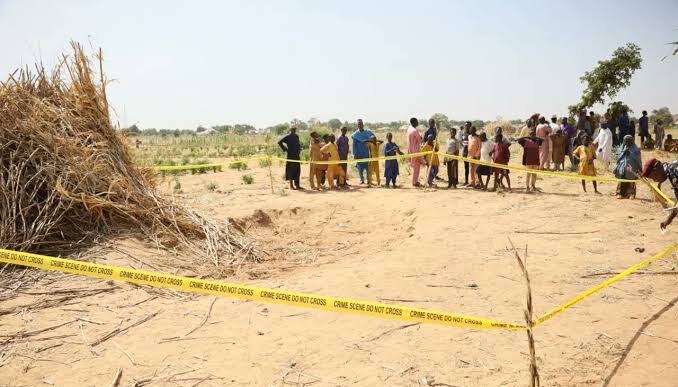
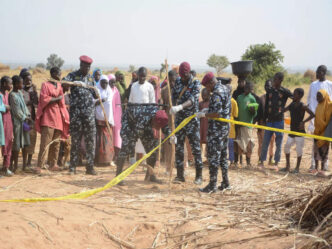
The US Department of Defense’s Africa Command (AFRICOM) said “multiple ISIS terrorists” were killed in an attack in Sokoto State. US defence officials later released footage appearing to show a missile launched at night from a US naval vessel.
Residents in remote communities in Sokoto State, which borders junta-ruled Niger, said they were startled by the explosions.
“We heard a loud explosion which shook the whole town and everyone was scared,” said Haruna Kallah, a resident of Jabo village in Tambuwal district, about 100 kilometres from the state capital.
“We initially thought it was an attack by Lakurawa,” he said, referring to an armed group linked to jihadists in the Sahel. “But later we learnt it was a US drone attack, which surprised us because this area has never been a Lakurawa enclave.”
It remains unclear which of Nigeria’s many armed groups were targeted. While jihadist activity is concentrated mainly in the northeast, militant groups have increasingly expanded into the northwest.
Researchers have linked some members of Lakurawa — the primary jihadist group operating in Sokoto State — to Islamic State Sahel Province (ISSP), which is active in neighbouring Niger and Mali. However, other analysts dispute these connections, noting that the term “Lakurawa” is used broadly to describe various armed actors in the region.
Some factions identified as Lakurawa have also been linked to the al-Qaeda-affiliated Jama’at Nusrat al-Islam wal-Muslimin (JNIM), a rival group to ISSP.
While Nigerian authorities have welcomed the strikes, analysts say Abuja has faced strong diplomatic pressure to cooperate.
“I think Trump would not have accepted a ‘no’ from Nigeria,” said Malik Samuel, an Abuja-based researcher with Good Governance Africa.
“Nigerian authorities are keen to be seen as cooperating with the US,” he added, noting that “both the perpetrators and the victims in the northwest are overwhelmingly Muslim.”
Tuggar confirmed that President Bola Ahmed Tinubu authorised the strikes, stressing that the operation was neither unilateral nor religiously motivated.
“It must be made clear that it is a joint operation, and it is not targeting any religion nor simply in the name of one religion or the other,” the foreign minister said.