



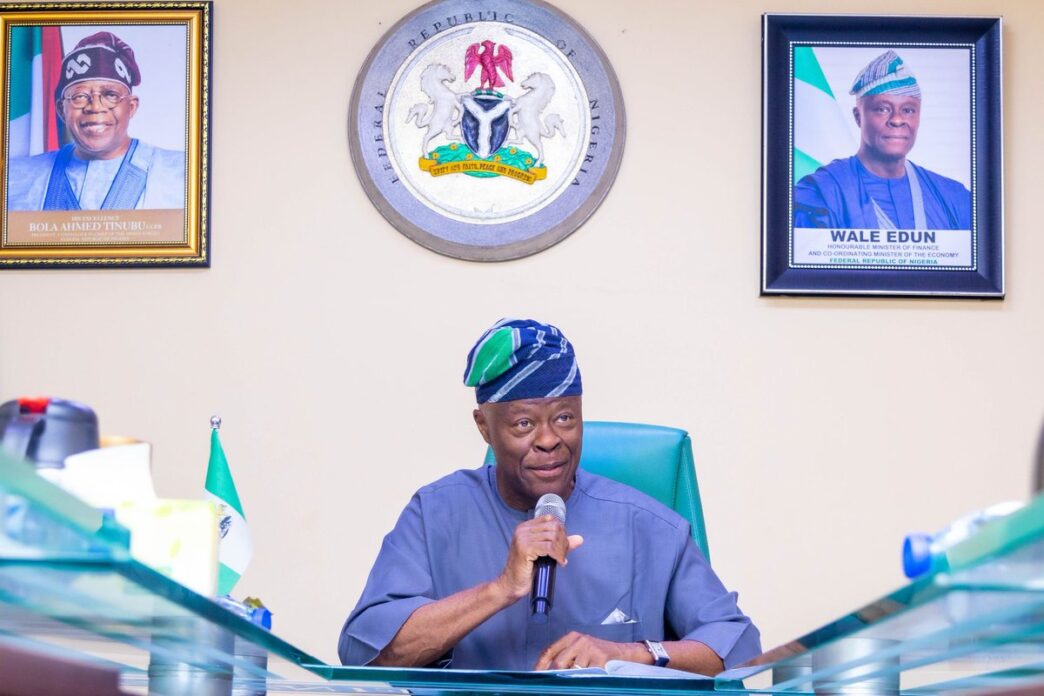
The Federal Government has launched a comprehensive 2026 Growth Acceleration and Investment Mobilisation Strategy aimed at accelerating economic growth, creating jobs, and attracting large-scale domestic and foreign investment as Nigeria transitions from macroeconomic stabilization to expansion.
Gatekeepers News reports that the announcement was made in a press statement issued by the Federal Ministry of Finance (FMF) on January 1, 2026, highlighting key fiscal, monetary, and structural priorities for the year.
Focus of the Strategy
According to the Ministry, the strategy builds on reforms implemented over the past two years and is designed to strengthen macroeconomic stability, unlock private capital, and put Nigeria on a credible path toward a $1 trillion GDP by 2036.
The Ministry said 2026 marks a shift from stabilization to growth-focused reforms under the Tinubu Administration, following initiatives such as exchange rate unification, energy market restructuring, and fiscal consolidation.
The government aims to “move decisively from stabilization to growth” by lowering investment risk, attracting private capital, and ensuring sustainable returns while expanding economic opportunities for Nigerians.
The economic agenda is anchored on three core principles:
- Macroeconomic predictability – controlling inflation, stabilizing exchange rates, and ensuring consistent fiscal policies.
- Clear sectoral investment pathways – defining priority sectors, incentives, and regulations to guide capital deployment.
- Disciplined policy execution – emphasizing credibility, consistency, and avoidance of abrupt policy reversals.
Capital Formation and Financial Market Reforms
Capital formation is central to the 2026 growth strategy, with reforms targeting deeper capital and insurance markets. Measures include expanding long-term local currency instruments, improving market liquidity and transparency, strengthening investor protections, and encouraging participation from pension funds and insurance firms.
The government also plans to deploy blended finance instruments, credit enhancements, and first-loss capital in partnership with development finance institutions (DFIs) to attract private and foreign investment.
To ensure broad-based growth, access to consumer credit and financial services will be expanded, particularly for households, microenterprises, and the informal sector. The Ministry will work with the Central Bank of Nigeria (CBN), commercial banks, microfinance institutions, fintechs, and credit guarantee schemes to scale responsible lending, focusing on women- and youth-led businesses.
Expanded Role for Development Finance Institutions
The Ministry of Finance will take over development finance quasi-fiscal responsibilities previously managed by the CBN and issue new guidelines for a forward-looking development finance strategy.
Domestic DFIs such as the Bank of Industry (BOI) and NEXIM Bank will play a central role in de-risking priority sectors, mobilizing long-term capital, and anchoring investor confidence. Reforms will focus on improved capitalization, governance, risk-sharing powers, and closer alignment with the Ministry of Finance.
Other key priorities include:
- Strengthening non-oil revenue through improved compliance, digital revenue systems, and the rollout of a federal Revenue Optimization Platform (RevOps) from January 1, 2026.
- Stricter cash management via the Treasury Single Account, domestic debt restructuring to reduce short-term interest burdens, and enhanced coordination with the CBN to lower financing costs.
- Improving public sector productivity through digitized workflows, streamlined approvals, and faster decision-making across ministries and agencies.
Why This Matters
Nigeria’s 2026 growth agenda signals a deliberate shift toward private sector-led expansion at a time of heightened global competition for capital.
By emphasizing policy coordination, sector clarity, capital market depth, and disciplined execution, the government aims to restore investor confidence and translate reforms into tangible job creation and income growth. If effectively implemented, the strategy could reshape Nigeria’s growth trajectory, reduce dependence on oil revenues, and strengthen its position as a leading investment destination in Africa.