

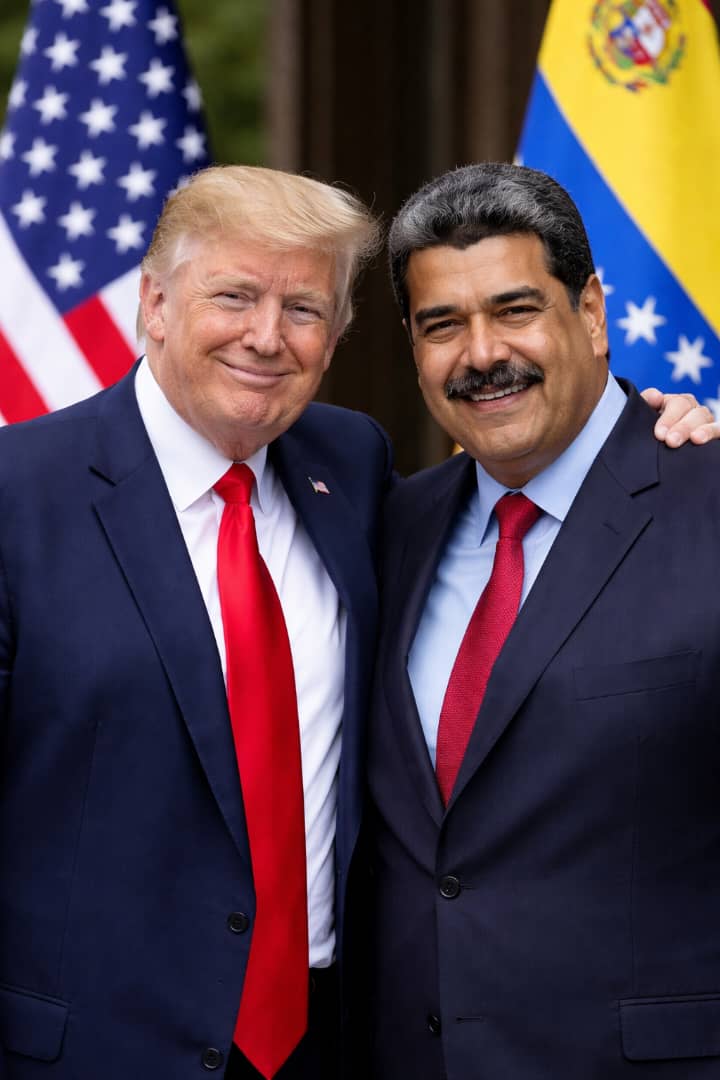
Venezuela’s President, Nicolás Maduro, and his wife, Cilia Flores, are now in United States custody after being captured in the early hours of January 3, 2026. The are to be arraigned in a Manhattan Federal Court on federal criminal charges relating to narcotics and related offenses.
But as more information emerges, we’re learning that their capture wasn’t simply a military victory. It was a catastrophic security failure that began with those closest to the Venezuelan leader—his own bodyguards.
The question everyone is asking is simple: How did the United States pull this off? How did American special forces penetrate one of the most paranoid security apparatuses in the Western Hemisphere?
The answer, according to sources close to the operation, is as old as warfare itself: betrayal from within.
Multiple intelligence sources are now confirming that members of Maduro’s personal security detail—the men tasked with protecting his life—were the ones who handed him over to American forces. These weren’t low-level guards or perimeter security. These were elite bodyguards, handpicked for their loyalty, trained to take a bullet for the president. Yet in the end, they took American money instead.
Let’s start with what we know about the timeline of events.
At approximately 1:45 a.m., Caracas time, Maduro was at a secure location in the capital. The exact address has not been disclosed, but sources indicate it was one of several safe houses used by the president to avoid assassination attempts. These locations change frequently, and only a handful of people know the president’s whereabouts at any given time.
At 2:00 a.m., the first explosions were heard across Caracas. These strikes, as we now know, were diversionary. While Venezuelan military forces scrambled to respond to attacks on Fort Tiuna and La Carlota Airport, a much smaller operation was unfolding elsewhere.
A team of Delta Force operators, transported by stealth helicopters, landed near Maduro’s location.
Here’s where the story takes its most dramatic turn.
According to sources familiar with the operation, these American commandos did not have to fight their way in. They walked in.
The outer perimeter guards had been told to stand down. Security cameras had been disabled. Alarm systems had been deactivated. When the Delta Force team reached Maduro’s personal quarters, they found only two bodyguards still at their posts, and these men immediately surrendered without firing a single shot.
The entire extraction took less than 12 minutes from landing to takeoff.
Maduro and his wife were aboard an American aircraft before Venezuelan military command even understood what was happening. By the time Defense Minister Vladimir Padrino López realized the president was missing, the helicopters were already crossing into international airspace.
So how did the United States flip Maduro’s bodyguards?
The answer lies in a sophisticated intelligence operation that began more than a year ago. American operatives working through the CIA and the Defense Intelligence Agency had been systematically studying Maduro’s security apparatus, looking for vulnerabilities. They found plenty.
Maduro’s bodyguards, despite their elite status, were facing the same economic hardships as ordinary Venezuelans. Their salaries, paid in worthless bolívars, couldn’t buy basic necessities. Meanwhile, they watched as Maduro and his inner circle lived in luxury, flying to Cuba for medical care while Venezuelan hospitals lacked basic supplies.
The resentment was deep and growing.
American intelligence identified three bodyguards in particular who seemed susceptible to recruitment.
The first was a senior member of the presidential security team, a man in his late thirties who had been with Maduro for over six years. He had a sick daughter who needed medical treatment unavailable in Venezuela. Despite his position, he couldn’t get her the care she needed.
The second was a younger guard, ambitious and frustrated by the lack of advancement opportunities in a system based entirely on political loyalty rather than merit. He had watched less competent officers promoted over him simply because of their family connections.
The third was a veteran security official who had served under Hugo Chávez and had grown disillusioned with what he saw as Maduro’s betrayal of Chávez’s vision. He believed Maduro was a usurper who had destroyed Venezuela for personal gain.
Making contact with these men required patience and extraordinary care. The approach came through intermediaries—former colleagues who had defected years earlier, and in some cases through family members living abroad. The initial conversations were vague, testing the waters. Would the individual be willing to simply provide information? What about their concerns for Venezuela’s future?
Only gradually did the conversations turn to more concrete proposals.
The Americans were offering life-changing sums of money—packages worth between $10 million and $20 million per person. But more importantly, they were offering something these men couldn’t buy at any price: escape from Venezuela and a future for their families.
The bodyguard with the sick daughter was promised immediate medical evacuation for his child to a hospital in the United States, with all expenses covered for life. The ambitious guard was offered American citizenship, a new identity, and financial security. The disillusioned Chávez loyalist was told he could live out his days in peace, knowing he had helped free Venezuela from tyranny.
But money and promises weren’t enough. These men needed proof that the United States was serious and capable of protecting them after the operation.
So the Americans did something extraordinary: they extracted the families first.
Over a period of several months, the wives and children of these three bodyguards were quietly moved out of Venezuela. Some left on commercial flights under false pretenses. Others were smuggled across the border into Colombia. By the time the operation began, these families were already safe in undisclosed locations.
With their families secure and millions of dollars in escrow accounts waiting for them, the bodyguards agreed to cooperate.
But the plan required more than just three men.
A successful extraction would need coordination across multiple layers of security. The three recruits were asked to identify other guards who might be sympathetic.
Asked to identify others, the network grew carefully and slowly. By the time the operation was ready to execute, at least eight members of Maduro’s security detail were compromised. Some were active participants who would facilitate the American insertion. Others simply agreed to look the other way at critical moments. A few were told nothing but given instructions that would keep them away from their posts at the crucial time.
The operation almost didn’t happen.
There were several false starts when Maduro changed his schedule or location unexpectedly. American forces were put on standby multiple times, only to stand down when conditions weren’t right.
The breakthrough came when one of the compromised bodyguards was assigned to overnight duty at the safehouse where Maduro would be sleeping. This guard was able to provide real-time updates on the president’s location and the disposition of security forces. He confirmed how many guards were present, where they were positioned, and—most critically—which ones were part of the plan.
When the Delta Force team received the final green light, they knew exactly what they were walking into.
The actual operation was clinical in its execution. The outer security perimeter simply melted away as guards who had been paid off abandoned their posts or claimed they saw nothing. The Americans moved through the building, encountering no resistance.
When they reached Maduro’s quarters, the president was apparently asleep. He woke to find American special forces in his bedroom and his own bodyguards standing aside.
There are conflicting reports about Maduro’s reaction. Some sources say he immediately understood he had been betrayed and went quietly. Others claim he initially thought it was a training exercise or a test of his security team. One particularly dramatic account suggests he tried to appeal to his bodyguards’ loyalty, reminding them of their oaths and the trust he had placed in them.
If true, his words fell on deaf ears.
These men had already made their choice.
The extraction itself was textbook special operations work. Maduro and his wife were flex-cuffed, hooded, and carried to the waiting helicopters. The entire team was airborne within minutes. By the time the rest of Maduro’s security apparatus realized something was wrong, it was far too late to respond.
What’s particularly striking about this operation is how thoroughly the Americans had penetrated Maduro’s inner circle. These weren’t peripheral figures or distant associates. These were men who stood next to the president every day, who knew his routines, his fears, his secrets.
The fact that they could be turned speaks to the complete erosion of loyalty within the regime.
Maduro’s security didn’t fail because of technological superiority or overwhelming military force. It failed because the system he built was fundamentally hollow. Loyalty purchased through fear and patronage is not loyalty at all. When a better offer comes along, it evaporates.
The bodyguards who betrayed Maduro made a rational calculation. They looked at their options and chose survival and prosperity over continued service to a failing regime. They knew Venezuela was collapsing. They knew Maduro’s grip on power was weakening. They knew that eventually there would be a reckoning.
The Americans simply offered them a way out before that reckoning arrived.
Now the question becomes: where are these bodyguards now?
According to sources, they were extracted along with the American team and are now in protective custody, likely being debriefed by intelligence officials. Eventually, they’ll be relocated under new identities, their promised payments delivered, and their families kept safe.
For them, betraying Maduro was the beginning of a new life.
For Maduro, it was the end.
The man who survived coup attempts, assassination plots, and years of international pressure was undone not by his enemies, but by his own guards. The irony is almost Shakespearean. He trusted these men with his life, and they sold it for the price the Americans were willing to pay.
This operation will be studied for years as a masterclass in intelligence work and psychological operations. The United States didn’t need to invade Venezuela with tanks and troops. It didn’t need to bomb Caracas into submission. It simply identified the right people, made the right offers, and waited for the right moment.
The bodyguards did the rest.
As more details emerge, we’re likely to learn even more about how this operation was planned and executed. There will be congressional hearings, after-action reports, and eventually, perhaps, books written by the participants.
But the basic outline is already clear.
This was a betrayal purchased with American dollars and executed by men who decided their loyalty had a price.
The broader implications are still unfolding. What happens to Venezuela now? Will there be chaos or a transition? What about the bodyguards still in Venezuela who weren’t part of the operation? Are they now suspects facing potential execution? And what message does this send to other authoritarian leaders about the reliability of their own security forces?
These questions will be answered in the days and weeks ahead.
For now, what we know is this:
Nicolás Maduro is in American custody. His wife beside him—captured not through military conquest, but through the calculated betrayal of the very men sworn to protect him.
In the end, his greatest vulnerability wasn’t external enemies, but the weakness of the system he built around himself.
This has been our special Intelligence report as collected and recollected by a cluster of U.S intelligence and military officials privy to how this whole operations unfolded, minute by minutes, hour by hours. We’ll continue to bring you updates as this extraordinary story develops and our contacts gather more facts of this extraordinary intelligence and security collapse around, Nicolas Maduro, the erstwhile Venezuelan President.
The capture of Nicolás Maduro through the betrayal of his own bodyguards marks a new chapter in the long and troubled relationship between the United States and Venezuela. What follows next we can’t tell you for now, but we can say that we are monitoring and following events as they continue to unfold and we will continue to update you as we get more updates.
Capt. Bishop C. Johnson, US Army (rtd), is a national defense and military strategist, and a respected national security commentator.
Gatekeepers News is not liable for opinions expressed in this article; they’re strictly the writer’s