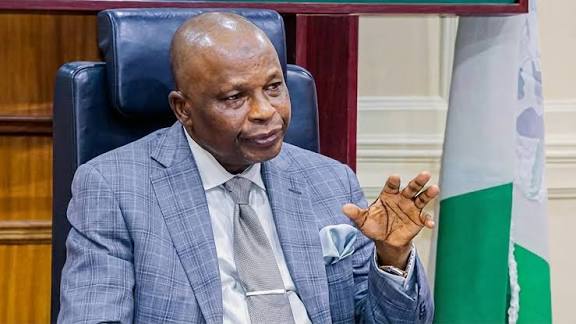


Deputy Speaker of the House of Representatives, Rt. Hon. Benjamin Kalu, has said that a strategic political alliance between the Southeast and Southwest remains the shortest and most realistic pathway to the emergence of an Igbo president in Nigeria.
Gatekeepers News reports that Kalu made the assertion during a series of high-level courtesy visits across Abia State’s three senatorial zones—Abia North, Central and South—where he met with elder statesmen and leaders of the All Progressives Congress (APC) to discuss party unity, electoral strategy and the future of the Southeast in national politics.
He urged Igbo leaders and voters to move beyond sentimental politics and embrace deliberate, calculated political investments, stressing that votes must be deployed where they translate into power, influence and negotiation.
“What you play politics with is numbers, not sentiments. Votes are currency. If you invest them where they don’t count toward success, you have wasted your opportunity at the negotiation table,” Kalu said.
According to the Deputy Speaker, sustained political support for the Southwest—particularly under the leadership of President Bola Ahmed Tinubu—would deepen trust, inclusion and reciprocity, ultimately positioning the Southeast favourably for the presidency.
He added that consolidating the southern political bloc was critical to preventing a shift of power to regions that may not prioritise the interests of the Southeast.
“The South must stay united. Any attempt to break that unity through sentiment will weaken the Southeast politically and take us backwards,” he warned.
As part of efforts to strengthen APC structures in Abia State, Kalu visited former Senate Chief Whip and former Abia State Governor, Senator Orji Uzor Kalu, in Abia North; Senator John Bob Nwannunu in Abia Central; and former Managing Director and Chief Executive Officer of the defunct Hallmark Bank and APC chieftain, Sir Mac Wabara, in Abia South.
Discussions during the meetings focused on party cohesion, stakeholder alignment and sustained collaboration to strengthen the APC and stabilise the polity.
Kalu said President Tinubu had directed APC leaders nationwide to intensify engagement, promote reconciliation and deepen unity within the party, noting that the period presents an opportunity for reflection and renewed commitment to inclusive governance.
Tinubu, Performance and 2027
The Deputy Speaker commended President Tinubu’s leadership, describing his policies as tough but necessary, courageous and already yielding results.
He said the President has demonstrated inclusiveness, political will and readiness to work with the Southeast.
“He has proven that there is no discrimination in project allocation or governance. He is a listening president, and the political will is there,” Kalu said.
Kalu also presented his two-year scorecard to the elder statesmen and party leaders, inviting them to assess his performance openly.
“I believe leadership must be subjected to scrutiny. I asked them to honestly assess what I have done so far so I can do better,” he said.
Charging party stakeholders to intensify grassroots mobilisation, Kalu declared that the era of negotiating for just 25 per cent of votes in Abia State was over, expressing confidence that the APC now has the structure, momentum and political capital to secure an outright victory for President Tinubu in the state.
In their separate remarks, the elder statesmen praised Kalu’s performance at the National Assembly, describing his leadership as impactful and people-oriented, and pledged continued support and collective action to strengthen the party ahead of the 2027 general elections.