

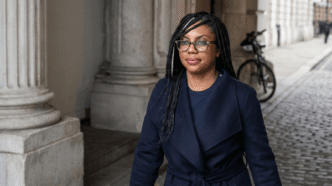
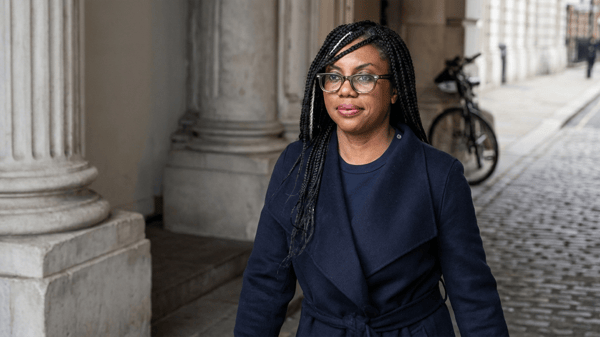
UK Cabinet minister Kemi Badenoch has defended the United States’ military operation in Venezuela that resulted in the capture of President Nicolás Maduro, arguing that the action was “morally” justified despite unresolved legal questions and raising doubts about the continued relevance of the rules-based international order.
Gatekeepers News reports that speaking on the BBC’s Today programme, Badenoch departed from the more cautious tone adopted by senior figures in the British government. While acknowledging that the legality of the US action remained unclear, she said its moral basis was defensible.
“Morally, yes,” Badenoch said when asked whether sending US special forces to seize Maduro was right. “Where the legal certainty is not yet clear, morally I do think it was the right thing to do.”
Her remarks have sparked unease in Westminster, particularly as Prime Minister Sir Keir Starmer reiterated that the UK was not involved in the operation. Foreign Secretary Yvette Cooper also reaffirmed Britain’s commitment to international law without directly criticising Washington.
Badenoch argued that Venezuela’s political circumstances distinguished the situation from previous US interventions criticised by Britain. Responding to comparisons with former Prime Minister Margaret Thatcher’s condemnation of the 1983 US invasion of Grenada, she said the contexts were not comparable.
“Venezuela was a brutal regime. We didn’t even recognise it as a legitimate government,” she said. “I think that what’s happened is quite extraordinary. But I understand why America has done it.”
She linked her position to her personal background, citing her childhood experience in Nigeria under military rule.
“I grew up under a military dictatorship [in Nigeria], so I know what it’s like to have someone like Maduro in charge,” Badenoch said. “I know what it’s like to have people celebrating in the street. So I’m not condemning the US.”
While conceding that the raid raised “serious questions” about the rules-based international order, Badenoch suggested that international law lacks enforceable authority.
“As we all know, international law is what countries agree to,” she said. “Once people decide they don’t agree, there is no international law. There’s no world police, no world government, no world court. These are agreements.”
She also questioned why concerns about international law had not been raised earlier, citing remarks by Venezuelan opposition leader María Machado.
“She said Venezuela had already been invaded — by Russia, by Iran, by Hezbollah. Where were the people talking about international law then?” Badenoch asked.
Pressed on comments by Stephen Miller, President Donald Trump’s deputy chief of staff, who said global affairs were governed by “strength” and “force”, Badenoch signalled broad agreement.
“The US has actually been saying this for a very long time,” she said, referencing Washington’s disengagement from the World Trade Organisation over alleged rule violations.
“The world has changed. What I want to see is a strong Britain,” Badenoch added. “We can’t control everything that the US does. Venezuela is very far away from here. But what they do respect is strength — and we are getting weaker.”
Her comments mark a shift from her earlier response on 4 January, when she said the UK was “closely monitoring” developments and cautioned against rushing to judgement. In a post on X at the time, she described the situation as “fast-moving and extremely serious” and urged attention to the views of Venezuelans “risking their lives in pursuit of democratic change”.
“There’s a lot of noise from people who couldn’t find Venezuela on a map yesterday,” she wrote, adding that it was premature for outsiders to second-guess motives or evidence before hearing further from the US administration and Venezuela’s democratic opposition.
The US operation was announced by President Trump, who said American forces had captured Maduro and his wife and that Maduro would face criminal proceedings in the United States. Trump later stated that the US would oversee Venezuela’s administration until conditions were in place for a democratic transition.
International reaction has been mixed, with some governments warning against violations of sovereignty and the use of force, while others have focused on the potential implications for Venezuela’s prolonged political and economic crisis.
In Britain, Starmer reiterated that the UK played no role in the operation and said officials were assessing developments, including the safety of British nationals in Venezuela.