


The Federal Government has almost doubled the budgetary allocation to the Federal Ministry of Women Affairs in the 2026 Appropriation Bill, increasing it from N78.5 billion in 2025 to N154.3 billion—an increase of about 97 per cent.
Gatekeepers News reports that a breakdown of the proposal shows that the ministry is allocated a total of N154,315,760,358. Of this amount, N2.66 billion is set aside for personnel costs, N1.25 billion for overheads, while a substantial N150.39 billion is earmarked for capital expenditure, signalling a renewed emphasis on programmes and projects targeting women and girls.
The sharp increase represents one of the most significant funding boosts the ministry has received in recent years and has raised expectations among gender advocates and civil society organisations for measurable improvements in women’s welfare, protection and economic empowerment.
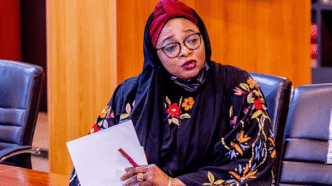
As of press time, the Minister of Women Affairs, Imaan Sulaiman-Ibrahim, had not issued an official response to the increased allocation.
Reacting to the development, National President of the Women in Politics Forum (WiPF), Ebere Ifendu, welcomed the increase but cautioned that funding alone would not guarantee impact without proper release and utilisation.
“It’s good, but will there be cash backing?” Ifendu asked.
“We expect intentional expenditure. Health, education, social amenities and economic empowerment should be prioritised to bring women out of poverty. The girl child must be protected, and we want to see stronger policy and legal reforms to end all forms of violence against women and girls.”
She congratulated the minister and Nigerian women, expressing optimism that the current leadership would ensure women are adequately protected and supported.
Similarly, the Director of the Safeguarding Centre, University of Lagos, Dr Abiola Akiyode-Afolabi, described the allocation as a positive development, noting that the Ministry of Women Affairs has historically been underfunded.
“This is a good development, and the minister deserves commendation for her sterling negotiation skills,” she said.
“Women Affairs has often been at the lowest rung of the ladder. We hope this increase will translate into real institutional reforms for women and girls, not just figures on paper.”
However, concerns were raised over transparency and the completeness of the budget. An anonymous source familiar with the ministry’s operations said the allocation does not fully reflect all programme needs, particularly the Nigeria for Women Project, which was reportedly not adequately captured in the appropriation.
With more than N150 billion allocated to capital projects, stakeholders insist that the 2026 budget presents a crucial opportunity for the government to demonstrate tangible outcomes—ranging from reducing gender-based violence and expanding access to education and healthcare, to strengthening social protection and economic opportunities for women nationwide.
As implementation begins, advocates say sustained monitoring, accountability and engagement with civil society will be critical to ensuring that the unprecedented allocation delivers meaningful change for Nigerian women and girls.