

The Nigerian Army has called for deeper strategic cooperation with the United States Army to effectively address Nigeria’s evolving and complex security challenges.
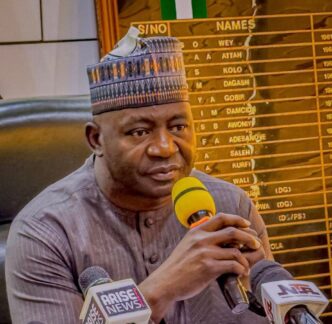
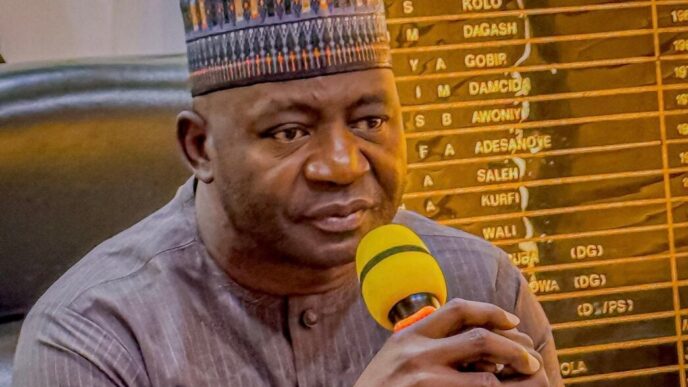
Gatekeepers News reports that the Chief of Army Staff (COAS), Lt.-Gen. Waidi Shaibu, said the Nigerian Army intends to leverage the United States Army’s vast experience in both kinetic and non-kinetic operations to enhance its operational effectiveness.
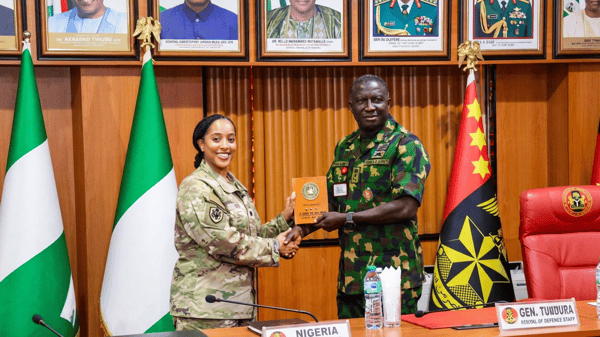
Shaibu made the call while receiving the United States Defence Attaché to Nigeria, Lt.-Col. Semira Moore, during a courtesy visit to the Army Headquarters in Abuja.
He advocated the expansion of collaborative engagements between both armies to strengthen operational effectiveness, institutional capacity, doctrine development and strategic capability.
According to the army chief, international military partnerships remain critical to complementing Nigeria’s internal security architecture and advancing sustainable peace and stability.
Shaibu commended the United States Government for its enduring partnership and sustained support, noting that the Nigerian Army has benefitted significantly from American military professionalism and institutional expertise.
He added that he and several Principal Staff Officers are alumni of renowned United States professional military institutions, describing this as a testament to the depth and impact of the longstanding bilateral military relationship.
Earlier, Lt.-Col. Moore expressed appreciation for the cordial and mutually beneficial relationship between the two armies. She reaffirmed her commitment to strengthening existing ties while exploring new areas of collaboration, particularly in capacity building, intelligence sharing and joint operational planning.
She also disclosed that the United States remains committed to supporting the Nigerian Army in key non-kinetic areas, including humanitarian assistance and troop welfare initiatives, which she described as essential for sustaining morale and operational effectiveness.
COAS lauds Switzerland’s support for Nigerian Army
In a related development, the COAS praised the Government of the Swiss Confederation for its sustained support and strategic partnership with the Nigerian Army, particularly in humanitarian assistance, peace-building and conflict prevention.
Shaibu gave the commendation while receiving the Swiss Ambassador to Nigeria, Patrick Felix Egloff, at the Army Headquarters.
He described Switzerland as a global pacesetter in peace promotion and humanitarian diplomacy, recalling the Swiss government’s role in facilitating negotiations that led to the release of the Chibok schoolgirls in 2016.
The army chief noted that such international cooperation has remained vital to confidence-building efforts, including the recent rescue of over 300 kidnapped victims across the country.
Shaibu also commended Switzerland for its tangible support to the Nigerian Army, particularly the provision of mobile medical clinics, saying the facilities have significantly improved frontline medical care by ensuring wounded personnel receive prompt, life-saving treatment before evacuation to military reference hospitals.
He assured the ambassador of the Nigerian Army’s commitment to professionalism, adherence to international best practices and respect for fundamental human rights in the discharge of its constitutional duties, stressing the importance of international partnerships in strengthening Nigeria’s internal security framework.
In his response, Ambassador Egloff underscored the longstanding diplomatic relations between Switzerland and Nigeria and reaffirmed his country’s commitment to promoting peace, regional stability and institutional cooperation.
He said Switzerland, globally recognised for its neutrality, diplomacy and peace mediation, remains keen on strengthening collaboration with the Nigerian Army. Although not a kinetic military power, he explained that Switzerland has distinguished itself through non-kinetic security interventions, assuring continued cooperation through humanitarian assistance, dialogue facilitation, capacity building and conflict-prevention initiatives.