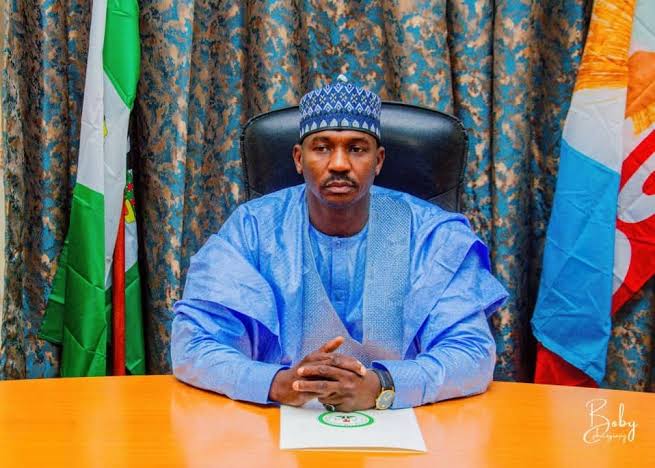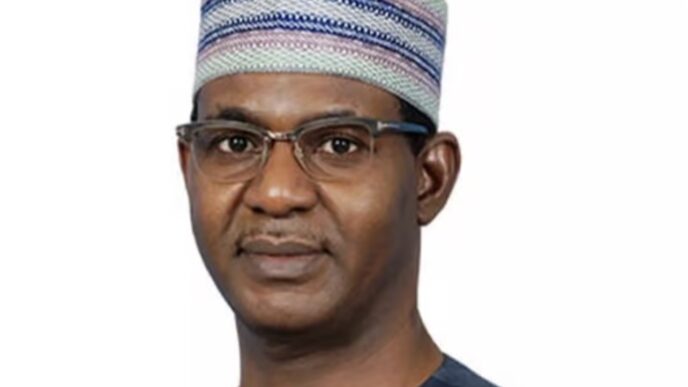


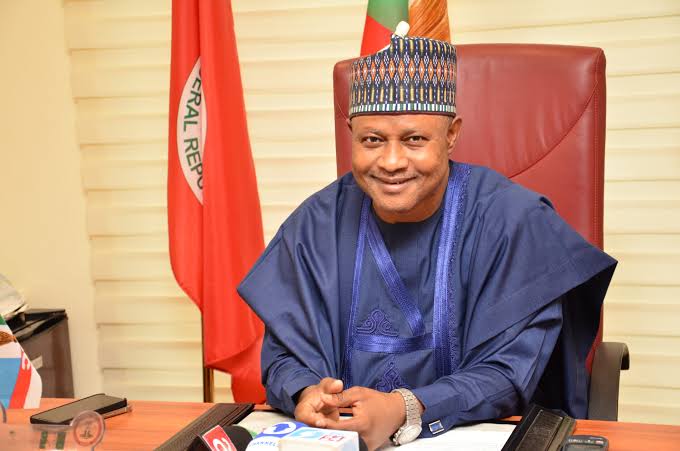
As Kaduna State approaches the midpoint between the 2023 elections and the 2027 general elections, one reality that clearly stands out to Governor Uba Sani is that the year 2026 is a decisive bridge to the 2027 governorship election. And going by the prevailing political reality, that election is shaping up in favour of Governor Uba Sani, with the momentum firmly on his side. His second-term ambition was no doubt secured from May 29, 2023—the very moment he assumed office—based on a deliberate and well-thought-out strategy. It is a known fact that elections are rarely won in the final year, but through accumulated I Owe Yous (IOUs), which the governor has several that he can appropriately cash, visible impact, and leadership, these are factors working in Governor Sani’s favour.
Being a very strategic politician, Governor Sani understood from the very outset that momentum-both political and developmental-must not only be built early, but sustained. One of his most consequential first moves was the establishment of the Kaduna Elders Forum. In a state with a complex social and political history, this decision sent a powerful signal of willingness to consult. Rather than govern in isolation, the governor chose to draw from experience, creating a stabilising platform that helped lower political tensions and foster consensus. Though the Forum has served more as an advisory body, it has acted as a bridge between government and the communities, reinforcing peace and helping market difficult but necessary policy decisions.
This approach of inclusion has defined the administration’s broader style of governance. Through deliberate outreach across ethnic, religious, and political lines, Governor Sani has given many who previously felt excluded a renewed sense of belonging in the Kaduna State project. Old suspicions have gradually given way, and governance is increasingly seen as a shared enterprise rather than an imposed authority. In a state long challenged by division, this reaching out has quietly reshaped public perception and rebuilt trust in government.
In practical terms, inclusion has been matched with fairness in development projects. The Governor Sani administration has consciously avoided the familiar trap of concentrating projects in select areas, opting instead for a more visibly equitable distribution of projects across the state. The three skills acquisition centres provide a clear and compelling example of this philosophy. Strategically located to serve different parts of Kaduna State, they are not merely infrastructure projects; they are centers of empowerment. By equipping young people with employable skills and promoting self-reliance, these centers would directly impact household livelihoods. For many families, they represent the first tangible evidence that government policy can meaningfully touch lives.
Such lived experiences carry enormous political weight. While Governor Sani would still have to embark on electioneering campaigns, the task has been made easier by the testimony of people whose lives he has improved through peace, opportunity, and inclusion. This constituency of beneficiaries forms the backbone of the governor’s political strength and explains why the momentum heading into 2027 firmly remains with him.
While Governor Uba Sani can afford to rest on these gains, those familiar with his political temperament know that complacency is not his style. As a proven strategist, he continues to tie every knot carefully, aware that his political advantage must continue to be managed until the Independent National Electoral Commission (INEC) blows the final whistle.
The inroad by the All Progressives Congress (APC) into Southern Kaduna did not begin with the appointment of General Christopher Musa, first as the Chief of Defence Staff and later as Minister of Defence. Long before these appointments, the Southern Kaduna Senatorial District had warmly embraced Governor Sani. For instance, as a senator representing Kaduna Central Senatorial District, he had facilitated the establishment of a computer centre at the College of Education, Kafanchan. Beyond its lasting impact on digital literacy, teaching capacity, and student preparedness for a technology-driven world, the intervention also portrayed Governor Sani as a leader with whom meaningful progress and partnership were possible.
The gesture of a senator reaching out beyond his own constituency was not lost on the people of Southern Kaduna, who saw it as a sign of goodwill and inclusive leadership. That early outreach helped to build understanding and trust. Consequently, when President Bola Tinubu made the appointment, it reinforced the goodwill and made Governor Sani’s task of uniting Kaduna State under the banner of the APC considerably easier. Until the 2015 elections, Kaduna State had largely moved in one political direction, in voting and membership of a party.
However, under President Muhammadu Buhari’s administration, Southern Kaduna was marginalised, with local concerns and political appointments receiving no attention. This created lingering tensions and a perception of exclusion that the APC needed to overcome to build statewide cohesion. Governor Sani deserves commendation for his strategic interventions and inclusive messaging, which helped to bridge the divides. The governor has clearly and successfully built a broader acceptance for the party and laid the groundwork for a more united political front heading into the 2027 elections.
These initiatives reflect a philosophy that is built around investing in human capital as the foundation for long-term development. They also reinforce a narrative of continuity that shows that his current policies as governor are an extension of values and priorities that he has long held dear.
Governor Uba Sani’s unflinching support for the establishment of the Federal University of Applied Sciences, Kachia, is a clear demonstration of his long-standing commitment to expanding access to higher education and promoting development. The establishment and immediate take-off of the university in Southern Kaduna is not just an educational milestone; it is a socio-economic catalyst that promises jobs, business opportunities, upward mobility for the youths, and infrastructure development. For the people of Southern Kaduna, it is a source of pride and tangible hope that they have finally have a federal presence – a much-needed attention, and that Southern Kaduna is a valued partner in progress.
Beyond state politics, Governor Uba Sani’s extremely good standing is further strengthened by his special relationship with President Bola Ahmed Tinubu. This relationship reflects mutual respect from a shared political history- their pro-democracy agitations. On the governor’s birthday last year, President Tinubu sent a notably warm message that went beyond routine pleasantries, praising his leadership and commitment to peace and development. In that message, the President described him as “a dependable partner in the task of building a more peaceful, inclusive, and progressive Kaduna State.” Such public affirmation from the nation’s leader reinforces the governor’s political stature and reassures stakeholders that Kaduna State enjoys tremendous goodwill at the highest level of the federal government.
This strong federal–state synergy has enhanced Kaduna State’s ability to get federal support. Governor Sani has repeatedly acknowledged the backing of the federal government, particularly in addressing the persistent challenge of insecurity across the state—a support that he has not taken for granted.
This strategic mindset of Governor Sani going forward will be important in the days and years ahead.
As the APC, which has eclipsed the opposition, approaches its party primaries for various elective positions, the opposition is counting on an implosion due to competing ambitions and internal tensions to defeat the party. There will definitely be challenges, but Governor Uba Sani is well positioned to deploy political brinkmanship- balancing interests, negotiating compromises, and managing aspirants-in a way that would preserve party cohesion without alienating key stakeholders. His track record of consultation, consensus-building, and calm negotiation suggests that internal contests will be well managed.
The 2026 budget provides a coherent framework for demonstrating that he won’t go sleep despite his pole position going into the election.
For Governor Sani, 2026 is the year of consolidation-the year to deepen and complete ongoing projects, sustain the peace that has been painstakingly restored across the state, and to continue to translate the stability into tangible social and economic gains. The administration’s development priorities, carefully articulated through extensive town hall meetings and shaped by citizen input, would certainly yield measurable results. These consultations established a social contract with the people of Kaduna State.
The ₦985.9 billion 2026 budget, aptly titled “The Budget of Consolidation of Transformation for Inclusive Development,” reflects this reality. It signals a shift from stabilisation to more delivery, with strong emphasis on education, healthcare, infrastructure, agriculture, and community development. Improved security has seen the reopening of schools and markets and allowed displaced families to return home, providing the foundation upon which development can thrive.
The governor’s decision to invest significantly at the ward level further reinforces this inclusive approach. Community-driven projects decentralise development and ensure that no part of the state feels excluded from progress. Politically, this reshapes the engagement between citizens and government. Development would cease to be something people hear about from afar; it has become something they can point to within their own neighbourhoods and villages.
Though the 2027 election is a walkover, the governor is clearly determined that by January 2027, the administration’s achievements must be visible to ordinary citizens. Towards this end, he is moving with the speed of light to ensure the completion of several critical projects.
If Governor Uba Sani sustains this trajectory- leveraging the momentum, managing political challenges with skill, deepening inclusive development, and consolidating gains-the 2027 governorship election will be less a contest and more of a confirmation. It will be a strong endorsement of leadership that understood very early that service delivery, inclusion, and empathetic leadership are key to governance.
With the 2027 general elections visible on the horizon, 2026 is no longer just about balancing the books; it is about anchoring the achievements of the past two years into a foundation that can withstand the scrutiny of the ballot box.
Governor Sani’s story of 2026 must be clear and consistent: Kaduna State is more peaceful, more inclusive, and more focused on people. Every completed school, health facility, road, and community project adds weight to this narrative. Importantly, the most credible voices in telling this story are not government officials but the beneficiaries—teachers, traders, farmers, youths, and women-led cooperatives whose lives have been touched.
Gatekeepers News is not liable for opinions expressed in this article; they’re strictly the writer’s