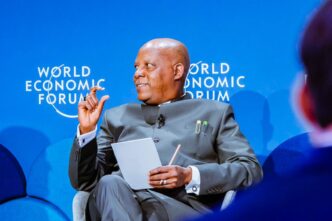



The Chief Executive Officer of the Nigerian Midstream and Downstream Petroleum Regulatory Authority (NMDPRA), Engr. Saidu Aliyu Mohammed, has said Nigeria will stop importing fertiliser-related products and become a major urea-exporting nation within the next two years.
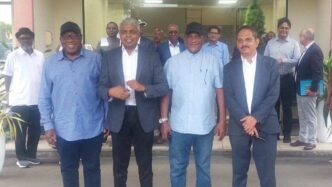
Gatekeepers News reports that Mohammed made the declaration during an operational tour of key midstream and downstream facilities in Port Harcourt, Rivers State, including the Indorama Eleme Petrochemicals Complex. The visit formed part of an executive regulatory exercise mandated by the Petroleum Industry Act (PIA) 2021.
He said ongoing expansions at Indorama and large-scale investments such as the Dangote Fertiliser Plant mark a turning point in Nigeria’s oil and gas value chain.
“We have no business importing any of those things,” Mohammed said. “With the expansion of what is going on today at Indorama and many other places, including Dangote Fertilisers, I am sure that in the next 24 months Nigeria will join the league of urea-exporting countries, and that is where we should be.”
He described the midstream segment as critical but capital-intensive, noting that between $30 billion and $50 billion is required to position Nigeria as a regional hub for oil, gas, and value-added derivatives such as fertilisers and urea.
“What we have seen in Indorama is really a manifestation of what Nigeria needs to have. We need a lot of these in the midstream—fertiliser plants and every value-addition opportunity from our hydrocarbon sources. That is what the nation needs to propel growth,” he said.
Mohammed acknowledged that while similar ambitions had existed in the past, progress was slow due to structural and investment challenges. However, he said recent partnerships with the private sector were now yielding results.
“Today, we have found the right footsteps in partnership with the private sector. Indorama has really shown us that growth is growth, and we can continue to grow in that same direction,” he stated.
He explained that the visit to Rivers State was aimed at assessing the operational status of key facilities, ensuring alignment between the regulator and its licensees, engaging investors, and strengthening regulatory support. The exercise also seeks to promote health and safety standards and provide the public with an accurate picture of industry operations.
Describing Rivers State as a strategic hub, Mohammed said the state hosts diverse facilities spanning gas processing, manufacturing, and refining.
“There is no sample that we cannot take here. If we want to see gas processing, manufacturing, or refining, we can. We selected just a few facilities to have an overview of what is going on, but we cannot do that in only three days. I will be coming back because there are many industries within Rivers State that we still need to cover,” he said.
Mohammed stressed that NMDPRA’s role is to create an enabling environment that facilitates investments, allows operators to expand, and attracts new investors. He added that the regulatory exercise, which has begun in the South-South, will be replicated nationwide.
Speaking for Indorama, its Chief Executive Officer, Mr. Munish Jindal, described the visit as timely and significant.
“These visits are always very important. It is important for the regulator to come and see with their own eyes what is happening and understand the changes that have been brought,” Jindal said.
He praised the NMDPRA leadership for visiting with its full team to assess the progress made over the past two decades.
“We are highly appreciative that since assuming office, Engr. Saidu Aliyu Mohammed has visited with his full team to see and visualise what has been delivered here in the last 20 years,” he said.
Jindal recalled that Mohammed had been part of the sector during the early days of the Eleme Petrochemicals Company Limited (EPCL), when Phase 2 and Phase 3 expansions were first conceived.
“Those dreams have been delivered today by Indorama,” he noted.
While commending regulators for improved understanding of the midstream sector, Jindal disclosed that the company had raised concerns over certain regulatory requirements it believes are no longer relevant to manufacturing-focused operators.
“We have made a keen request to the Authority to kindly look into some issues that may not be relevant to the manufacturing industry and consider granting exemptions where necessary,” he said.
The NMDPRA reaffirmed its commitment to ensuring that government objectives and national economic goals are reflected in the business outlooks of industry stakeholders, as Nigeria positions itself as an energy hub and a centre for oil and gas derivatives in Africa.