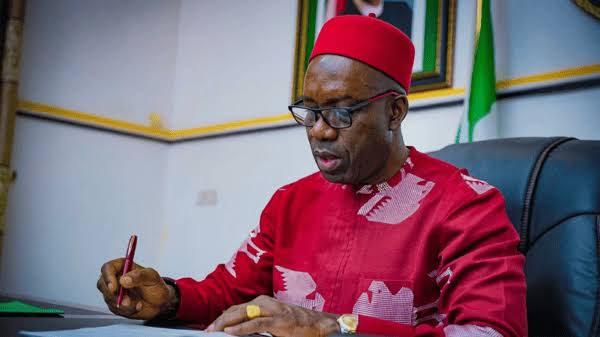



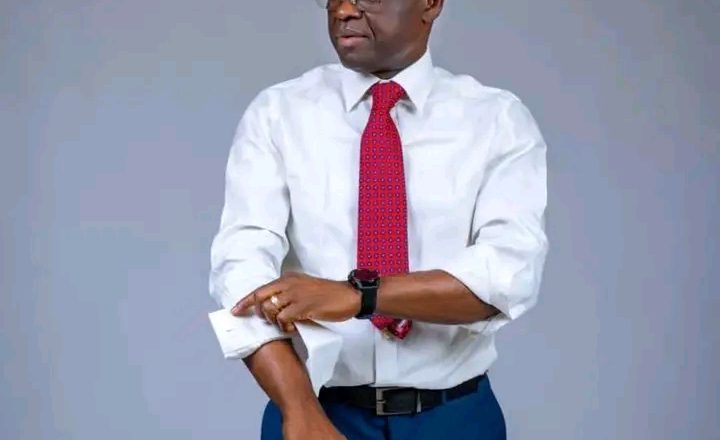
Philip Shaibu, the immediate past Deputy Governor of Edo State, has launched a series of reforms at National Institute for Sports (NIS) following his appointment as Director-General in May 2025.
Gatekeepers News reports that according to a statement released by Office of the S.A. Media to the DG/CEO of NIS, Shaibu’s leadership is focused on restoring the Institute’s strategic relevance and expanding access to sports development nationwide.
“One of his earliest and most symbolic actions as Director-General was a deliberate outreach to former administrators of the National Institute for Sports. In a system where leadership transitions often erase institutional memory, Philip Shaibu chose a different and uncommon path, one defined by respect, humility, and continuity,” the media office stated.
“Shaibu listened attentively, asked difficult but necessary questions, and acknowledged both the sacrifices and shortcomings of the past. Those visits were far from ceremonial; they were foundational”, the statement added.
“They reassured staff, stakeholders, and the wider sports community that this new chapter would not begin with blame or erasure, but with understanding, healing, and collective wisdom.”
The Office further confirmed that Shaibu established strategic committees of seasoned professionals and technocrats to develop a Ten-Year Development Plan, which redefined the Institute’s purpose, direction, and relevance within Nigeria’s sports community.
“Under his watch, strategies moved steadily from paper to practice. Reforms are being implemented in phases, ensuring institutional stability, administrative clarity, and staff inclusion. Bottlenecks that had stifled growth are being addressed, internal processes are streamlined, and gradually, morale within the Institute has begun to rise,” the media office said.
A significant development under Shaibu’s leadership is the establishment of zonal offices across Nigeria’s six geopolitical zones. “For decades, access to the Institute’s programmes had been limited by distance and centralisation, leaving many talents excluded by geography. That barrier has been broken. With the zonal offices in place, sports education, training, and certification are getting closer to the people,” the statement noted.
“Talents in communities far removed from the centre can now be identified, trained, and nurtured, affirming the belief that opportunity should never be dictated by location,” the statement added.
Shaibu has also prioritised manpower development, recruiting both experienced and new professionals to align with the Institute’s renewed mission. “This is not recruitment for numbers or optics, but for competence, balance, and renewal. New hands bring fresh energy, while experienced professionals will offer guidance and institutional memory. Together, they will form a workforce aligned with the rebirth of the Institute and committed to its renewed mission,” the media office said.
Other ongoing initiatives include infrastructure assessments, policy realignment, stakeholder engagement, and staff welfare improvements. “From infrastructure assessments to stakeholder engagement, from policy realignment to staff welfare, Philip Shaibu is leaving no stone unturned in his determination to reposition the National Institute for Sports as a centre of excellence,” the statement added.
“His leadership style, firm yet humane, visionary yet grounded, rekindled belief in what public service can still achieve when driven by sincerity, discipline, and purpose.”
“Today, the story of the National Institute for Sports is no longer one of nostalgia and forgotten glory, but of renewal and forward motion. The Philip Shaibu era represents more than reform; it represents a rediscovery of the institutional soul”, the statement concluded.
“This is a statement that Nigeria’s greatness begins with individuals who choose service over comfort and purpose over praise singing. History will remember May 2025 was the moment the National Institute for Sports found its engine room again.”