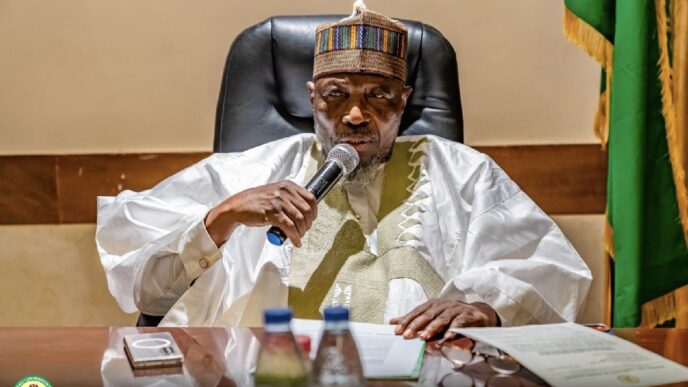


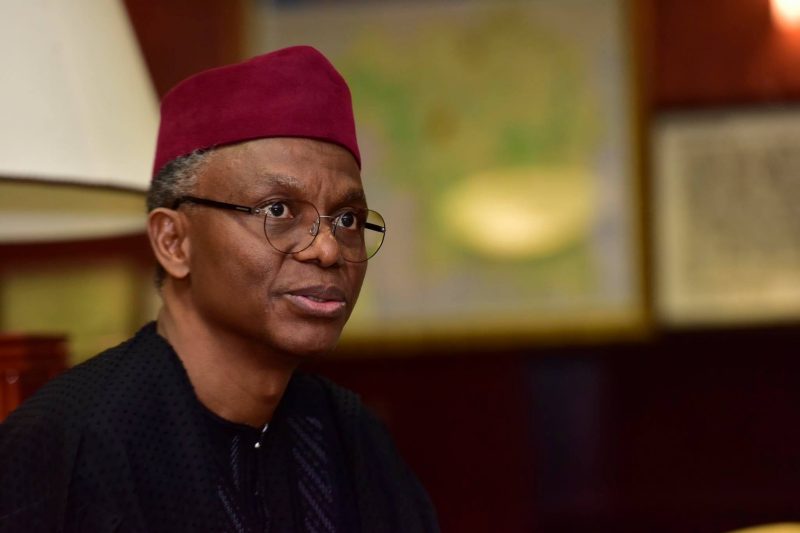
Former Kaduna State Governor, Nasir el-Rufai, has expressed strong support for the protest against the Senate’s rejection of real-time electronic transmission of election results.
Gatekeepers News reports that he said he would have personally joined the demonstration at the National Assembly complex in Abuja if not for his absence from the country at the time.
Peter Obi, 2023 presidential candidate of the Labour Party (LP) had on Monday led a large crowd of protesters, including students, civil society organisations, members of the African Democratic Congress (ADC), and supporters from the Obidient Movement, to demand the adoption of real-time electronic transmission of election results.
The protest followed the Senate’s decision to throw out a proposed amendment to the Electoral Act that would have made instant electronic upload of polling unit results compulsory.
Speaking during an interview on Trust Television, el-Rufai said real-time transmission of election results is the most effective way to curb electoral malpractice in Nigeria. According to him, result manipulation largely takes place at collation centres after voting has ended.
He said, “That is where the real rigging takes place.” He added that instant electronic transmission would help block these practices and restore public confidence in the electoral process.
The former Governor argued that the rejected amendment would have significantly improved the credibility of elections, transparency, and fairness.
He accused the ruling party and the current administration of resisting the reform because it would limit their ability to influence outcomes after voters have cast their ballots. According to him, real-time electronic transmission would make it harder to alter figures and ensure that votes genuinely count.
El-Rufai also spoke about preparations by the African Democratic Congress ahead of the 2027 general elections, saying the party is intensifying efforts to build nationwide support. He said, “We are mobilising at that level. And at the top level, we are preparing.”
He explained that the party is developing its manifesto, strengthening its political platform, and working toward internal consensus to guarantee credible primaries, internal democracy, and equal opportunities for all aspirants.
He stressed that the party will not impose candidates or force anyone to step down, saying, “Everyone will be given the opportunity to contest, and whoever wins will be supported by all.” He added that these preparations are being carried out on multiple levels to ensure the party is fully ready for the next election cycle.
The controversy began after the Senate passed the Electoral Act amendment bill on February 4 following a lengthy clause-by-clause review. While some timelines were adjusted, including reducing the period for INEC to publish a notice of election from 360 days to 180 days, the Senate rejected the proposal for mandatory real-time electronic transmission of results. Instead, it retained the existing provision that allows INEC to determine how results are transmitted.
This decision triggered widespread criticism across social media and civil society groups, who argue that compulsory real-time electronic transmission is essential to prevent rigging, reduce human interference, and promote transparency.
Labour unions, including Nigeria Labour Congress, have also threatened mass protests if the Senate fails to reverse its decision, warning that public trust in elections is rapidly declining.
At the centre of the dispute is clause 60(3) of the proposed amendment, which sought to make instant electronic upload of results to the INEC Result Viewing Portal mandatory. Supporters of the clause believe it would drastically reduce manipulation, speed up result collation, and enhance public confidence in the democratic process.