

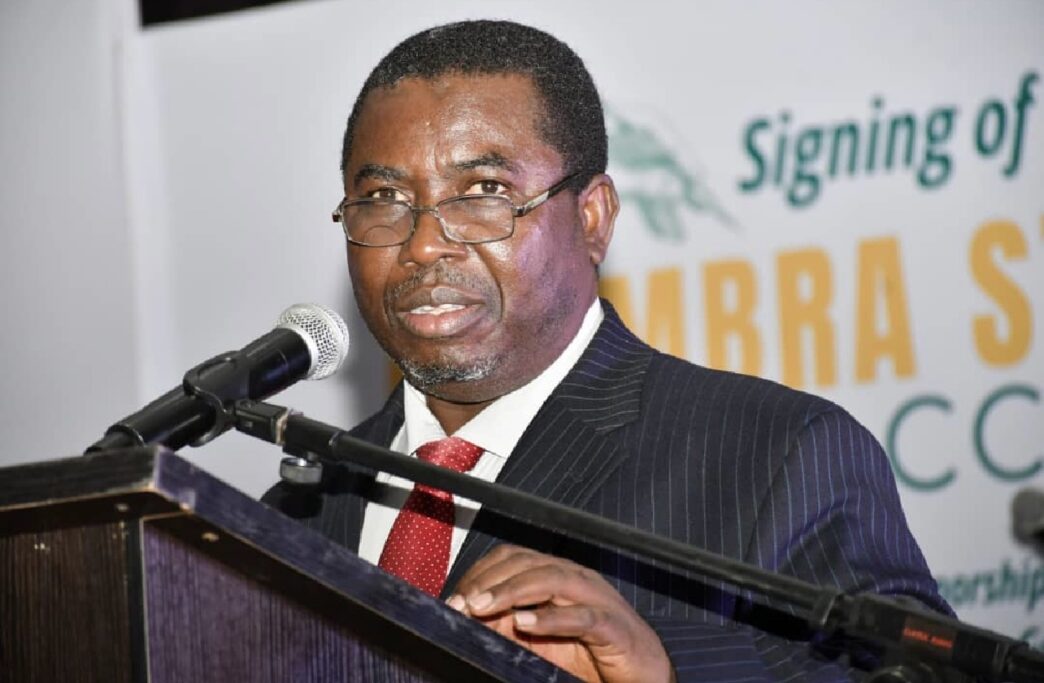
Independent National Electoral Commission has requested a total of N873.78 billion from the National Assembly to conduct the 2027 general elections.
Gatekeepers News reports that the commission warned that inadequate funding could seriously disrupt early preparations and compromise key aspects of the electoral process.
The proposal was presented on Thursday in Abuja during the defence of the commission’s 2026 budget estimates and projected election costs before the joint committee of the Senate and House of Representatives on electoral matters.
INEC chairman, Joash Amupitan, told lawmakers that in addition to the 2027 election budget, the commission is also seeking N171 billion to cover its operational activities in 2026.
According to Amupitan, the proposed N171 billion for 2026 will fund routine electoral responsibilities, including by-elections, off-cycle governorship elections, voter registration exercises, logistics, and staff-related expenses.
He explained that the commission had been given a funding ceiling of N140 billion by the Ministry of Finance, which falls short of its actual operational needs.
Breaking down the projected N873.78 billion required for the 2027 elections, Amupitan said N379.75 billion is allocated for field operations such as logistics, personnel deployment, transportation, and election-day activities.
He added that N92.32 billion is meant for administrative costs, while N209.21 billion is set aside for technological upgrades, including improvements to the Bimodal Voter Accreditation System, result transmission platforms, and data security infrastructure.
Capital expenditure, covering election materials, equipment procurement, and infrastructure upgrades, is estimated at N154.91 billion, while N42.61 billion is reserved for contingency and miscellaneous expenses.
He noted that the estimate was prepared in line with Section 3(3) of the Electoral Act 2022, which mandates INEC to submit its election budget at least one year before a general election to ensure adequate planning and timely fund release.
On the 2026 operational budget, Amupitan said personnel costs account for N109 billion, overhead expenses N18.7 billion, election-related activities N42.63 billion, and capital projects N1.4 billion.
The INEC chairman criticised the current envelope budgeting system, arguing that it limits the commission’s ability to respond swiftly to operational demands and unforeseen challenges.
“INEC requires flexible and timely funding to effectively discharge its constitutional responsibilities,” he said.
He also identified the absence of a dedicated communication network as one of the commission’s biggest operational weaknesses, stressing that establishing an independent network infrastructure would improve transparency, boost efficiency, and enable Nigerians to hold the commission accountable for technical lapses during elections.
Following the presentation, the joint committee approved a motion recommending a one-time release of INEC’s annual budget to allow for better financial planning and smoother execution of electoral activities.
The committee also said it would review the request by the National Youth Service Corps for about N32 billion to raise allowances for corps members involved in election duties to N125,000.
Speaking at the session, chairman of the Senate committee on INEC, Simon Lalong, assured the commission of the National Assembly’s cooperation to ensure credible and well-funded elections in 2027.
Similarly, chairman of the House committee on electoral matters, Bayo Balogun, pledged legislative support but urged INEC to avoid making commitments that may be difficult to fulfil, citing past challenges with the iREV result viewing portal.
“iREV was not even in the Electoral Act; it was only in INEC regulations. So, be careful how you make promises,” Balogun said.
The proposed N873.78 billion represents a significant increase from the funding for the 2023 general elections, for which the National Assembly approved N355.3 billion, although INEC said it eventually received N313.4 billion from the federal government.
Lawmakers said the rising cost reflects inflation, expanded technological demands, increased logistics, and broader security requirements ahead of the 2027 polls.