

In today’s political climate, particularly with the 2027 elections on the horizon, the visibility of politicians will increasingly dominate the airwaves. Already, they are amplifying their achievements, highlighting milestones, and reinforcing their public presence in a bid to persuade voters that they merit another term in office. In the coming days, billboards will multiply, media appearances will intensify, and project launches will be prioritised. This heightened activity is a natural part of the electoral build-up, as incumbents attempt to shape public perception before their opponents do. Yet beyond the optics and the inevitable surge in political messaging lies the true measure of governance: delivery.
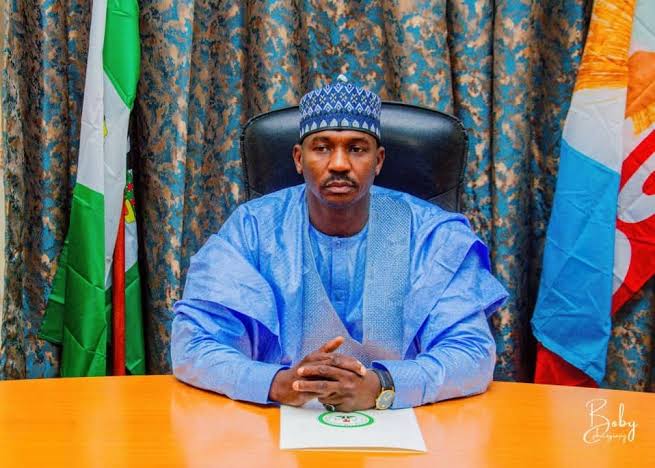
But effective leadership is not defined by the frequency of the headlines generated, but by how meaningfully it improves the daily lives of the people. The construction of roads that reduce travel time, hospitals that provide reliable care, and schools that create opportunity—these are the benchmarks that endure beyond election cycles. In Sokoto State, Governor Ahmed Aliyu has built a reputation firmly anchored not merely on visibility, but in tangible, measurable results that citizens of the state can see, use, and experience firsthand.
While visibility is crucial as the electoral season gathers momentum, political communication can help shape narratives, but it is the sustained implementation of projects and reforms that shapes realities. In Sokoto State, the conversation has increasingly centered not only on what has been announced, but on what has been completed and is functioning. This emphasis on practical results reinforces a governance model where, for Governor Aliyu, service delivery matters as equally as publicity. By ensuring that all its developmental initiatives translate into lived improvements, the Aliyu administration has positioned delivery as the foundation of its appeal to the electorate.
Since assuming office in 2023, Governor Ahmed Aliyu’s administration has completed more than 350 projects across key sectors, averaging roughly 10 completed projects per month—a remarkable pace. Within his first 100 days, over 100 development initiatives were executed, from infrastructure to education and health.
This emphasis on practical results reinforces a governance model where, in Sokoto State, service delivery is at the core of governance. Rather than focusing solely on political messaging, the Aliyu administration ensures that developmental initiatives translate into lived improvements—from rehabilitated roads to functional healthcare centres.
An infrastructure renaissance is evident. More than 240 township roads have been completed, with an additional 40 projects ongoing across both urban and rural areas. Solar-powered streetlights now illuminate major thoroughfares across all the 23 local government areas, improving safety and commerce after dark.
This approach reflects the broader understanding of the Aliyu administration that political capital is strongest when it is firmly rooted in strong performance rather than in empty campaign promises, because completed projects have more credibility. When communities see rehabilitated roads that ease transportation, functioning primary healthcare centers that serve families efficiently, and improved schools that enhance student outcomes, governance moves from promise to proof. In this context, delivery becomes the most persuasive campaign narrative of all.
As the 2027 general election approaches, this results-driven framework positions Governor Aliyu not just as a candidate seeking reelection, but as a leader presenting measurable progress as evidence of stewardship.
In the 2025 budget, 25% was allocated to education, surpassing the UNESCO benchmark of 15–20% recommended for developing countries. This prioritisation has supported the renovation of schools, the provision of instructional materials, enhanced learning environments, and timely payment of examination fees for secondary school students.
The healthcare sector illustrates this philosophy better. Attention has been directed towards improving operational capacity—ensuring that facilities are staffed, equipped, and accessible. Dilapidated primary healthcare centres have been revived and equipped, new general hospitals are under construction, and free maternity care for pregnant women has been introduced statewide. In more than 244 wards, facility upgrades and staffing initiatives have expanded access to basic health services.
These achievements align with the Sokoto State administration’s broader fiscal strategy. Of the ₦526.88 billion 2025 budget, 66% was dedicated to capital expenditure, prioritising roads, water supply, and energy infrastructure.
From the average citizen’s perspective, governance is experienced through functionality: a rehabilitated road that eases commerce, an upgraded health facility that expands access to quality care, and an enhanced school system that supports learning outcomes. These tangible outcomes define progress far more than press statements.
What has also distinguished Governor Aliyu’s administration from his immediate predecessor is its emphasis on follow-through and the understanding that governance extends beyond groundbreakings to careful planning, realistic budgeting, procurement discipline, coordinated execution across ministries and agencies, and the award of contracts to timely implementation in line with the holistic nature of the 9-Point Smart Agenda.
Since assuming office, Governor Aliyu has prioritized strengthening institutional mechanisms to ensure that projects are completed. Inter-ministerial committees and project management structures have also been reinforced to enhance oversight and coordination. By aligning planning with execution, the administration has succeeded in minimizing delays and improving efficiency across sectors. The result is a governance model that recognizes that implementation is as essential as the preparation of the budget. The 2025 budget is believed to have achieved more than 70% in terms of performance.
For instance, healthcare improvements demand staffing, equipment, and operational funding. Educational reforms call for teacher support, curriculum alignment, and the provision of learning materials. These are not one-day events but ongoing processes that form the backbone of service delivery.
Governor Aliyu’s approach reflects an understanding that visibility and delivery are complementary. Communication builds public trust and keeps citizens informed, while disciplined execution strengthens the administration’s credibility. When projects are completed on schedule and services operate effectively, recognition follows naturally as a by-product of competence.
The governor is no doubt in tandem with the people. From the perspective of the average Sokoto State citizen, governance is experienced through functionality: a rehabilitated road that reduces travel time and boosts economic activity; installed solar-powered streetlights that enhance security and commerce; an upgraded health facility that expands access to quality care; and a revitalized school system that shapes future opportunities for young people. These, for them, are the tangible outcomes that define progress. While public engagement helps citizens understand what the government intends to do, delivery ensures that they experience its impact.
While the 24-hour news cycle and digital media environment place tremendous pressure on leaders to demonstrate constant activity, sustainable governance requires patience, discipline, and strategic planning. Infrastructure must be built to last. Hospitals must remain staffed and supplied with essential resources. The same applies to schools, which must continue to improve learning outcomes. Governor Aliyu’s administration has shown that meaningful progress lies in sustaining these efforts over time.
Equally important is the redefinition of performance metrics. Success is not measured solely by the number of projects launched but by completion rates, durability, and measurable impact. An infrastructure project delivered on schedule and fully operational contributes far more to development than a long list of unfulfilled plans.
Again, for Governor Aliyu, transparency remains central to governance. Regular updates, accessible communication channels, and community engagement create a sense of shared ownership over development initiatives. For him, the people are not passive observers but partners in progress, and through dialogue and feedback, governance becomes more responsive and inclusive.
He also understands that political legitimacy rests on performance. While speeches may inspire, it is sustained delivery that builds enduring trust. As Sokoto State continues its development trajectory, Governor Ahmed Aliyu’s focus on implementation, coordination, and measurable outcomes positions his administration as one defined not merely by promises, but by what it accomplishes.
The credibility of the Aliyu administration was built from day one and has continued to grow, with promises translating into visible improvements in the daily lives of the people—improved water supply, better roads, expanded healthcare access, and stronger educational foundations. Governor Aliyu’s governance style underscores a simple but powerful principle: announcements indicate intention, but delivery completes it.
In the final analysis, leadership will always be remembered for impact. Roads that ease commerce, hospitals that save lives, and schools that empower future generations are the enduring markers of progress. Ahmed Aliyu’s governance reflects the understanding that while visibility informs, delivery transforms—and in that transformation lies the true measure of a governor who delivers.
Gatekeepers News is not liable for opinions expressed in this article; they’re strictly the writer’s