

“Leadership is a potent combination of strategy and character. But if you must be without one, be without the strategy.” — Norman Schwarzkopf Jr.
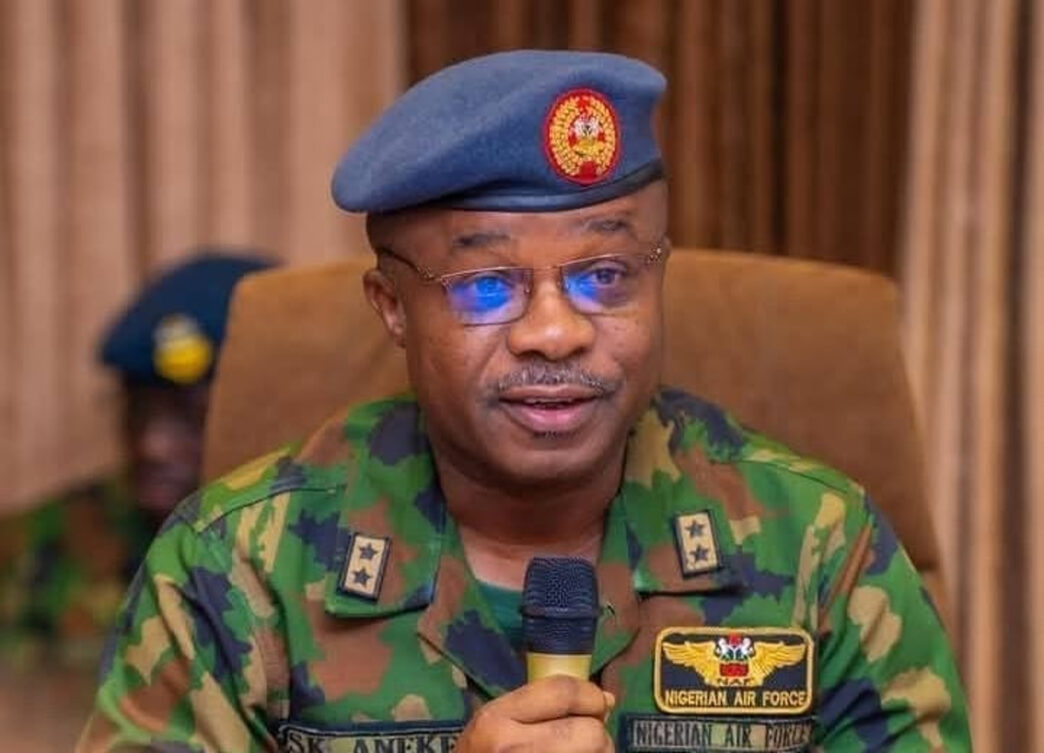
When Air Marshal Kelvin Aneke assumed office as the 23rd Chief of the Air Staff in 2025, he did something spectacularly unusual in military leadership. While many newly appointed service chiefs usually announce sweeping changes and unveil their strategic vision, Air Marshal Aneke chose to complement his authority with reflection. Alongside outlining his strategic vision, he embarked on deliberate visits — to former Chiefs of the Air Staff, to the barracks where he was formed as a young man, and to old friends who had shared in his early journey in life — some who in the past had once hunted bushmeat with him in Makurdi and fished with him at the famous River Kaduna.
In Nigeria, it’s normal for those who get appointed to positions of authority to abandon old friends for new ones and to totally ignore their predecessors.
But Air Marshal Aneke visited his predecessors, not to announce his “arrival,” but to engage in conversations on how to further strengthen the force. The Nigerian Air Force (NAF) runs on doctrine and discipline, but it also runs on memory — the experiences of operations conducted, mistakes made, reforms attempted, and battles fought and won. By engaging the former Chiefs of the Air Staff such as Paul Dike, Mohammed Dikko Umar, Adesola Amosu, Oladayo Amao, and Hasan Bala Abubakar, the Chief deliberately chose to tap into decades of accumulated institutional experience.
By visiting them, Aneke acknowledged that he stood to benefit tremendously by listening and asking questions of those who shaped the service in distinct ways — from fleet recapitalization, counterinsurgency campaigns, and expansion of operational bases to doctrinal reforms and enhanced pilot training pipelines — and who once bore the same weight of command. Aneke signaled an understanding that his leadership of the NAF is a relay — a continuum of stewardship — and that, when his tenure is over, he will hand over to the next leader to continue the work.
Yet perhaps more touching was Aneke’s return to the barracks that shaped him, a visit that will no doubt inspire the youths who thronged out to see him. The powerful message, delivered in a few simple words, was: “If I can make it, so can you with hard work.” Long before he rose through the ranks, before the various staff appointments, he was also a young boy living in the military barracks with his father, Air Warrant Officer Sylvester Aneke, absorbing the rhythm of service life — the early morning drills, the bonds, the sacrifices of families whose fathers were part of the ECOMOG contingent to Liberia and Sierra Leone to restore peace. By walking those barracks grounds, the Chief of the Air Staff also demonstrated that attaining the rank of Air Marshal has not erased his memory or changed him.
Pictures from the visits to the former Chiefs and the barracks showed the unmistakable happiness that comes from being remembered. By that singular gesture, he reminded them that, after all, they had not been forgotten. Nor will Aneke ever forget the unchoreographed shouts of “We love you” from the children at the barracks.
There is something deeply human in the Chief reconnecting with old friends, those who knew him before the stars, the various military honors, and medals. By remaining reconnected with his friends, he certainly will not be swallowed by sharks (contractors) masquerading as friends. There is absolutely no doubt that leadership at the highest level can be isolating.
In the military, symbolism carries real weight. Troops pay attention not only to what their Chief says, but more to what he does and how. By coupling strategic pronouncements with a personal pilgrimage, Aneke has demonstrated that directives from the headquarters would show a genuine understanding of the challenges of serving. As someone who once lived the life of a barracks boy himself, he understands the issues of water shortages and inadequate accommodation. During one of his visits, he addressed a longstanding welfare concern by granting Air Women of Warrant Officer rank and above greater flexibility in residential choices — a move aimed at strengthening family unity and which would ultimately boost morale. It may appear a simple gesture, but its significance is profound.
In doing so, he has also set a tone for his tenure: forward-looking, yet grounded; decisive, yet reflective; powerful, yet personal. It is a style of leadership that suggests that he intends not just to command the Nigerian Air Force, but to build on his own experience and that of his predecessors — in shaping the future of the force. That deliberate choice shows a Chief who is thoughtful, charismatic, and grounded in the belief that innovation without institutional memory is doomed to failure.
Under late Marshal Alex Badeh, the Air Force saw renewed investment in platforms and infrastructure that significantly expanded its operational footprint. Under Air Marshal Amao, consolidation and operational intensity in counterinsurgency theatres deepened. The professionalization drive and structural reforms initiated by the earlier Chiefs created opportunities for officers like Aneke to grow through demanding assignments. His roles in policy, safety, mobility command, and training did not occur in isolation; they were in alignment with institutional priorities set by those who came before him. He certainly will want to leave his footprints in the sands of time.
Leadership demands not only authority but legitimacy — and legitimacy in the military rests heavily on respect. In leading the Air Force, it is crucial that the commander enjoys the confidence and respect of his officers and men. But respect cannot be commanded by rank alone; it is earned through competence, respect, and authenticity. Aneke’s charismatic engagement style — calm, attentive, and firm — has helped reinforce that bond. Officers see in him a leader who understands their professional journey because he has walked the path.
Born on 20 February 1972 in Makurdi, Benue State, Aneke’s relationship with the Air Force predates his commission. As the son of an Air Force personnel, he grew up in the barracks environment. He attended Army Children School in Kaduna and later Government College, Kaduna, before entering the Nigerian Defence Academy (NDA) in 1988 as a member of the 40th Regular Course. Commissioned in 1993, he built his career steadily through operational, instructional, logistics, and command appointments. Armed with a degree in Physics and postgraduate qualifications in management, international affairs, diplomacy, and political economy, he embodies both technical grounding and strategic breadth.
Morale is not an abstract virtue; it is an operational multiplier. A force that feels appreciated and respected operates with higher discipline and stronger cohesion. Aneke understands this instinctively. His presence among younger personnel, his direct conversations with them, and his attention to welfare underscore a human-centered approach to command. Air power is not only about platforms; it is about the people who maintain, and support them.
To interpret his reflective style as softness would be a huge mistake. Aneke’s operational record is formidable. He participated in intelligence, surveillance, and reconnaissance missions in the Niger Delta under Operation Restore Hope between 2004 and 2005. He also served in the United Nations peacekeeping mission in the Democratic Republic of Congo, managing air operations in complex multinational environments. These assignments have no doubt sharpened his appreciation for precision, coordination, and disciplined force application.
Today, that experience is being tested in Nigeria’s ongoing war against terrorists. The air component has become central to degrading insurgent networks, disrupting logistics corridors, and providing close air support to ground forces in difficult terrain. Under Aneke’s leadership, there is an emphasis on intelligence-driven targeting and improved inter-service coordination. The integration of surveillance assets with strike capabilities has enhanced responsiveness, while mobility platforms have supported rapid troop deployment and casualty evacuation.
Crucially, this recalibration reflects lessons drawn from past operations. By studying previous campaign assessments — including collateral damage reviews and after-action reports — Aneke has reinforced stricter adherence to the rules of engagement. The goal is clear: sustained pressure on terrorist elements while minimizing harm to civilian populations. In asymmetric warfare, legitimacy is as important as lethality. An Air Force that protects civilians strengthens the moral foundation of the broader campaign.
There are also signs of renewed attention to a strict maintenance culture, which is critical. Operational tempo means little if aircraft are grounded by preventable bottlenecks. Aneke’s background as Director of Safety and his experience in mobility command appear to inform a focus on reliability, logistics discipline, and risk management. Serviceability rates and sortie generation capacity are not merely technical statistics; they are reflections of institutional coherence.
His leadership style — commanding with memory — mirrors the nature of counterterrorism campaigns themselves. Gains are cumulative. Lessons must be retained and refined. Tactical successes must feed strategic recalibration. By consciously harvesting institutional memory, Aneke has strengthened the feedback loop between past operations and current planning.
Ultimately, any Chief of the Air Staff will be judged by outcomes: operational effectiveness, safety records, modernization progress, and national security impact. Nigeria’s security landscape remains complex, and expectations are high. The early signals from Aneke’s tenure suggest a leader determined to align reflection with resolve.
By grounding his leadership in both institutional legacy and personal experience, Air Marshal Kelvin Aneke has begun his tenure on a promising footing. If he sustains this combination of charisma, consultation, and operational clarity, it could well define a period of leadership that will strengthen the force and propel it to greater heights. Aneke’s vision of an Air Force rooted in history, united in purpose, and decisive in action is both timely and well judged.
Gatekeepers News is not liable for opinions expressed in this article; they’re strictly the writer’s