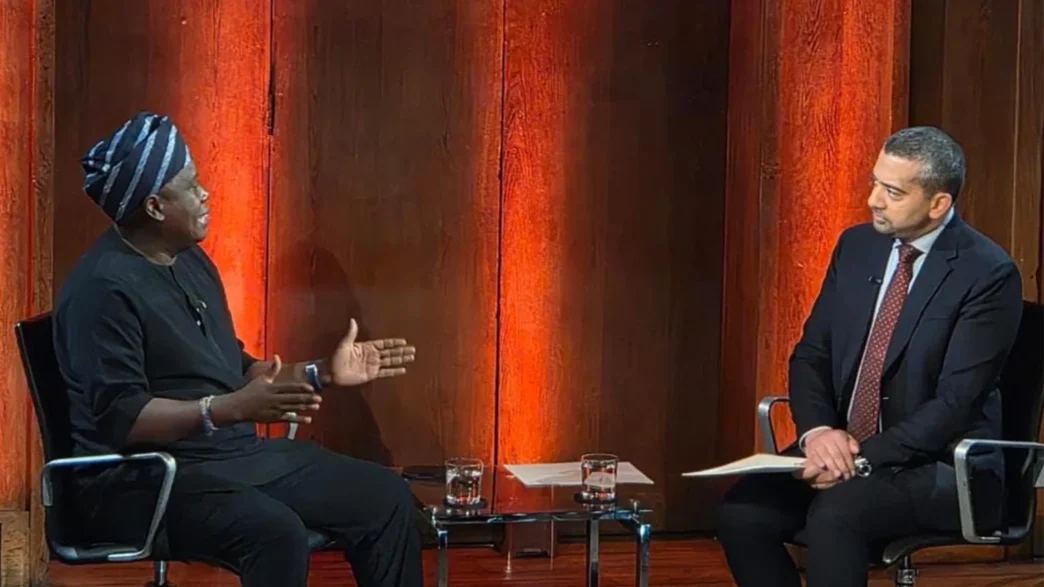
Charles Aniagolu, a news anchor with Arise TV, has sparked debate by insisting that what took place between expert journalist Mehdi Hasan and Daniel Bwala, the Special Adviser to President Bola Ahmed Tinubu on policy communication, was not a traditional interview.
Gatekeepers News reports that Aniagolu described the interaction on as a cross‑examination rather than an exchange focused on governance issues. He argued that Hasan concentrated on challenging Bwala’s past statements and credibility instead of engaging meaningfully on current policy matters.
According to Aniagolu, this approach allowed the host to set and keep control of the conversation, leaving Bwala little room to shift focus back to policy explanations.
“Mehdi Hasan didn’t interview Daniel Bwala – he cross-examined him,” he wrote.
“Hasan used past words as evidence to interrogate Bwala’s contradictions. And because the interview centred on credibility rather than policy, Hasan controlled the narrative, and Bwala never regained it.”
The comments reflect wider public discussion following Bwala’s appearance on Al Jazeera’s “Head to Head” programme, which carried the theme “Nigeria: Renewed hope or hopelessness?” and aired last week.
The show saw Hasan press Bwala on a series of controversial remarks he allegedly made about President Tinubu before joining the administration, remarks Bwala later denied when confronted. Hasan cited specific statements, including an assertion that Tinubu had formed a militia to influence the 2023 election, which Bwala rejected during the exchange.
Bwala defended himself, saying the remarks were made when he was in opposition and insisted that acting as opposition involves critique. He has also stated that social media has drawn out reactions from both critics and supporters. In comments after the programme aired, Bwala insisted he was ready to defend the government anywhere and argued that the interview was presented to him as one that would focus on issues like security, corruption, and the economy—not his personal political history. He further accused the programme of applying what he called “opposition research‑style journalism” and alleged that some of the quotations cited were inaccurate or misattributed.
Following the broadcast, reactions have poured in across social media and from public figures. Some commentators, including political actors, have described the interview as hostile or confrontational, going beyond hard questions into what they called a public ambush—suggesting the tone overshadowed substantive policy discussion.
Others have criticised Bwala’s performance, arguing that he appeared unprepared for Hasan’s combative style and was unable to effectively defend the administration’s record on issues like insecurity and corruption.