

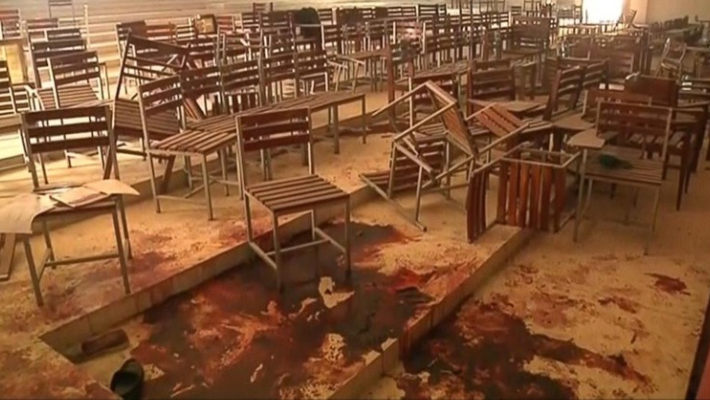
Nada Al‑Nashif, deputy high commissioner for human rights at the United Nations, says attacks on schools worldwide increased by 166 percent between 2021 and 2024, underscoring the growing dangers children face in conflict zones.
Gatekeepers News reports that Al-Nashif spoke on Monday at the annual meeting of the United Nations Human Rights Council on the rights of the child, where she called for stronger measures to protect children affected by armed conflicts.
The meeting was held under the theme “Mainstreaming the Rights of Children in Armed Conflict: Prevention and Protection.”
According to her, the council has recently heard disturbing testimonies of some of the gravest violations occurring across more than 60 armed conflicts worldwide.
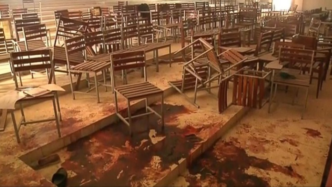
She said attacks on schools have been particularly prevalent in Sudan, Ukraine, the Gaza Strip, Myanmar and Ethiopia.
Al-Nashif warned that children are often the primary victims of such violence.
“Children are too often among the primary victims, paying a terrible and unacceptable price,” she said.
She added that in 2024, armed conflict directly affected nearly one in six children globally, representing about 470 million children.
Highlighting the situation in Gaza, Al-Nashif said the territory now records the highest number of amputee children per capita in the world.
“The territory now has the world’s highest number of amputee children per capita,” she said, warning that the consequences of war extend far beyond immediate violence.
She stressed that lost education, trauma and long-term psychological scars would continue to affect societies for generations.
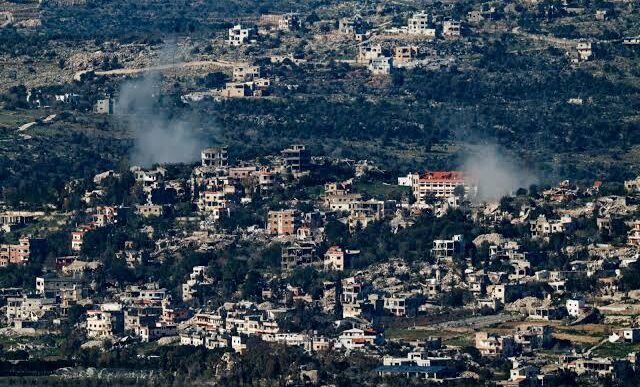
Al-Nashif also cited the situation in Lebanon, where displacement has surged amid renewed violence.
“In less than a week, according to government figures, more than 450,000 people have been registered as displaced, and at least 394 have been killed, including 83 children,” she said, noting that the country is still recovering from the 2024 conflict with Israel.
She added that displacement disproportionately affects children, who in many cases are more likely to die from diseases linked to unsafe water and sanitation than from direct violence.
Cholera kills 340 children in DR Congo
Al-Nashif also highlighted the situation in the Democratic Republic of the Congo, where a cholera outbreak killed 340 children in 2025, calling for urgent action to address the long-term consequences of conflict.
She stressed that children’s rights are fully protected under international human rights, humanitarian and criminal law.
“States have a clear obligation to protect all children under their jurisdiction without discrimination based on age, gender, disability or other status,” she said.
“When these obligations are not met, international law requires prompt and independent investigations, accountability for violations and reparations for victims.”
Despite the grim situation, Al-Nashif noted that children are not only victims but can also play an important role in peace-building, dialogue and reconciliation.
She urged governments, national human rights institutions, international organisations and civil society groups to strengthen collaboration to reduce the risks faced by children during conflicts.
“Protecting children is not a luxury. It is both a legal obligation and a humanitarian moral imperative, and it is clear that we can, together, do much better,” she said.
Also speaking, Vanessa Frazier, special representative of the UN secretary-general for children and armed conflict, said violence against children in conflict situations remained extremely high in 2025.
According to her, integrating the children and armed conflict agenda across peace and security, humanitarian, human rights and development efforts is essential to prevention and protection.
“It is crucial to ensure the mainstreaming of children and armed conflict in peace and security efforts at all stages of the conflict cycle,” she said.
Frazier added that children’s participation in peace and security processes — when conducted safely and inclusively — can strengthen the sustainability of peace initiatives.
“My office is committed to elevating the voices of children, including through our global campaign, ‘Prove It Matters’,” she said.