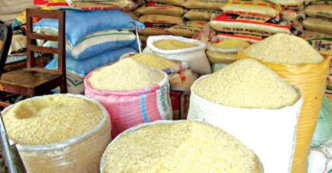
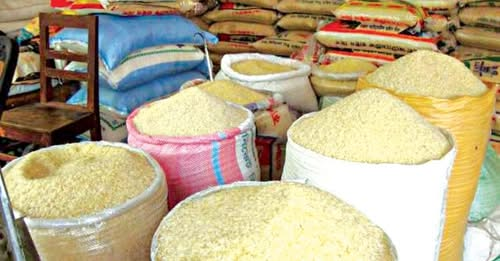
The federal government has intervened to support Nigeria’s rice industry following the shutdown of about 90 local rice mills across the country due to rampant smuggling.
Gatekeepers News reports that the intervention was announced during a high-level meeting held in Abuja on Monday between the Minister of State for Industry, Trade and Investment, John Owan Enoh, and the Rice Processors Association of Nigeria (RIPAN).
According to the ministry’s Head of Press, Augustina Obilor-Duru, the meeting focused on challenges confronting the rice value chain, including illegal imports, rising production costs, and weak infrastructure affecting local processors and farmers.
Speaking at the meeting, Enoh emphasised the importance of stronger collaboration between government and industry stakeholders to stabilise the sector and sustain Nigeria’s rice self-sufficiency drive.
He warned that the growing influx of cheaper imported rice is undermining domestic production and discouraging investment in the local industry.
“When smuggled rice is sold at prices far below locally processed rice, it threatens domestic production. Government will take necessary policy actions to protect local industry,” the minister said.
Enoh also urged stakeholders in the sector to provide credible data to enable the government to develop effective policies. He noted that responsible conduct within the industry would encourage transparency, cooperation, and national development.
The Director-General of RIPAN, Andy Ekwelem, highlighted the severe impact of large-scale smuggling on local producers, noting that cheaper imported rice has created an uneven playing field for domestic millers.
“Smuggled rice enters the Nigerian market at prices that local producers simply cannot compete with. This has forced many rice mills to shut down, while the remaining mills are operating at only 30–70 per cent of capacity,” he said.
Ekwelem added that the rice industry remains a major contributor to Nigeria’s economy, providing direct employment for more than 100,000 people and supporting over 10 million farmers across the agricultural value chain.
However, he noted that rising production costs, insecurity in farming communities, and inadequate infrastructure continue to pose significant challenges for local millers.