(Reflecting on the Past, Resetting the Present)
There is a saying often attributed to African elders: “that when a man does not know where he is going, he should look carefully at where he is coming from.” As Sokoto State celebrates fifty years of its existence, this wise saying is particularly relevant to all stakeholders. Anniversaries are not only moments for celebration; they also offer opportunities for deep reflection and, more importantly, for setting a clear direction for tomorrow. Fifty years is not merely a milestone—it is a mirror that reflects both achievements and shortcomings, as well as a guide for planning the next fifty years.
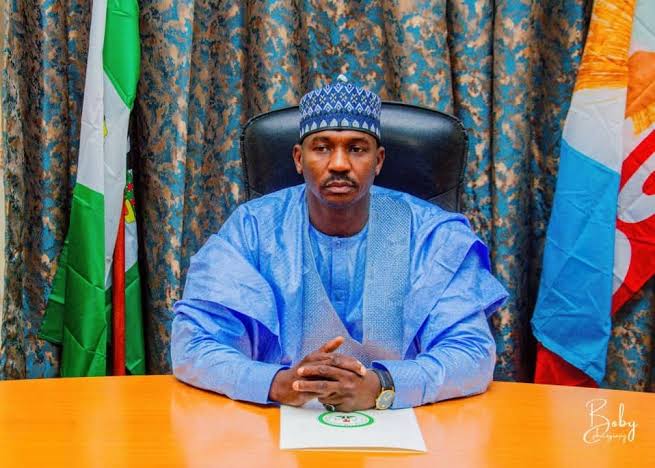
This is where Ahmed Aliyu, the current governor, has a pivotal role to play as the leader whose lot it is to shape the state’s future. Thankfully, he has already begun addressing the central question of where Sokoto State should be in the coming half-century through his forward-looking 9-Point Smart Agenda. The most important question for Governor Aliyu is not how far the state has come, but whether the choices he is making today will strategically position the state for the next fifty years.
So, how has the Seat of the Caliphate, the historic center of culture, faith, and learning, fared in the past fifty years? Its journey has no doubt been one of resilience—of some progress, setbacks, and missed opportunities. Through some effective, ineffective, and even disastrous administrations, as well as economic challenges, insecurity, and the growing challenges of climate change, the people have persevered and have refused to lose hope in a better tomorrow, especially because of Governor Aliyu, who has given a good account of himself.
Upon assuming office on May 29, 2023, he was confronted with the sobering reality of a state in near bankruptcy: a water crisis, mounting debts, a backlog of unpaid gratuities, abandoned scholarship obligations, streets overwhelmed by refuse, and critical infrastructure in decay. Schools were in a state of disrepair, as were healthcare facilities that were barely functional, and confidence in the capacity of government to provide services had been deeply eroded, but he was not deterred.
The anniversary comes at a defining moment, as the administration of Governor Ahmed Aliyu continues to reset priorities and return governance to its most fundamental purpose—service delivery. His administration has rightly placed emphasis on the development of critical infrastructure, security, agriculture, social welfare, education, health, and fiscal discipline—areas that matter deeply to a state like Sokoto. He has demonstrated a clear recognition that progress in these vital sectors is fundamental to the state’s holistic development. Notably, he has remained consistent and committed in translating this vision into practical action.
Governor Aliyu’s decisive interventions have no doubt been shaped by a clear awareness of these harsh realities. His strategy is firmly anchored in infrastructure renewal, improved security, agricultural revitalization, educational reform, social welfare support, and strict fiscal discipline, reflecting a deliberate effort to stabilize the state and lay a sustainable foundation for growth. Through consistent implementation and prudent management of limited resources, he has sought not only to address these inherited challenges but has also repositioned the state on a path of recovery and long-term development.
Building on these realities, Governor Ahmed Aliyu has moved beyond diagnosis to deliberate action, recognizing that meaningful development can only be achieved by confronting the foundational challenges head-on. By prioritizing the settlement of outstanding gratuities and scholarships, tackling waste management to restore environmental sanity, rehabilitating dilapidated infrastructure, and reviving collapsed schools and healthcare facilities, his administration is laying the groundwork for development.
These critical interventions are not mere remedial measures; they are strategic investments in the state’s future. Strengthening infrastructure will stimulate commerce and attract both foreign and local investment; functional schools and healthcare systems will ensure healthy human capital, while fiscal discipline will restore confidence in public finance. In this way, the governor’s efforts form a coherent development agenda—one that seeks to transform inherited hardship into an opportunity for renewal and progress.
Agriculture has long been the backbone of Sokoto State’s economy, yet for decades it operated largely at a subsistence level, sustaining households but contributing little to economic development. Given the state’s agrarian character, it is only fitting that the sector has now received deliberate and strategic attention. For Governor Aliyu, if Sokoto State is to attain true economic viability in the next fifty years, agriculture must evolve beyond merely feeding families—it must power industries, generate employment at a massive scale, and produce exportable finished goods. Farm produce must no longer leave the state as raw materials; it must be processed into finished and semi-finished goods that add value. Local markets must expand outward, linking farmers and agro-processors to regional and international value chains. Otherwise, as the saying goes, “we will continue to carry gold in our hands without knowing its worth.”
The governor clearly understands that Sokoto State has a comparative advantage in agriculture—but only if it is treated as a business. It is commendable that the state is deliberately building agro-industrial clusters that will turn onions, livestock, grains, and other produce into finished or semi-finished goods.
In this regard, the administration of Ahmed Aliyu has signaled a radical shift from years of inaction to decisive action. Investments in improved inputs, mechanization, irrigation systems, and storage infrastructure reflect a conscious effort to transition farmers from subsistence farming to commercial farming that will drastically improve their income. By strengthening the entire agricultural value chain—from cultivation to preservation and distribution—the Aliyu administration is positioning the sector as a catalyst for long-term economic growth and industrial development in the state.
Gatekeepers News is not liable for opinions expressed in this article; they’re strictly the writer’s