

President Bola Ahmed Tinubu’s two-day state visit to the United Kingdom, which began on Wednesday, does not include a meeting with Kemi Badenoch, leader of the UK Conservative Party.
Gatekeepers News reports that on the first day of the visit, Tinubu met with King Charles III and Queen Camilla, held discussions with interfaith organisations and attended a state banquet where both leaders delivered speeches. The Nigerian president is scheduled to meet UK Prime Minister Keir Starmer on Thursday.
Although it is often customary for visiting heads of state to meet opposition leaders, Badenoch was not formally introduced to Tinubu during the banquet.
Badenoch, who has previously criticised Nigeria despite her Nigerian heritage, has said she no longer identifies with her ancestral roots. She once described Nigeria as a country with corrupt politicians and alleged that the Nigerian police robbed her — comments that drew rebukes from Nigerian leaders, including Vice-President Kashim Shettima.
The controversy also comes amid comparisons with an earlier moment when Badenoch shared a photograph with former US president Donald Trump during his state visit to the UK, though she did not post a similar photo with Tinubu despite attending the same banquet in his honour.
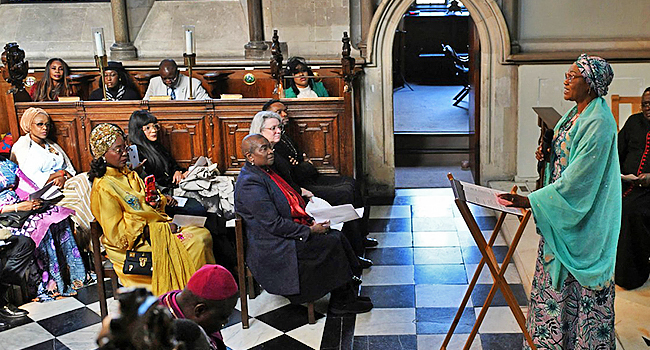
Meanwhile, discussions during the visit have also focused on religious tensions in Nigeria. Following global attention on allegations of Christian persecution in parts of the country, King Charles III and President Tinubu held talks with national and international interfaith organisations at Vicars’ Hall in Windsor, London, aimed at finding solutions to the crisis.
According to the royal family, the meeting included Nigeria’s First Lady, Oluremi Tinubu, as part of engagements during the state visit.
Speaking at the state banquet, Tinubu highlighted the contributions of Nigerians living in the United Kingdom, describing them as one of the most dynamic diaspora communities globally.
Within the UK’s National Health Service, he noted the role of Nigerian medical professionals, saying: “Nigerian-trained doctors are among the largest groups of international medical professionals serving the NHS.”
The president also acknowledged security challenges linked to terrorism in the Sahel region and stressed the importance of cooperation with Britain.
“In confronting these threats, partnership with the United Kingdom remains essential and I look forward to my meeting with Prime Minister Kier Starmer tomorrow (today). Despite these challenges, Nigeria approaches the future with hope and confidence. We are a nation of diverse and vibrant people, of young people dreaming big, of entrepreneurs with a global outlook, and of a hopeful people determined to realise their full potential,” he added.
King Charles III also recognised Nigeria’s growing importance to the UK, noting expanding economic ties between both countries.
The state visit — the first by a Nigerian leader to the UK in 37 years — is aimed at strengthening bilateral relations and building partnerships considered economically beneficial to both nations.
Nigeria’s Minister of Information, Mohammed Idris, said the trip is focused on transforming a long-standing relationship into a modern economic alliance.
Ahead of the visit, the British Commission in Lagos announced that both countries had finalised several major investment agreements expected to create hundreds of jobs. The report also listed fintech companies, banks and creative industry players planning to expand operations across Britain.
During the visit, Tinubu is also expected to witness the signing of a £746 million agreement between Nigeria and the UK to revamp the Lagos ports in Apapa and Tin Can Island.
Both countries are also seeking deeper cooperation in immigration, security, education, healthcare and cultural exchanges.
However, the visit has also drawn reactions from civil society groups. The Socio-Economic Rights and Accountability Project (SERAP) urged King Charles III to raise concerns about what it described as “serious and continuing violations of human rights and the shrinking civic space in Nigeria.”
In an open letter signed by SERAP deputy director Kolawole Oluwadare, the organisation asked the monarch to encourage Nigerian authorities to withdraw Strategic Lawsuits Against Public Participation (SLAPP) suits filed against journalists, activists and civil society groups.
SERAP stated: “Nigeria, as a member of the Commonwealth, has committed to uphold the values set out in the Commonwealth Charter, including respect for human rights, democracy and the rule of law. Respect for Commonwealth values must be reflected in practice, not only in commitments.”
The group also criticised the continued use of laws such as the Cybercrimes Act and criminal defamation provisions to target peaceful expression.
Meanwhile, some Nigerians have questioned the size of the presidential delegation accompanying Tinubu, which includes several state governors, the Senate president and key ministers overseeing finance, defence, trade, investment and tourism. Critics argue the large entourage could strain public resources, while supporters say the trip may yield long-term economic benefits.
Concerns were further heightened after reports that bandits attacked the villages of Falale and Kadobe in Jibia area of Katsina State, killing at least 15 people while the state governor was in the UK.
Despite the criticism, the visit has featured ceremonial engagements, including a reception by senior members of the British royal family such as the Prince and Princess of Wales.
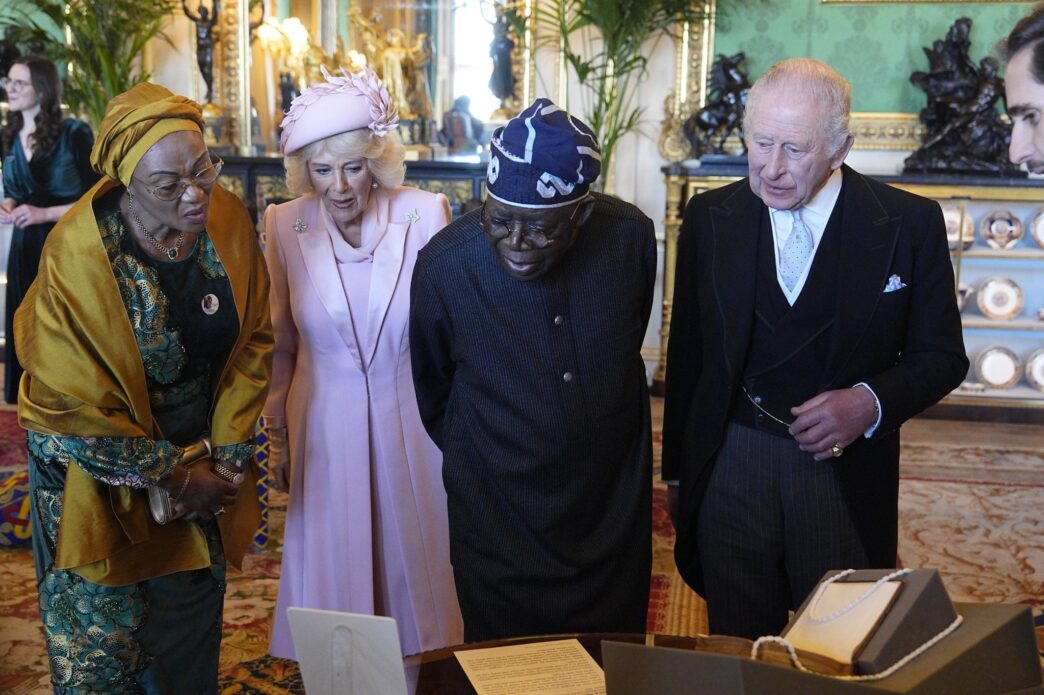
The Nigerian delegation also viewed items from the Royal Collection, including a Yoruba throne, sculptures, paintings and a manuscript by Nigerian writer Ben Okri, with gifts exchanged to symbolise cultural ties between both countries.
In a notable adjustment to the traditional schedule, King Charles III dropped the formal lunch in respect of Ramadan, allowing Tinubu, a Muslim, to observe fasting before attending the state banquet later in the evening.
The last state visit by a Nigerian leader to the UK took place in 1989, when Queen Elizabeth II hosted then military ruler Ibrahim Babangida in London.
Meanwhile, Nigeria’s Minister of Education, Tunji Alausa, said progress is being made toward establishing a Nigerian campus of Coventry University.
According to him, the proposed campus — expected to be located in Alaro City in Lagos — will allow students to earn fully accredited UK degrees at lower cost without leaving the country.
He said the campus is expected to offer Bachelor’s and Master’s programmes across STEMM, Business and Technical and Vocational Education and Training (TVET), with admissions projected between the third and fourth quarters of 2026, subject to regulatory approvals. The initiative, he added, is aimed at strengthening Nigeria’s human capital and expanding access to global educational opportunities.