“A good head and a good heart are always a formidable combination.”
Nelson Mandela
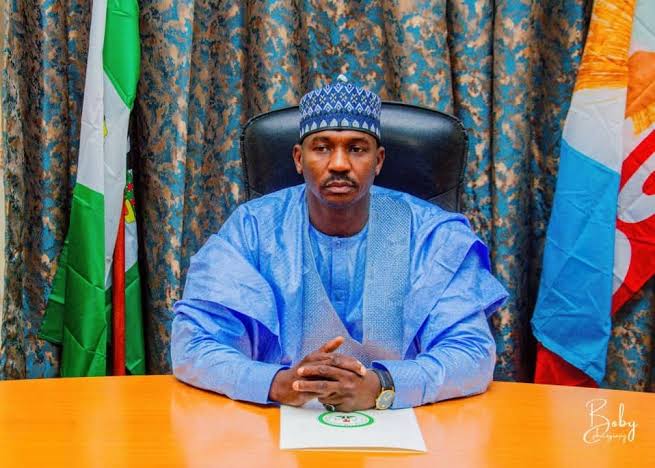
In many Muslim societies, the breaking of fast (Iftar) during the holy month of Ramadan is primarily a moment of spiritual reflection and communal nourishment—a quiet pause at sunset when families and neighbours gather after a day of devotion. In Sokoto State, however, this cherished tradition has taken on an additional dimension. Under the leadership of Governor Ahmed Aliyu, the Ramadan Iftar has evolved beyond a simple religious observance into a platform for engagement, reflection, and communication between government and the people of Sokoto State.
Through a series of Iftar gatherings organised throughout the Ramadan, Governor Aliyu demonstrated that the act of sharing a meal at sunset can and indeed did serve as a bridge between the government and the governed. Around the Iftar table, discussions extended beyond prayer and fellowship to crucial matters of governance, development, and the collective responsibility of building a greater Sokoto State. What might otherwise have remained a purely spiritual tradition was transformed into an opportunity for robust engagement, accountability, and policy communication.
During the Ramadan breaking of fast, Governor Aliyu threw open the doors of the Presidential Lodge to virtually every segment of society: commissioners and senior government officials, members of the legislature and judiciary, traders, youths and women, civil servants, local government officials, and resident communities. While each gathering retained the spiritual essence of Ramadan, the conversations were tailored to the participants, reflecting the expectations and responsibilities of each group in the broader project of the development of the state.
In leadership studies, Governor Aliyu’s approach reflects what scholars would describe as transformational leadership. Leadership thinkers like James MacGregor Burns and Bernard M. Bass explain transformational leadership as the ability of leaders to use vision, influence, and inspiration to elevate routine activities into opportunities to advance collective progress. Governor Aliyu’s Ramadan engagements illustrate this principle in practice. By reimagining a familiar religious gathering as a forum for interaction and reflection, he created an atmosphere where governance could be discussed openly and citizens reminded of their shared stake in the future of the state.
Governor Aliyu deserves commendation for transforming what might otherwise have remained a purely spiritual tradition into a strategic engagement platform—one that enabled him to highlight his numerous achievements, reinforce policy direction, and the building of a consensus for the future.
For members of the State Executive Council, permanent secretaries, and other senior officials, the governor’s message during these gatherings centred on responsibility and service delivery. The governor also reaffirmed his administration’s commitment to youth empowerment through job creation and skills development, highlighting the thousands of youths and women who have benefited from vocational and entrepreneurial training programmes. The establishment of the Ministry for Skills Acquisition and Entrepreneurship, he noted, reflects the administration’s conviction that productive citizens form the backbone of a stable and prosperous society.
At the same time, the civil service – Permanent Secretaries, Secretaries, and Directors-General – were reminded of their pivotal role as the engine room of government. He reminded them that without an effective and disciplined bureaucracy, policies would remain brilliant ideas on paper without making the desired impact on the people’s lives.
Governor Aliyu, in emphasizing the need for transparency, diligence, and professionalism in public service, cautioned against corruption, indolence, and lateness to work due to the damage they can wreak, and the high standard expected of those entrusted with the trust of implementing the agenda of the administration. In return, he reassured civil servants of his administration’s commitment to their welfare, citing the prompt payment of salaries and pensions as well as the efforts to clear inherited gratuity backlogs.
The Iftar with the legislature, and the judiciary, the other two arms of government, underscores the importance the governor places on institutional harmony and respect in governance. While it is customary in Sokoto State for the governor to host the other two arms of government during Ramadan, this year’s meeting reinforced the collaborative spirit that is necessary for effective governance. Governor Aliyu acknowledged the role of lawmakers in enacting consequential laws that have supported the development initiatives of his administration and commended the judiciary for its dedication to justice and stability within the state.
The business community also featured prominently in the governor’s Ramadan interactions because of Governor Aliyu’s pro-business stance and conviction that a thriving private sector is the engine room of Sokoto’s economic growth. Recognising this central role of commerce in the state’s economy, Governor Aliyu used the opportunity to engage with the leadership of the traders’ associations and to reaffirm his administration’s commitment to creating a supportive environment for enterprise. He announced to the delight of the traders that financial grants were ready for disbursement and assured them of the speedy reconstruction of the burnt section of the Sokoto Central Market. These steps, beyond restoring commercial activity, signal a broader policy direction that views a thriving private sector as essential to economic growth and job creation.
Young people, who constitute a large share of Sokoto’s population, were equally central in the governor’s Ramadan outreach. Addressing them during the special Iftar gathering, Governor Aliyu stressed the importance of education—both Islamic and Western—as the foundation for societal progress. He encouraged the youths to take advantage of the opportunities provided through skills training initiatives to play an active role in the development of the state. Discipline, education, and self-improvement, he reminded them, remained the surest pathways to personal and collective advancement.
Inclusivity also emerged as a defining theme of the governor’s Ramadan engagements, particularly in his interactions with the resident communities living in Sokoto. The Aliyu administration has abolished the long-standing indigene–non-indigene dichotomy in the delivery of government services, affirming that access to opportunities and social programmes should not be determined by origin but by residency and contribution to the state.
One of the clearest expressions of this policy is in the education sector, where the government pays school fees for students without discrimination between indigenes and non-indigenes. This approach reflects a broader philosophy that every child living in the state deserves the same opportunity to learn and succeed. Infrastructure projects have also been executed in communities largely occupied by non-indigenes, reinforcing the administration’s commitment to fairness and balanced development across the state.
Addressing resident communities through Alhaji Bello Sifawa, the Secretary to the State Government, the governor reiterated a message that is central to his administration’s governance philosophy: Sokoto belongs to everyone who lives in it and contributes to its progress. He reassured his guests that the government does not and would not discriminate in the provision of essential services such as education, healthcare, and social welfare. In a diverse society, such affirmations go a very long way in strengthening trust and reinforcing a shared sense of belonging among residents.
Beyond the banquet halls and formal addresses, Governor Aliyu didn’t forget the ordinary people whose primary concern was simply to have a proper meal to break their fast. He ensured that the feeding centres established across the metropolis operated efficiently and that they consistently served quality meals, demonstrating a practical, hands-on approach to governance.
This year, the state government expanded the initiative from 155 to 170 feeding centres strategically located across the city. To assess the quality and quantity of food served, the governor personally inspected several of the feeding centres – at Clapperton Road, Lodge Road, Gidan Dallatu, Specialist Hospital, and Madunka. Through these centres, more than 34,000 meals were served daily to the poor and vulnerable residents who might otherwise have struggled to secure a nutritious meal at the end of the day. Backed by a commitment of one billion naira, the programme which was designed to ensure that thousands of residents could break their fast definitely achieved the goal.
Taken together, these Ramadan engagements reveal an important dimension about leadership. First is that governance is not all about policies and projects but also about empathy. By sharing a table with different segments of the society, the governor created opportunities to explain government decisions, acknowledge concerns, and strengthen mutual understanding.
In a state where religion and governance often intersect, the Ramadan Iftar has certainly become more than a religious ritual. It has evolved into a platform for dialogue, social solidarity, and policy communication. Through these gatherings, citizens were reminded not only of the spiritual lessons of the Ramadan but also of their responsibility in the building of a prosperous and inclusive Sokoto State.
Ultimately, the evening meal that marks the end of the daily fast might have lasted only some hours, but the conversations and commitments that emerged around it will continue to shape the direction of governance long after the plates have been cleared. In Sokoto State, this year’s Ramadan demonstrated that leadership, like faith itself, can inspire reflection, compassion, and a renewed commitment to the common good.
Gatekeepers News is not liable for opinions expressed in this article; they’re strictly the writer’s