

Nigeria is home to some 20 million children who should be in classrooms receiving basic education, but sadly, they are not able to do so. It is also known that Northern Nigeria harbours 80 percent of the countrys out-of-school children, of which Sokoto, Kano and Kebbi states are particularly worrisome cases.
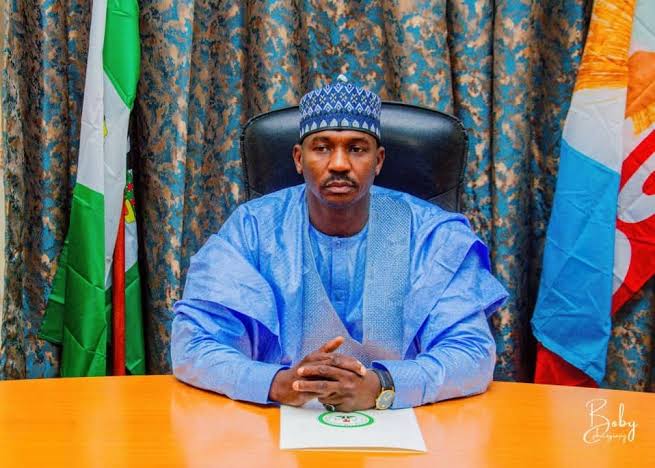
When Governor Ahmad Aliyu assumed office in Sokoto State on May 29, 2023, the very high number of out-of-school children in the state was just one of the many daunting education challenges he inherited. Other challenges included dilapidated physical structures, severe teacher shortages and socio-cultural barriers to the formal school system which connotes westernization. Poverty and the popular acceptance of the faith-based Almajiri alternative education system also helped in keeping hundreds of thousands of children away formal learning opportunities, in Sokoto and other states in the region.
In response these challenges, the Governor Ahmad Aliyu administration has embarked on a series of policy reforms and targeted programmes designed to bring children back into school, expand access to learning, and rebuild confidence in the public education system. These initiatives ranging from free education policies to modern school construction and reforms of the Almajiri system form a central pillar of the governors broader development agenda.
To appreciate the effort of the Aliyu administration, it is necessary to delve a little deeper into the scale of out-of-school children in Sokoto state. Over the years, the state has struggled with low enrollment rates and high dropout levels. According to education stakeholders, a large proportion of school-age children, especially girls and Almajiri pupils, remain outside formal education.
Many families cannot afford school expenses, even when tuition is minimal or completely absent. Others families rely on children for street trading or household labour. In rural areas, the lack of nearby schools and qualified teachers discourage enrollment. Some recent assessments show that 66.4 percent of school-aged children in the state are out of school, highlighting the urgency of the decisive actions that Governor Aliyu and his team has taken.
Governor Aliyus administration has, therefore, adopted a multi-dimensional approach, combining policy reform, infrastructure development, community engagement, and technology-driven data systems.
One of the most significant early steps taken by the Sokoto government was the declaration of free and compulsory basic education across the state. Under the new policy, the government abolished school levies in public schools, removing one of the major financial barriers preventing parents from enrolling their children.
For many poor households, even small fees, such as examination charges or levies for school maintenance, can discourage school attendance. By eliminating these charges, the state government aimed to ensure that every child, regardless of family income, can attend school.
The policy also reinforces the legal obligation of parents and guardians to send their children to school, aligning Sokoto with national efforts to achieve universal basic education.
Perhaps the most innovative component of the Aliyu administrations strategy is the reform and integration of the Almajiri education system. For centuries, the Almajiri system has been a traditional form of Islamic education in northern Nigeria. While it preserves religious scholarship, critics argue that it often leaves children without formal literacy, numeracy, or vocational skills. Many Almajiri pupils are forced into street begging to survive.
Governor Aliyu has sought to address this challenge by establishing integrated schools that combine Quran education with modern academic instruction. Pilot programmes have been launched in communities such as Shuni and Wamakko, where Almajiri pupils are enrolled in structured learning environments that include Quranic studies, basic literacy and numeracy, vocational training and life skills education. These schools also provide accommodation and feeding, helping to remove the need for children to beg on the streets.
Importantly, the programme has been implemented in collaboration with the Sultanate Council and religious leaders, ensuring community support and cultural acceptance.
Another key initiative has been the comprehensive profiling and registration of out-of-school children across the state. Through a statewide mapping exercise covering all 23 local government areas, the government identified large numbers of children who were not attending school.
This data-driven approach allows policymakers to identify where out-of-school children are concentrated; design targeted interventions for specific communities and monitor enrollment progress.
By the end last year, 2025, the governments data dashboard had recorded more than 326,000 out-of-school children, enabling authorities to track and address the problem systematically. Such digital monitoring tools, supported by international partners, represent a significant shift from previous approaches that relied on rough estimates rather than verified data.
The Governor Ahmad Aliyu administration has also emphasized the importance of Early Childhood Care and Education (ECCE). Education experts say they believe that children who receive early learning opportunities are more likely to remain in school and succeed academically.
To strengthen this foundation, the Sokoto State Universal Basic Education Board has expanded and improved ECCE centres across the state. With support from development partners, 160 early childhood centres were either started or strengthened through the provision of teaching materials and caregiver training, with plans to expand the programme further. The goal is to ensure that children begin structured learning from ages three to five, rather than entering school late or missing education entirely.
Infrastructure development has been another major focus of the governments education strategy. To address overcrowded classrooms and limited learning facilities, the Sokoto government has begun constructing large mega model schools across the states three senatorial zones. Among the projects already underway are: Aliyu Magatakarda Model Primary School in Wamakko; Muhammad Sambo Model Primary School in Goronyo and the Government Day Junior Secondary School in Tambuwal.
Each school is designed to include up to 60 classrooms, laboratories, and recreational facilities, occupying land areas of more than 35,000 square metres. These modern facilities are expected to accommodate thousands of pupils and create an environment that encourages enrollment.
While infrastructure is important, education experts emphasize that teachers remain the backbone of any effective school system. Recognizing this, the Sokoto government initiated a process to recruit and deploy thousands of qualified teachers. Approximately 3,000 teachers underwent screening and evaluation before being assigned to new schools, vocational centres, and special learning programmes.
In addition to recruitment, the government has also introduced professional development programmes; improved teacher motivation through better working conditions and addressed promotion backlogs and training opportunities.These reforms are designed to ensure that children who return to school receive quality instruction.
In 2025, the Sokoto government under Dr Aliyu Ahmad launched the Digital Village Initiative, a programme aimed at equipping vulnerable children with digital and technological skills. The initiative targets Almajiri pupils and out-of-school girls, providing training in basic computer literacy and modern technology. The programme reflects the administrations recognition that education in the 21st century must extend beyond traditional classrooms.
By exposing children to digital skills early, the government hopes to prepare them for future opportunities in the modern economy.
Another innovative policy introduced by the Aliyu administration is the establishment of Second Chance Education Centres, particularly for girls who previously dropped out of school. These centres offer flexible learning opportunities that allow young women to complete basic education, acquire vocational skills and reintegrate into formal schooling. A programme of this nature is highly recommended to states in the core North where early marriage, poverty, and cultural barriers often prevent girls from completing their education.
Beyond building new schools, the Sokoto government has also focused on renovating and upgrading existing education infrastructure. Education has consistently received the lions share of the states annual expenditure profiles, and huge allocations have been directed toward: rehabilitating damaged classrooms; installing electricity and water supply in schools; replacing worn-out furniture and providing laboratories and workshops.
These improvements are part of a long-term plan to modernize the entire education system and make public schools more attractive to families. As shown in the monitoring reports, better facilities do significantly improve attendance and retention rates, thereby reducing the number of school-age children outside the classrooms.
The Sokoto State government has also partnered with international organisations to address the out-of-school crisis. Agencies such as UNICEF and the European Union have supported education reform initiatives in the state, including teacher training, early childhood education programmes, and data-collection system. These partnerships provide technical expertise, funding, and monitoring mechanisms that strengthen government efforts.
One of the most critical aspects of the reform strategy is community engagement. Education policies often fail when they are imposed without grassroots support. Recognizing this, the Aliyu administration has worked closely with traditional rulers, religious leaders and community-based organisations
Through dialogue and sensitization campaigns, the government has sought to convince parents of the long-term benefits of formal education. Such engagement is especially important in reforming the Almajiri system, which is deeply rooted in northern Nigerian culture.
Although the reforms are still in progress, early signs suggest that Sokotos education sector is beginning to change. New schools, teacher recruitment, and expanded early childhood programmes have already increased enrollment in several communities. Stakeholders believe that the Ahmad Aliyu administration is headed in the right direction and that consistent implementation of these policies could significantly reduce the number of out-of-school children in the coming years.
Though significant challenges still remain, the Governor Ahmad Aliyus approach to tackling the out-of-school crisis reflects a broader understanding that education is the foundation of social and economic development. Without educated citizens, efforts to modernize agriculture, industry, and public institutions will struggle to succeed.
By expanding access to education, integrating the Almajiri system, building modern schools, and recruiting teachers, the Sokoto government is attempting to break the cycle of poverty and illiteracy that has affected many generations.
The reforms may take years to fully transform the states education landscape. But if sustained through the full eight years of Dr Ahmad Aliyu Sokotos regime, they could mark a turning point in Sokotos long struggle to ensure that every child has the opportunity to learn, grow, and contribute to society.
Gatekeepers News is not liable for opinions expressed in this article; they’re strictly the writer’s