


BACKGROUND OF THE CASE:
The background of the Freedom of Information Act (FOIA) requests filed by American transparency activist Aaron Greenspan traces back to a decades-old 1993 civil forfeiture case in Chicago involving Nigerian President Bola Ahmed Tinubu.
The historical timeline, the core of the original 1993 case, and how it evolved into the current U.S. federal lawsuit include the following:
THE ORIGIN OF THE FORFEITURE CASE:
The root of the issue began in the late 1980s and early 1990s when the U.S. Drug Enforcement Administration (DEA) and the FBI investigated a white-heroin trafficking ring operating out of Chicago and Indiana.
While the current legal battle and transparency requests focus heavily on Bola Ahmed Tinubu himself, the original 1990s U.S. federal investigation into the Chicago-area heroin ring named four key individuals;
MUEEZ ADEGBOYEGA AKANDE: Identified in historical IRS and DEA investigative affidavits as a central figure running the narcotics operation and connecting funds to various accounts.
ABIODUN AGBELE: An associate who was arrested by U.S. authorities after selling white heroin to an undercover DEA agent, whose subsequent cooperation exposed further links within the financial network.
LEE ANDREW EDWARDS: A distributor whose Indiana home was raided by DEA agents in 1990, uncovering weapons, cash, and heroin traced back to the Chicago network.
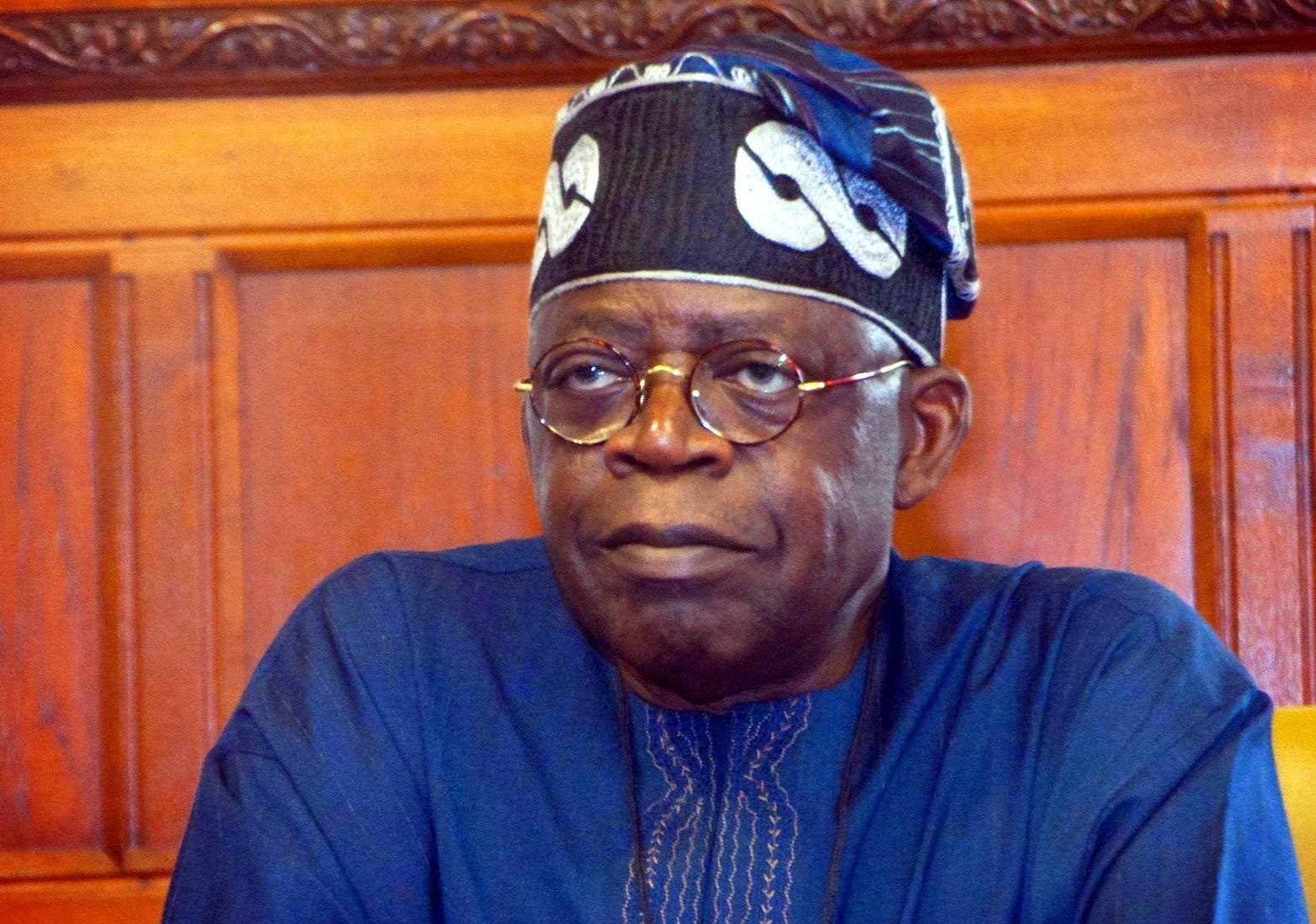
BOLA AHMED TINUBU: whose bank accounts were subjected to the $460,000 civil forfeiture.
THE ALLEGATIONS:
Federal authorities alleged that the network was routing illicit proceeds through several U.S. bank accounts.
During the investigation, accounts controlled by Bola Tinubu (who was then living and working in the U.S.) were linked to the suspected funds.
THE FORFEITURE SETTLEMENT:
In July 1993, the U.S. government filed an in rem civil forfeiture action against the accounts. Rather than going to a full trial, the matter was resolved through a compromise settlement. Under the terms of the decree, $460,000 was forfeited to the United States government on the grounds that the funds represented proceeds of narcotics trafficking or money laundering.
The remaining balance of over $1 million across disputed accounts was released back to Tinubu.
No Criminal Conviction: Crucially mirroring the mechanics of civil forfeiture, the case was handled entirely as a lawsuit against the money itself, not the person.
Tinubu was never criminally charged or convicted of a crime in connection to this investigation.
GREENSPAN FOIA REQUEST:
Between 2022 and 2023, Aaron Greenspan (founder of the transparency platform PlainSite) submitted 12 separate FOIA requests to six different U.S. federal agencies, including the FBI, DEA, IRS, CIA, Department of State, and the Executive Office for U.S. Attorneys.
THE SCOPE OF THE REQUEST: Greenspan sought full access to the raw investigative dossiers, interview logs (specifically FBI Form 302 files), and internal correspondence from the 1990s drug-ring probe.
THE TARGET:
His requests targeted files on four specific individuals linked to the historical case files, chief among them being Bola Tinubu.
WHAT IS THE POSITION OF THE LAW AS ITS OPERATES IN AMERICA?
FBI’S LEGAL DEFENSE.
THE GLOMAR STAND-OFF LAWSUIT:
A Glomar response is a specialized legal tool used by U.S. government agencies dealing with Freedom of Information Act (FOIA) requests.
Instead of handing over documents or officially stating they do not exist, the agency states that it can “neither confirm nor deny the existence” of the requested records.
It is designed to protect personal privacy, national security, or ongoing intelligence methods.
The Stand-Off:
When Aaron Greenspan submitted FOIA requests seeking raw dossiers on Tinubu’s connection to the 1993 Chicago civil forfeiture case, both the FBI and DEA issued Glomar denials.
They argued that even confirming whether an investigation file existed under Tinubu’s name would be an unwarranted invasion of his personal privacy.
Greenspan refused to accept this, resulting in a standstill that forced the dispute into the U.S. federal court system.
The Lawsuit and Turning Point: Greenspan filed a formal lawsuit against the agencies in the U.S. District Court for the District of Columbia.
The turning point came when U.S. District Judge Beryl Howell rejected the government’s Glomar defense.
The court ruled that because the public record already officially documented the 1993 settlement where $460,000 was forfeited from Tinubu’s accounts, it was “neither logical nor plausible” for the FBI and DEA to pretend they could not confirm an investigation took place.
Judge Howell officially lifted the Glomar shield and ordered the agencies to begin searching for and processing the actual documents
CURRENT STANDING IN AUGUST 2026
The case has become a critical battleground because Tinubu is now the sitting President of Nigeria, significantly raising the public interest factor.
The legal clash is currently divided into two fronts:
THE FBI PUSHBACK AND TINUBU’S INTERVENTION:
The FBI submitted a confidential, ex parte explanation directly to Judge Howell. The Bureau argues that heavily redacting or withholding certain files is necessary under FOIA Exemption 7(F), claiming that exposing decades-old informant names or investigative techniques could endanger lives or trigger violent retaliation.
Tinubu’s Intervention:
President Tinubu has consistently maintained his innocence whilst denying any wrongdoing and has formally joined the suit as an intervening party, deploying a 16-page legal defense to block the raw files from being unsealed, arguing the records are being weaponized for political gain in Nigeria while violating his fundamental privacy rights.
Represented by his legal team, Tinubu submitted a 16-page court response before the United States District Court for the District of Columbia opposing a motion for summary judgment filed by Aaron Greenspan.
TINUBU’S KEY ARGUMENTS:
Invasion of Privacy Rights: Tinubu’s lawyers argue that releasing his entire FBI file and Form 302 interview records from the 1990s would severely infringe upon his personal privacy rights. They contend that the Freedom of Information Act (FOIA) is intended to monitor U.S. government activities, not to expose the private records of individual citizens.
Dismissal of “Government Cover-Up” Claims: The defense explicitly rejects Greenspan’s assertions of a secret criminal prosecution or a government cover-up, calling them completely unsubstantiated and unsupported by factual evidence.
Political Exploitation in Nigeria: His legal team argues that the FOIA suit is being weaponized as a political tool to mine private records for use in Nigerian domestic politics rather than for genuine public oversight of U.S. federal agencies.
IS THERE A WARRANT TO ARREST PRESIDENT TINUBU IN AMERICA?
Someone asked me if it’s true that there’s a warrant to arrest President Bola Ahmed Tinubu in the United States just like former Venezuela President Nicolás Maduro, currently in detention in US.
Some even argued that if that happens, APC will lose its presidential candidate to pave the way for Atiku Abubakar. Remember, according to President Tinubu “all is fair in politics” so na politics all of them de play
WHAT HAPPENED?
Like I said earlier above, what occurred was a Freedom of Information Act (FOIA) lawsuit: filed by Aaron Greenspan against Executive Office for U.S. Attorneys and others requesting the FBI’s file on Tinubu. On August 20, 2026, Judge Beryl Howell allowed the FBI to submit its justifications privately, under seal, for confidential review.
On August 28, the FBI filed a Notice of Compliance confirming it had hand-delivered those sealed declarations. The FBI did not “clear the air” or “release” 399 pages to the public as they have consistently argued that releasing the information would expose decades-old informant names or investigative techniques which could endanger lives or trigger violent retaliation amongst drug traffickers.
The source that some people are quoting as a “Senior Government Advisor” who was said to have released the 399 pages is actually Von Batten-Montague-York, L.C., a Washington lobbying firm retained by Atiku Abubakar and he is not an independent government advisor so for the purpose of our class, we will take him to be working for the politicians that paid him in Nigeria, so take some of these statements with a pinch of salt.
TYPES OF FORFEITURE IN LAW:
Criminal Forfeiture and Civil Forfeiture:
Criminal forfeiture requires a criminal conviction of a person, while civil forfeiture is a lawsuit filed directly against the property itself without needing a criminal charge or conviction.
Criminal Forfeiture Target: It is an in personam action against a specific person.
Requirement: The government must first charge and convict the defendant in a criminal trial.
Timing: It happens during the sentencing phase as part of the punishment.
Standard of Proof: The government must connect the property to the crime based on the criminal standard, tying it to the specific counts of conviction.
Civil Forfeiture Target: It is an in rem action against the property itself, meaning the property is treated as the defendant (e.g., United States v. $10,000).
Requirement: No criminal charge or conviction of the owner is required.
Standard of Proof: The government only needs to show a preponderance of the evidence (or probable cause in initial phases) that the property is linked to a crime.
Process: The owner (now called a claimant) must step forward and prove their property is innocent or unrelated to illegal activity to get it back.
TYPES OF CIVIL FORFEITURE:
When the government pursues asset forfeiture without requiring a criminal conviction, the process is broadly categorized under non-conviction-based forfeiture.
Depending on how the case is handled and what is being seized, there are three main types of civil asset forfeiture:
Administrative Forfeiture (Non-Judicial)
This is the most common type of federal asset forfeiture. It allows an executive law enforcement agency (like the FBI, DEA, or Customs) to forfeit property without ever filing a lawsuit in court.
How it works: The agency seizes the property based on probable cause and sends a direct notice to the owner while publishing it publicly.
If no one files a formal legal claim to contest it within the strict deadline, the agency automatically takes permanent ownership.
Restrictions: It can generally only be used for personal property, cash of any value, or assets worth less than $500,000. Real estate (like houses or land) cannot be forfeited administratively.
Civil Judicial Forfeiture.
This is a formal, civil lawsuit filed in a court of law. The government acts as the plaintiff, and the property itself is named as the defendant.
How it works: A federal or state prosecutor must file a case before a judge. The government must prove by a preponderance of the evidence that the property was linked to criminal activity.
When it is used: If an asset’s value exceeds the $500,000 threshold. If the government is targeting real estate.
Automatically if a property owner formally contests an administrative forfeiture, forcing the government to take the case to court.
Summary Forfeiture:
This is the most immediate type of civil forfeiture, occurring on the spot without any formal notice or court hearings.
How it works: It applies exclusively to contraband—items that are completely illegal to possess under any circumstance.
Examples: Illegal narcotics, unregistered automatic weapons, counterfeit money, or pirated goods. Because nobody can legally claim ownership of contraband, the government destroys or takes it immediately without providing a chance to win it back
HOW TO FIGHT A CIVIL ASSET FORFEITURE:
To fight a civil forfeiture claim, a property or money owner must actively contest the seizure in court, as civil forfeiture treats the property as guilty until the owner proves it is innocent.
Because these are civil proceedings, owners do not have the right to a public defender and must navigate strict, unforgiving legal deadlines.
Property owners generally use the following step-by-step strategy and legal defenses to win their property back:
➡️ Step 1: File a Formal Claim (The Most Critical Step)When an agency seizes property, they must send a written notice. The owner must immediately file a Verified Claim to stop the automatic administrative forfeiture.
Strict Deadlines: Under federal maritime and asset forfeiture rules, an owner typically has only 35 days from receiving the notice to file a formal claim.
The Penalty for Missing It: Missing this deadline results in a default judgment, meaning the government takes permanent ownership of the assets automatically without a hearing.
➡️ Step 2: Force the Government into Court:
Filing the claim forces the seizing agency to hand the case over to a prosecutor. At the federal level, prosecutors have 90 days from receiving the claim to either file a formal civil lawsuit against the property or return it.
➡️ Step 3: Assert Key Legal Defenses:
Once the case is in court, the owner (now the “claimant”) can deploy several legal strategies to defeat the forfeiture:
The “Innocent Owner” Defense: Created by the Civil Asset Forfeiture Reform Act (CAFRA), this is the most common defense.
The owner must prove by a preponderance of the evidence that they did not know about the illegal use of their property, or that upon learning of it, they took all reasonable steps to stop it. (Example: A rental car company proving they had no idea a renter used their vehicle for a drug transaction.)
Challenging the Criminal Nexus: The owner can present financial documents, bank records, or tax filings to prove the property has a completely legitimate source. If the government’s tie between the money and a crime is weak or purely circumstantial, the court must return the assets.
The Constitutional Defense (Excessive Fines Clause): Under the Eighth Amendment, an owner can argue that the forfeiture is grossly disproportionate to the gravity of the alleged offense. For example, seizing a $50,000 truck over a minor misdemeanor cannabis possession charge is an unconstitutionally excessive fine.
Illegal Search and Seizure (Fourth Amendment): If law enforcement violated constitutional rights during a traffic stop or home search to find the cash or property, the owner’s lawyer can file a motion to suppress the evidence, which usually collapses the government’s entire case.
CONCLUSION:
Unfortunately the records has consistently shown that the Tinubu 1993 case was a civil forfeiture case in Chicago involving $460,000 and more than $1m was returned to him.
He was never criminally charged and the Nigerian Presidential Election Petition Tribunal in 2023 also ruled that this forfeiture did not amount to a criminal conviction or disqualification.
Also a FOIA transparency lawsuit is not a criminal prosecution that would warrant indictment, arrest warrant, or any criminal charges to warrant arrest by US Government or any government at all.
Also we have explained in previous class,using the law who can file a petition to challenge the qualifications of a candidate in a Presidential election in Nigeria and under what circumstances.
Consequently, so far no law disqualifies, Tinubu, Peter Obi or Atiku, Sowore, Adebayo or any of the major Presidential candidates in the forthcoming election in Nigeria.
Na politics all of them still de play.
@Liborous Oshoma Esq