

LThere is a quiet but damning pattern in global diplomacy that Nigeria’s political class appears determined not to confront. For years, the presidents and prime ministers of the world’s most consequential powers have treated Abuja as optional. The United States has not sent a sitting president since George W. Bush in 2003. No British prime minister has made a full bilateral state visit in recent memory. France’s Emmanuel Macron last came in 2018 and has yet to return. China’s Xi Jinping has never set foot in Nigeria as president. Japan, South Korea, Germany, Canada, Australia, Russia and the major economies of Southeast Asia have likewise kept their top leaders away. Even continental peers of weight, Egypt, Morocco, Ethiopia and South Africa, have not made Nigeria a regular stop. Leaders from the Middle East have largely stayed away too. Saudi Arabia’s King Salman and Crown Prince Mohammed bin Salman, the UAE’s Sheikh Mohamed bin Zayed Al Nahyan and other Gulf rulers have not treated Abuja as a priority for reciprocal high-level state visits.
This is not a minor oversight. It is a sustained diplomatic snub. Nigeria is Africa’s most populous nation, one of its largest economies, a major energy producer, the political and economic heavyweight of West Africa and a country of enormous strategic weight. Its market of more than 220 million people, its position on the Gulf of Guinea and its influence within ECOWAS and the African Union should make it an obligatory destination. Instead, the world’s serious leaders largely fly over it, landing more readily in Nairobi, Accra, Kigali, Pretoria, Cairo or Rabat. When they engage Nigeria, it is often at the level of foreign ministers, special envoys or business forums rather than the full weight of a presidential or prime ministerial state visit.
The contrast is instructive. Smaller economies with clearer policy signals, more predictable governance and better security narratives routinely attract the very leaders who treat Nigeria as a difficult file. India’s Narendra Modi broke the pattern in November 2024, but that single visit only underscored how rare such attention has become. The same pattern appears in the expansion of BRICS. The grouping that began as BRIC, Brazil, Russia, India and China, added South Africa in 2010. Later enlargements brought in Egypt, Ethiopia, Iran, the United Arab Emirates and Indonesia as full members, with Saudi Arabia invited. African full members are therefore South Africa, Egypt and Ethiopia. Nigeria, Africa’s largest economy and most populous country, was left out of full membership and only later admitted as a partner country. The omission is telling.
Why does this happen? Part of the answer lies in perception, and perception is earned. Chronic insecurity creates risk calculations that no amount of demographic or economic weight can fully offset. Policy inconsistency, opaque regulation and a reputation for elite capture make long-term political commitment harder to justify. The optics of Nigerian leaders spending extended periods abroad while domestic challenges mount only reinforces the impression of a country more interested in being hosted than in hosting. Diplomacy is reciprocal; constant outbound travel without corresponding inbound prestige visits begins to look like solicitation rather than partnership.
Major powers prioritise countries that can deliver results: stable cooperation, predictable markets and coherent foreign policy. When Nigeria appears internally contested or diplomatically reactive rather than proactive, it slips down the priority list. The result is a self-reinforcing cycle: fewer high-level visits mean less political capital invested in the relationship, which in turn means fewer incentives for reform that would attract those visits.
This diplomatic snob cannot be blamed on the current administration of President Bola Ahmed Tinubu. It has been a pattern that has persisted with every president since 1999, when the Fourth Republic began, and even with former heads of state preceding it. Nigeria does not lack importance. It lacks the institutional seriousness that converts importance into diplomatic gravity. The world’s heavyweights are not obliged to visit. They visit where they see competence, continuity and mutual benefit.
A change in approach is overdue. Security must become non-negotiable. Economic governance needs credibility that survives beyond press releases. Foreign policy should be less reactive and more agenda-setting, with clear priorities and the cultivation of relationships that make visits mutually advantageous. The culture of elite travel excess must give way to a quieter, results-oriented diplomacy that values inbound prestige as highly as outbound presence.
Nigeria should stop waiting to be discovered and start presenting a compelling strategic proposition. It must become more valuable, by delivering security, predictable institutions, measurable outcomes from every major engagement and a deliberate programme of engagement with priority partners. The objective is not to collect photographs or complain about being ignored. The objective is to make Nigeria matter so that other leaders’ national interests require them to come.
For decades Nigerians have described their country as the Giant of Africa. Perhaps it is time to stop saying it and start behaving like one. A giant does not beg to be noticed. A giant builds the capacity that makes attention inevitable. The real question is not simply why more presidents and prime ministers do not visit Nigeria. It is what Nigeria is doing to make the world need it more than it needs the world’s attention. Until that conversion of potential into power occurs, the silence will continue and the snub will remain a mirror rather than a mystery. The choice is straightforward. Nigeria can remain a country that other leaders fly past, or it can become one they feel compelled to land in. That decision begins at home.
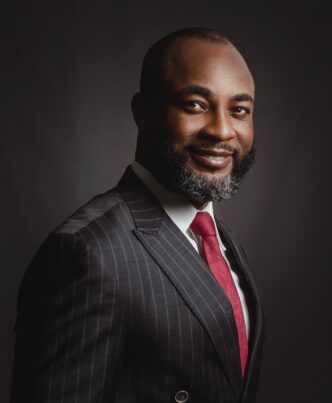
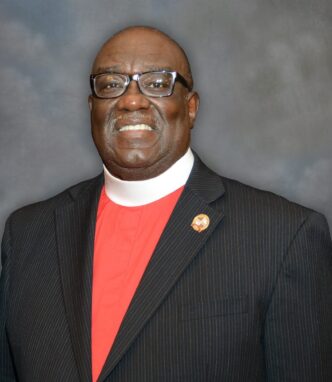
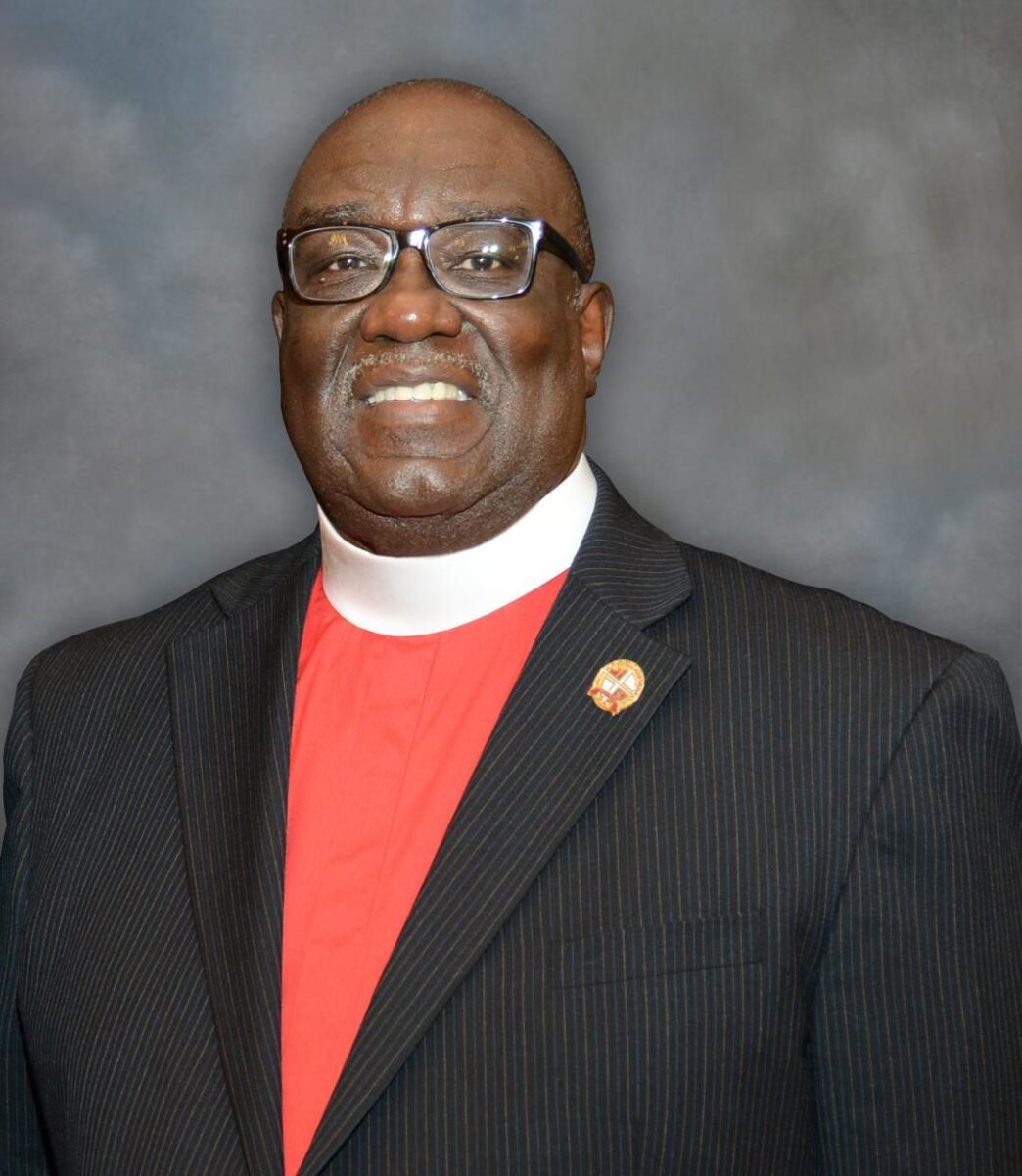
Capt. Bishop C. Johnson, US Army (rtd), is a National Defense and Military Strategist
Gatekeepers News is not liable for opinions expressed in this article; they’re strictly the writer’s.