

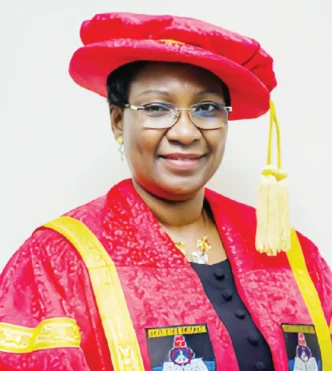
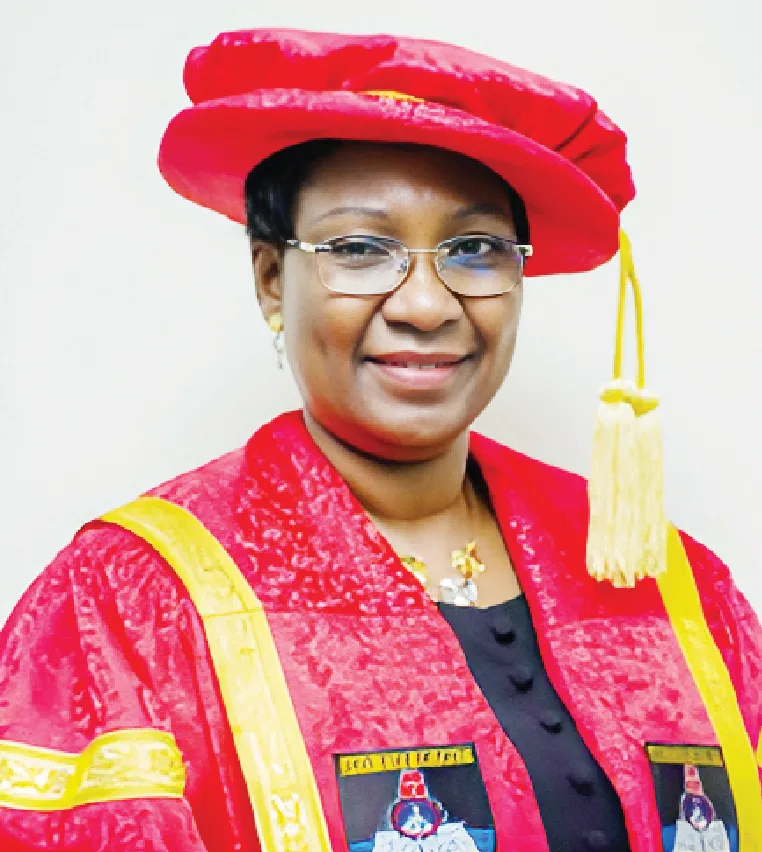
The immediate past Vice-Chancellor of Lagos State University (LASU), Ibiyemi Olatunji-Bello, has said public universities in Nigeria may need to charge at least N1 million in annual tuition per student to achieve financial sustainability.
Gatekeepers News reports that Olatunji-Bello made the submission in an interview with Punch, reflecting on her five-year tenure at LASU, which ended on Saturday.
The professor of physiology, who was appointed vice-chancellor in 2021, identified funding as one of the major challenges facing public universities, arguing that institutions seeking financial independence would need to substantially increase their internally generated revenue.
“Universities can achieve financial self-sustainability. If they can innovate and ensure improvements in the institution, money will come in.”
She, however, said generating revenue was only part of the challenge, noting that LASU was still dependent on external funding to meet its financial obligations.
“But then, if the money comes in, how do you spend it? Right now, LASU does not have financial self-sustainability.”
According to Olatunji-Bello, LASU’s monthly wage bill exceeds N1 billion, while its annual internally generated revenue (IGR) of N13 billion is not enough to cover salaries.
“So, universities that want to attain self-sustainability will have to increase school fees into millions.”
She compared the fees charged by some secondary schools with those of public universities, saying the disparity was difficult to sustain given the rising cost of running tertiary institutions.
“So, any public university that wants to sustain financial independence will have to charge school fees of not less than N1 million per student.”
Olatunji-Bello also argued that quality education requires adequate funding and urged parents to prioritise their children’s education.
“Good quality education needs money.”
Protest, UTME ranking
Reflecting on her tenure, Olatunji-Bello identified a 2024 students’ union protest over a N10,000 payment for computer-based testing as the lowest point of her administration.
She, however, described LASU’s emergence as the university with the highest number of UTME applications in 2025 as one of the highlights of her tenure.
“When JAMB declared that we were the most subscribed university by UTME candidates in Nigeria; that was great for me.”
She added that LASU retained the top position in 2026 and received N25 million for maintaining compliance with regulations set by the Joint Admissions and Matriculation Board (JAMB).
“And this year, 2026, we maintained that number one position. And not only did we maintain it, but we were even awarded N25m for maintaining compliance with JAMB regulations.”
Olatunji-Bello said her administration introduced new academic programmes, expanded digital processes and explored additional revenue-generating opportunities during her five-year tenure.
She said these initiatives helped increase LASU’s IGR from N3 billion to N13 billion.
New LASU Vice-Chancellor
Lagos State Governor, Babajide Sanwo-Olu, appointed Badejo Olawumi as Olatunji-Bello’s successor on September 10.
According to a statement by the Lagos State Commissioner for Information and Strategy, Gbenga Omotoso, Olawumi, a professor of guidance and counselling, was born on August 4, 1962.
Funding challenge
Olatunji-Bello’s comments come amid renewed calls for public universities to diversify their sources of funding as government allocations come under pressure.
On September 9, Education Minister Tunji Alausa urged vice-chancellors of public universities to seek alternative sources of funding, arguing that government resources alone cannot sustain tertiary institutions.
Alausa said universities could raise funds through alumni networks, research grants, philanthropy, endowments and partnerships with the private sector.
“To our Vice Chancellors: the era of waiting for the government to fund everything must end.”
He added:
“Build the structures. Mobilise the resources. Strengthen your institutions. That is your responsibility, and it must become part of your legacy.”