Sokoto State’s decision to validate its Health Labour Market Analysis (HLMA) report may appear, at first glance, like another technical exercise within the health bureaucracy. But the significance goes considerably beyond the two-day meeting at Sokoto Guest Inn. The exercise is about answering a practical question that has consequences for virtually every part of the state’s healthcare system: does Sokoto have the right health workers, with the right skills, in the right places, and in sufficient numbers to meet the needs of its people?
That is a more consequential question than simply asking how many doctors, nurses, midwives, pharmacists, laboratory scientists or other health professionals are on the state’s payroll. The real issue is whether the health system has the right mix of personnel, deployed where they are needed, working in facilities that are properly equipped and capable of providing the services for which they were established. A doctor without the necessary diagnostic equipment cannot effectively manage complex cases; a nurse cannot compensate for the lack of laboratory, a poorly functioning facility; without the basic infrastructure required for service delivery cannot, by sheer numbers alone, strengthen the system. For Sokoto State, therefore, the more meaningful measure of the administration’s investment in healthcare is whether its spending is translating into functioning facilities, adequate staffing, essential equipment, reliable diagnostics and treatment, and ultimately better access to quality care for people across the state.
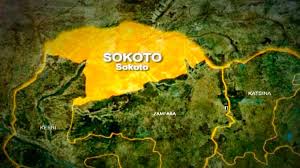
The distinction matters because the state does not operate a single healthcare facility serving its population of more than 7 million people. Its health system extends from primary healthcare facilities in local communities to secondary facilities and specialist hospitals in urban areas. The Ministry of Health also works alongside institutions such as the Sokoto State Primary Healthcare Development Agency (SSPHDA), Sokoto State Contributory Health Care Management Agency (SOCHEMA), Sokoto State Organisation for the Control of AIDS (SOSACA) and the Health Services Management Board.
The effectiveness of that system depends not merely on the existence of these institutions, but on whether the people, skills, financing and facilities required to make them function are properly aligned. This is what makes the HLMA particularly relevant to the health agenda of Governor Ahmed Aliyu.
The Sokoto State Ministry of Health says the analysis is intended to provide reliable data on the state’s health workforce, identify gaps and support informed decisions on workforce planning and management. At the validation meeting, Commissioner for Health, Dr. Faruk Umar Abubakar, said the analysis indicates that Sokoto has adequate personnel across various health cadres, while stressing the need for continuous assessment.
That finding requires some qualification. “Adequate personnel” at the state level does not necessarily mean that every facility has the personnel it needs. A workforce can be adequate in aggregate and still be poorly distributed. A community may have a functioning primary healthcare facility but lack the particular cadre required to provide a service effectively. A secondary facility may have nurses but not enough specialists. Another facility may have personnel but lack the equipment or supporting systems that allow those personnel to work productively.
This is where the value of the Sokoto State HLMA lies. It has moved the conversation beyond the crude question of how many health workers Sokoto State has to the more useful questions of where they are deployed, what services they provide, which cadres are in short supply, what skills will be required in the coming years, and what it will cost to sustain the workforce.
The same questioning has informed another important intervention: the bonding of medical professionals sponsored by the state for training. The logic is straightforward—if government invests in the training of health professionals, it must also ensure that the investment translates into service where the need is greatest. The bonding arrangement therefore provides a mechanism for retaining trained professionals within the state and directing their services to underserved rural communities, where inadequate manpower has historically been one of the weakest points in healthcare delivery.
For a state as geographically dispersed as Sokoto State, this is not an academic distinction. The distribution of health personnel can determine whether a woman in a rural community can access skilled maternal care, whether a child receives timely treatment, whether laboratory services are available when a diagnosis is required and whether a patient needing specialist attention can receive it without travelling unnecessarily long distances.
The point, therefore, is not that Sokoto needs to recruit people simply because recruitment is politically attractive. It needs to know where the additional personnel will produce the greatest improvement in healthcare delivery. That is a much more disciplined approach to public expenditure.
It is also consistent with the direction in which the state’s health institutions is moving. The Ministry of Health’s Planning, Research and Statistics Department now maintains specific functions around health research, human resources for health and strategic health data, while the ministry has also published an HRH report and a Health Sector Resources Optimization Plan.
The significance is that workforce planning is beginning to sit within a wider planning architecture rather than being treated as an isolated personnel matter.
That matters for Governor Ahmed Aliyu’s Nine-Point Smart Agenda, in which health development is one of the administration’s priorities. The important thing is that the system is becoming progressively more capable of delivering care.
The HLMA offers one way of advancing that commitment because its findings will eventually be connected to decisions that citizens can see and experience: recruitment, deployment, training, specialist coverage, retention, primary healthcare staffing and the allocation of health resources.
There is another reason the exercise deserves attention.Sokoto State is not starting from the assumption that healthcare can be transformed simply by building more structures. The state is simultaneously dealing with the condition of existing institutions and the capacity of the workforce operating within them. In August 2026, for example, the Commissioner inspected renovation work at Specialist Hospital, Sokoto, including the maternity ward, labour room, Infectious Disease Unit, Sardauna Ward and medical laboratory, while directing the restoration of services at the Infectious Disease Unit to assess the renovation.
That combination is important.A renovated maternity ward no doubt still requires midwives, nurses, doctors, laboratory personnel and other workers to function.just as a modern laboratory requires trained personnel to operate it. An improved primary healthcare facility requires staff who can provide the services for which the facility exists.
Infrastructure and workforce are therefore not competing priorities. They are complementary parts of the same health system.
This is precisely why the HLMA should not be regarded as another report produced by government to be filed away. Governor Ahmed Aliyu most certainly will work with the information which is delightful.
The Ministry of Health has said that the validation exercise is intended to reconcile data gaps, build stakeholder consensus around the health labour market and establish timelines for subsequent action. Representatives of the Global Fund and the Federal Ministry of Health have commended Sokoto’s participation in the exercise and are delighted because the state had emerged as the best-performing of the six pilot states implementing the HLMA.
That recognition is useful, but it is not the endpoint.The more important question is what happens after validation.
If the analysis identifies a shortage of particular cadres in particular locations, the response should be visible in recruitment and deployment. If it identifies skills gaps, training should follow. If it exposes retention problems, the government should examine the conditions responsible for losing trained personnel. If it reveals that certain facilities have personnel but cannot deliver particular services, the answer may lie in equipment, supervision, financing or referral arrangements rather than another round of recruitment.
That is where evidence-driven planning becomes different from just increasing expenditure. The objective is not to spend more because a sector has some problems. The objective is to understand what the money is supposed to achieve and whether the expenditure will produce the intended result.
This approach is particularly important for Sokoto’s primary healthcare system. The SSPHDA is a central part of the state’s health architecture, while the Ministry of Health, Health Services Management Board, SOCHEMA and SOSACA have responsibilities that intersect with different aspects of healthcare delivery. The presence of these institutions at the HLMA validation meeting is therefore significant. It reinforces the fact that workforce planning cannot be confined to one ministry department.
The same applies to health training. Sokoto State decision in 2026 to constitute governing councils for its College of Nursing and Midwifery in Sokoto and the College of Nursing Science, Tambuwal, also brings the question of workforce supply into sharper focus. Training institutions are ultimately part of the pipeline through which the state develops the nurses and midwives required by its health system.
This creates an important connection between education and healthcare policy. It’s important that the state wants to know not only how many health workers it requires today, but what its workforce needs will look like tomorrow—and whether its training institutions can contribute sufficiently to meeting those needs. That is the deeper value of the HLMA.
It provides the possibility of connecting several decisions that governments often make separately: how many people to train, whom to recruit, where to deploy them, which facilities to strengthen, what skills to develop and how much the state can sustainably finance.
For Sokoto State, the practical measure of success will eventually be found in the primary healthcare facility where a patient does not have to return because the required health worker is absent. It will be found in a maternity unit where skilled personnel are available when a woman arrives in labour. It will be found in a laboratory where trained personnel can provide the diagnostic support required by clinicians. It will be found in a specialist facility where patients can access the services for which the facility was established.
That is why the distinction between a health project and a health system matters,a project can be completed and commissioned. But a health system has to work every day.
The Ahmed Aliyu administration now has an opportunity to use the HLMA to strengthen that everyday system. The validated findings will provide a basis for a Sokoto-specific workforce strategy covering recruitment, deployment, training, retention, financing and performance.
The Ministry of Health has already identified the immediate outputs: a validated report, documented stakeholder corrections, consensus around key findings and an agreed timeline for action. The next stage is to ensure that those outputs do not remain as administrative conclusions.
For Sokoto State, the value of the exercise will ultimately be measured by what changes because the data was collected. That is the real promise of evidence-driven health planning: not more statistics for their own sake, but better decisions about people, facilities and resources.
If Sokoto State can make that connection—from data to decisions, from decisions to deployment, and from deployment to better care—the HLMA would have served its purpose. It would have become not merely an analysis of the state’s health workforce, but part of the institutional machinery through which the state can build a health system capable of responding more effectively to the needs of its people.
Gatekeepers News is not liable for opinions expressed in this article; they’re strictly the writer’s.