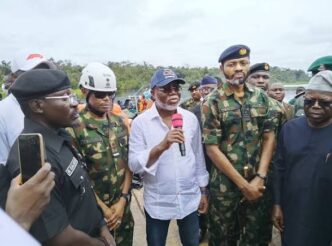
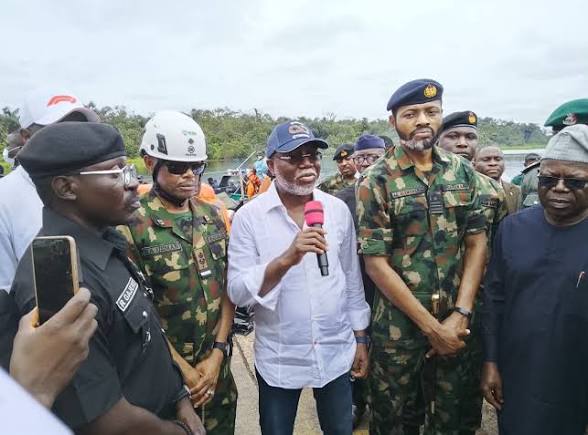
Lucky Aiyedatiwa, governor of Ondo, says the pilot of the Nigerian Air Force (NAF) aircraft that crashed in Igbokoda may have prevented a greater disaster by manoeuvring the aircraft away from the residential area before it crashed into a swamp.
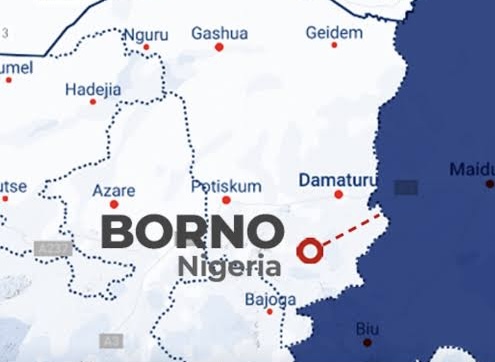
Gatekeepers News reports that the ATR-42 aircraft, with registration number NAF 931, crashed on Monday while on a routine flight from Benin City to Lagos, killing all 25 people on board, comprising five crew members and 20 passengers.
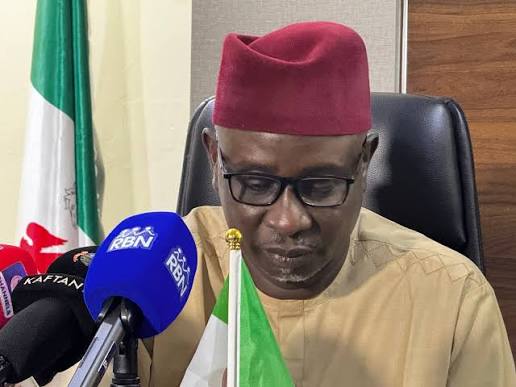
Aiyedatiwa made the remarks on Wednesday when he visited the crash site, where recovery operations were continuing.
According to the governor, residents at the scene told him the aircraft appeared to be heading towards the community before the pilot changed its course.
“From what the people told us, the aircraft was almost coming into the community, but the pilot managed to manoeuvre it away before it crashed about 200 metres from the community and went straight into the swampy area,” Aiyedatiwa said.
He added that residents reported hearing an unusual sound from the aircraft shortly before the crash, suggesting that it may have developed engine problems.
“It’s only the pilot that could have been able to tell the efforts put in place to be able to manoeuvre. Because people from the area could see the plane coming down, with a sound like a bad engine, almost landing within the community,” the governor said.
Recovery operations have entered their second day, with the difficult terrain around the crash site hampering efforts to locate the main wreckage and recover the remains of those killed.
Aiyedatiwa described the scene as a “very gory sight”, saying belongings of NAF personnel and fragments of the aircraft had been recovered and preserved for investigation.
“The main body of the aircraft has not been sighted. It is believed to be submerged in the swamp,” he said.
The governor said thick mangroves, murky water and deep mud had made access to the crash site difficult. He added that the main wreckage, including the cockpit and black boxes, had yet to be located.
To improve access to the area, Aiyedatiwa said he directed the state Ministry of Works to deploy two amphibious machines, popularly known as swamp buggies.
The machines are being used to create access through the waterways and enable larger boats to move closer to the crash site. They are also being used to excavate sections of the area in an effort to locate the submerged wreckage.
Meanwhile, navy personnel, divers and local residents have continued searching the deeper sections of the swamp.
“From construction experience and analysis of this area, for you to get to refusal level when you’re piling, it’ll get to about 30 metres deep,” Aiyedatiwa said, highlighting the depth and difficult terrain confronting rescuers.
The governor also raised concerns about pollution at the crash site, saying aviation fuel was still leaking into the water as recovery operations continued.