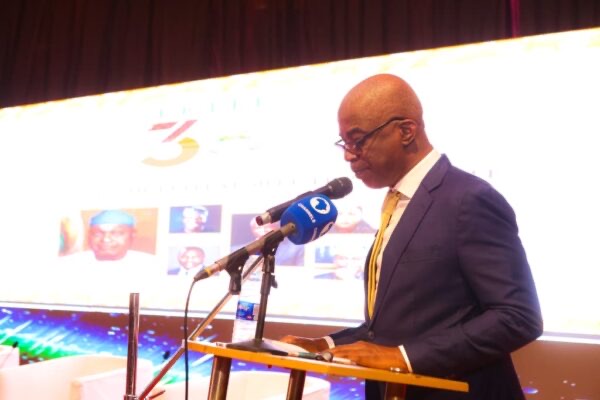
Dr Tunji Olowolafe, founder of the Tunji Olowolafe Foundation, has proposed the establishment of renewable energy-powered microgrids across Ekiti State’s 177 political wards to support schools, healthcare centres, workshops and small businesses.
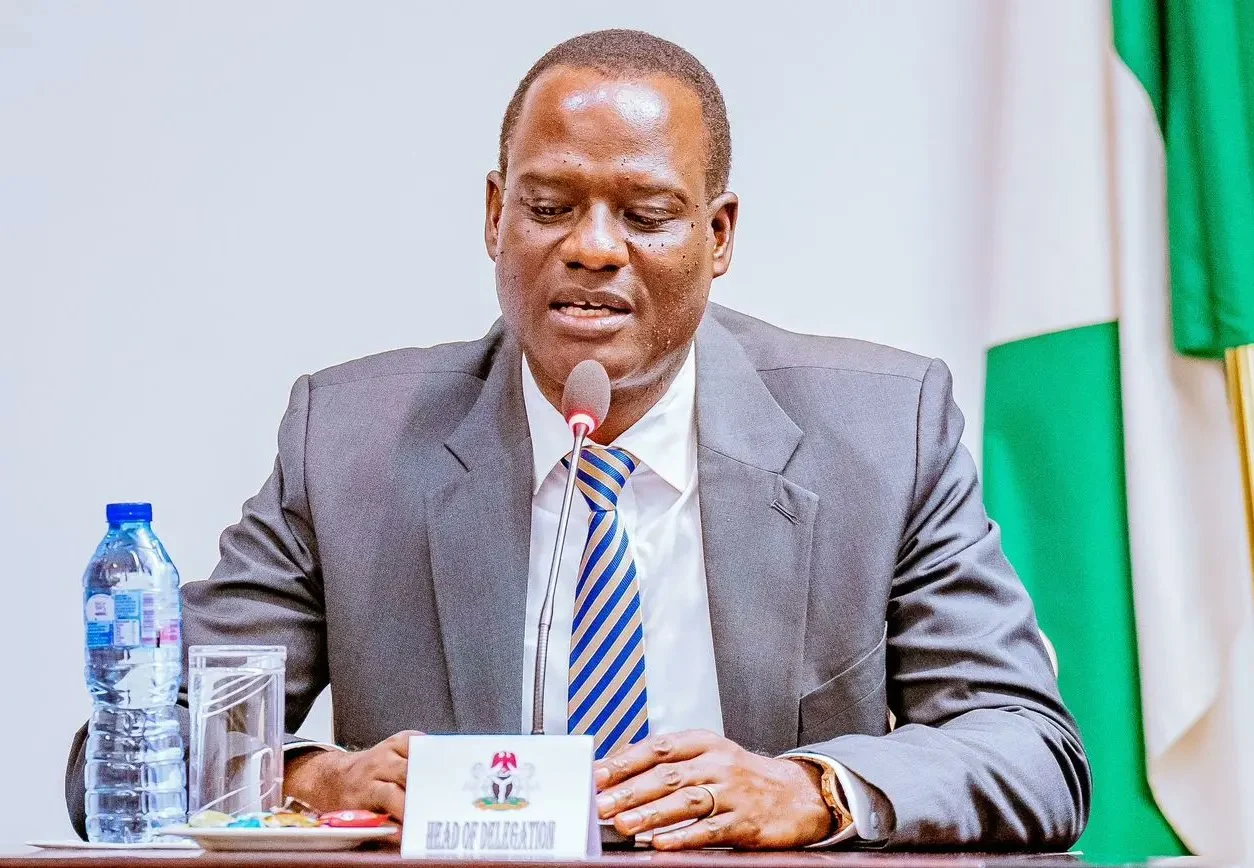
Gatekeepers News reports that Olowolafe made the proposal while delivering the lead paper at the Ekiti at 30 Future Summit, held at the Obafemi Awolowo Civic and Convention Centre in Ado-Ekiti on Wednesday, October 7.
In his presentation titled The Path to Ekiti’s Greatness: Opportunities, Choices, and Imperatives for the Next 30 Years, he said the state needed reliable electricity, practical vocational skills and stronger connections to industrial supply chains and international markets to translate its educational achievements into economic growth.
He proposed an immediate technical audit of all 177 wards to determine the requirements for establishing local microgrids, explaining that solar systems with capacities of between 300 and 500 kilowatts could serve schools, healthcare centres and clusters of small businesses in many communities.
According to him, support from the Rural Electrification Agency would accelerate the implementation of the projects.
Olowolafe also called for greater investment in vocational education, including solar installation, welding, fabrication, machinery repairs, food processing and other technical trades.
He noted that Ekiti State’s six government technical colleges were insufficient to meet the demand for practical training among young people across its 16 local government areas.
He therefore proposed modernising their curricula and engaging international vocational training experts from countries such as Switzerland, Germany, Canada and South Africa to train instructors and strengthen links between students, employers and industry.
The medical doctor and corporate practitioner said technical education must be treated as a valuable career pathway, with industries participating in curriculum development, providing practical training and recruiting qualified graduates.
He cited the practical training undertaken by civil engineering students of Ekiti State University on the Lagos-Calabar Coastal Highway as an example of industry-linked education.
Olowolafe said Ekiti could benefit from partnerships that connect electricity, technical skills, enterprise and physical and digital infrastructure.
He identified the Ekiti Knowledge Zone as an opportunity for young people to develop technology businesses within the state while providing services to clients in cities such as Lagos, London and Singapore.
He also highlighted the Ekiti Agro-Allied International Cargo Airport, noting that its development reflected continuity across successive administrations, from the conception of the project under former Governor Segun Oni to its completion under the administration of Governor Biodun Oyebanji.
On road infrastructure, he commended President Bola Tinubu and Senate Majority Leader Opeyemi Bamidele for their roles in securing the award of the contract for the Ado-Ijan-Ilumoba-Ikole federal road, which he said had commenced construction.
The road serves Afe Babalola University, founded by legal practitioner Afe Babalola.
Addressing the role of research and innovation in development, Olowolafe said Ekiti needed to promote evidence-based decision-making and practical solutions to problems affecting communities.
He illustrated the importance of scientific evidence with a childhood experience involving a snakebite. While his grandmother applied a traditional herbal remedy, his uncle later took him to Lagos University Teaching Hospital for antivenom treatment.
He said the experience taught him the importance of testing assumptions and using the best available evidence when people’s lives, health and livelihoods were at stake.
Olowolafe also highlighted projects supported by his foundation in Are-Ekiti, his ancestral community, including the Gbemisola Olowolafe Memorial Community Secondary School, which opened in September 2025 with 100 students and had grown to more than 170.
He said the foundation aimed to develop the school into a world-class institution with a capacity of 600 students, focusing on science, technology, languages, arts and sports.
An adjacent information and communications technology centre, GOMTECH, offers training in artificial intelligence, coding, graphic design and Mandarin.
At Ekiti State University, where he was appointed chancellor in 2024, Olowolafe said the foundation was supporting initiatives to improve digital teaching and practical learning.
Through Project Digi-Teach EKSU, the initiative aims to equip all 650 lecturers with digital teaching skills, while the university’s Trading Room has developed into a Senate-approved diploma programme in financial markets.
He added that high-speed Starlink internet had been installed at 12 locations across the campus to improve access to digital resources and support technology-driven learning.
The foundation is also collaborating with the university to modernise its Department of Geology through dedicated solar power, high-speed internet, computer hardware and advanced field-testing equipment.
Olowolafe said the initiative was intended to strengthen the department’s capacity and help it become Africa’s leading geology faculty within five years.
He further called for greater local processing of agricultural produce and solid minerals, arguing that Ekiti should derive more economic value from its natural resources rather than rely on exporting raw materials.
Using cocoa production as an example, he cited figures from the state Ministry of Agriculture indicating that Ekiti produced 4,500 tonnes of cocoa in 2025.
He questioned why the state had yet to develop affordable solar-powered cocoa dryers for farming communities, noting that drying cocoa on roadsides exposed produce to damage and consumption by livestock.
He urged the state to pursue a policy of processing cocoa into chocolate within producing communities to increase local value addition and economic returns.
As part of the foundation’s commitments to Ekiti, Olowolafe announced plans to work with the state government to install or upgrade modern ICT centres in the six government technical colleges, modelled after GOMTECH.
He said the centres would be powered by solar energy and connected to high-speed Starlink internet.
The foundation also pledged to recruit international vocational training experts to support instructors, train students and guide curriculum reforms, with success measured by the number of graduates who obtain professional certifications, secure employment or establish businesses.
Its third commitment is to partner with leading mining schools in Canada and South Africa to strengthen the university’s geology programme, improve lecturer training and introduce vocational certification pathways for geological technicians and mine safety officers.
Olowolafe urged Ekiti to set measurable development targets and review its progress every two years, saying the state could achieve many of its ambitions within the next decade rather than wait another 30 years.
He said the state’s first three decades had demonstrated its capacity to exist and develop, adding that the next phase should focus on leadership, productivity and economic transformation.
“ Our first thirty years proved that Ekiti could exist. The next ten must prove that Ekiti will lead,” he said.
He urged residents and leaders to make deliberate choices that would translate the state’s educational strengths, natural resources and human capital into sustainable prosperity.