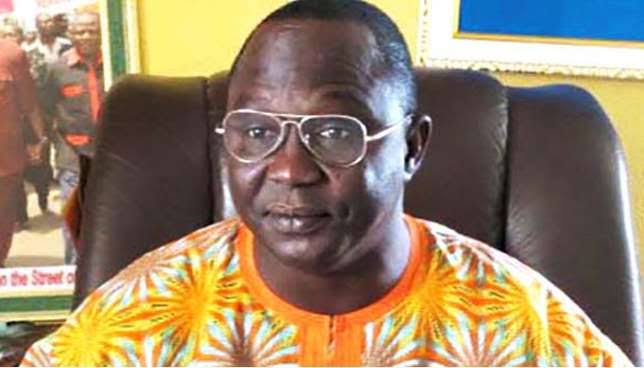

The Minister of Power, Joseph Tegbe, has ruled out plans to increase electricity tariffs, saying the Federal Government is focused on achieving a reliable 24-hour power supply across Nigeria.
Gatekeepers News reports that Tegbe spoke on Thursday at the groundbreaking ceremony for a 17.7-megawatt interconnected mini-grid project in Ibadan, Oyo State, organised by the Rural Electrification Agency (REA).
“I want to say this clearly and without ambiguity: there is no plan to increase electricity tariffs. What we are planning is a power sector that works around the clock. Our commitment is 24/7 power,” the minister said.
In July, Tegbe had similarly assured Nigerians that the Federal Government had no immediate plans to increase electricity tariffs.
He said the Ibadan project demonstrated the government’s commitment to expanding electricity supply, improving reliability and ensuring that investments in the power sector translated into economic opportunities for Nigerians.
According to him, the government’s priority extends beyond expanding electricity infrastructure to ensuring that additional generation capacity supports businesses, industries, productive enterprises and households.
“Our objective is clear: to increase the quantum of electricity available to Nigerians, improve the reliability of supply and ensure that electricity becomes an enabler of productivity, investment and economic growth,” Tegbe said.
“Projects such as this demonstrate how we are translating that commitment into infrastructure that directly serves communities and productive economic clusters.”
The minister added that the initiative complements ongoing Federal Government interventions to strengthen electricity generation, transmission and distribution infrastructure across the country.
Speaking at the event, Abba Aliyu, Managing Director of the REA, said the agency was increasingly prioritising the deployment of electricity generation capacity in areas where it could deliver the greatest economic benefits.
He said the agency was also leveraging private-sector investment and sustainable operating models to expand electricity access and improve reliability.
“This groundbreaking is about more than 17.7 megawatts of new generation capacity. It is about what that capacity will enable,” Aliyu said.
“Reliable electricity means longer operating hours for businesses, lower dependence on expensive self-generation, increased productivity, new investment and ultimately more jobs and economic opportunities.”
Aliyu said the Ibadan project formed part of a broader pipeline of investments being facilitated by the agency.
Across Nigeria, he added, “we are demonstrating that distributed energy can move beyond addressing electricity access alone to becoming an important pillar of electricity reliability and economic development”.
The project is expected to contribute to improved electricity supply for communities and productive economic clusters in Ibadan, while supporting the government’s broader efforts to strengthen the country’s power sector.