

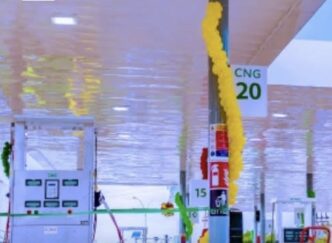
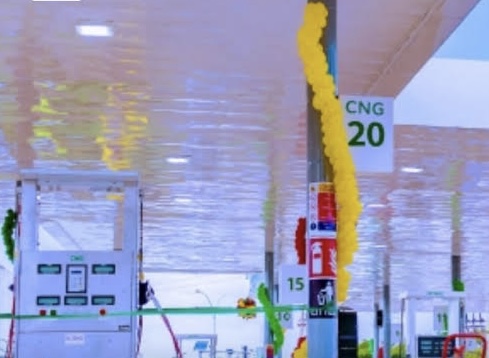
The Federal Government has commissioned three Compressed Natural Gas (CNG) infrastructure facilities in Kano State as part of efforts to expand access to cleaner and more affordable energy and reduce transportation costs.
Gatekeepers News reports that the facilities, developed by Rolling Energy Limited with support from the Midstream and Downstream Gas Infrastructure Fund (MDGIF), comprise a 300,000-standard cubic metres per day Liquefied Compressed Natural Gas (LCNG) distribution hub and retail station at Tamburawa, Dawakin Kudu Local Government Area, and a 21,000-standard cubic metres per day LCNG daughter and retail station at Hotoro, Tarauni Local Government Area.
Speaking at the commissioning ceremony, the Minister of State for Petroleum Resources (Gas), Ekperikpe Ekpo, said the projects demonstrated the Federal Government’s commitment to converting Nigeria’s abundant gas resources into tangible economic benefits for citizens.
Ekpo, who was represented by a senior government official, said the facilities would strengthen gas distribution, expand access to cleaner energy in Kano and neighbouring communities, support businesses and transportation, and create additional economic opportunities.
He explained that the Tamburawa hub would provide integrated LNG storage, regasification and CNG distribution services, including the capacity to supply daughter stations, while the retail outlets would ensure direct access to the product for consumers.
“Together, these three facilities demonstrate the complete philosophy of our domestic gas agenda: building the infrastructure to receive and distribute gas, while simultaneously creating the last-mile outlets that make the product accessible to Nigerians,” the minister said.
He added that the projects aligned with President Bola Tinubu’s Renewed Hope Agenda, which seeks to move the country from policy formulation to the delivery of critical infrastructure.
“His charge to us is clear: we must move from policies to projects, from plans to infrastructure, and from gas reserves beneath our soil to affordable energy that actually reaches our homes, businesses, industries and transportation systems,” Ekpo said.
The minister reaffirmed the government’s commitment to mobilising private sector investment to accelerate the development of Nigeria’s gas infrastructure.
He also commended Rolling Energy, MDGIF, regulators, investors and technical partners for their contributions to the projects.
Also speaking, the Executive Chairman of the Presidential Initiative on Compressed Natural Gas and Electric Vehicles, Ismaeel Ahmed, said the expansion of CNG infrastructure across the country showed that investments in the sector were beginning to yield results.
Ahmed, who was represented by his Special Adviser on Technical Training and Capacity Building, Omoh Imoukhede, noted that the commissioning in Kano came just days after Rolling Energy inaugurated another CNG facility in Karu, Abuja.
He said the developments demonstrated the growing infrastructure supporting Nigeria’s transition to alternative fuels and the gradual expansion of access to cleaner energy.
“The conversation about energy transition cannot remain a conversation about what Nigeria can do with its enormous gas resources. Nigerians must begin to see the infrastructure, use the infrastructure, and experience the benefits in their lives every day,” he said.
Ahmed described Kano as a strategic location for CNG infrastructure investment because of its large transportation network, commercial activities and population, noting that many residents depended on affordable mobility to earn a living and transport goods and services.
He stressed that the expansion of refuelling stations must go hand in hand with the growing conversion of vehicles to CNG.
“Conversion without refuelling infrastructure will not deliver the transition we want. The two must grow together,” he said.
The presidential initiative chairman assured investors that the government would continue supporting developments in the sector while prioritising affordability, availability and safety.
He added that the programme was designed to provide Nigerians with cheaper and cleaner transportation alternatives while leveraging domestic gas resources to strengthen the economy.
In his remarks, Kano State Governor Abba Kabir Yusuf said the state was prepared to collaborate with the Federal Government and private investors to expand gas infrastructure and stimulate commercial activities.
Yusuf, represented by the Commissioner for Power and Renewable Energy, Sani Gaddafi, said the increasing adoption of CNG-powered vehicles in the state had created an urgent need for additional refuelling stations.
According to him, existing facilities were becoming insufficient to accommodate the growing number of transport operators and other CNG users.
“With a population of about 20 million and commercial activities involving neighbouring states in the North-West and other African countries, I am sure the number of these stations will not be enough in Kano,” he said.
The governor identified Kano’s population, commercial importance and strategic location as major opportunities for investment in the gas sector.
He recalled that Rolling Energy approached the state government about one to two years ago to obtain the necessary permits and approvals for the projects, expressing satisfaction that the initiative had eventually been realised.
Yusuf assured investors of his administration’s continued support through the provision of necessary approvals and strategic partnerships to encourage infrastructure development.
He also commended President Tinubu, the Minister of State for Petroleum Resources (Gas), MDGIF and Rolling Energy for their contributions to the projects.