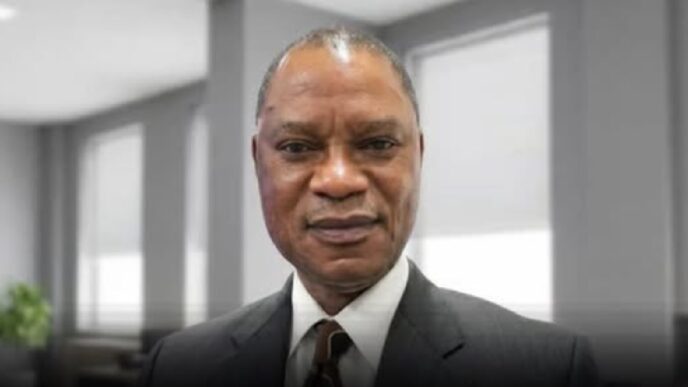


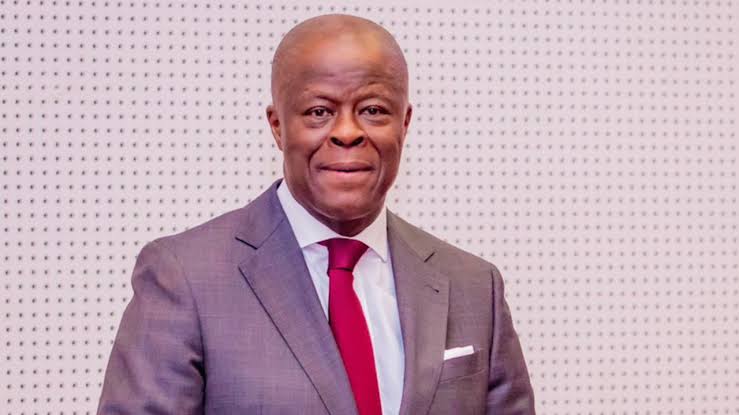
Wale Edun, minister of finance and coordinating minister of the economy, says the federal government is expanding social protection programmes as part of wide-ranging economic reforms aimed at driving growth and reducing poverty.
Gatekeepers News reports that speaking on Wednesday at the Imo Economic Summit, Edun said Nigeria is shifting from a nation of “latent, stagnant potential” to one of “rising opportunity”, supported by fiscal reforms that have “expanded revenue inflows and improved allocation to sub-national governments”.
“When opportunity is there, business follows when you put the right framework in place. Our economy is growing, our fiscal capacity is strengthening, our states are empowered, and resourced,” he said.
“Our social protection is expanding, which shows the empathy and the humane approach to governance of Mr. President, his excellency, President Bola Ahmed Tinubu. Our digital, energy and industrial foundations are being rebuilt.”
Nigeria’s social protection programmes fall under the National Social Investment Programme Agency (NSIPA), which has been under scrutiny following corruption allegations that led to the freezing of its accounts in 2024 and the suspension of its leadership.
That suspension stalled the rollout of key programmes — including N-Power, the conditional cash transfer (CCT), the government enterprise and empowerment programme (GEEP), and the national school feeding initiative.
On December 2, the house of representatives opened an investigation into the status of N30 billion recovered by the federal government from NSIPA.
Saidu Abdullahi, an All Progressives Congress (APC) lawmaker from Niger state, said that even after the presidential approval lifting NSIPA’s suspension on January 21, 2025, “the agency has been unable to resume full implementation of its programmes, allegedly due to the non-availability of recovered funds… thereby exposing millions of Nigerians to prolonged socioeconomic distress”.
Economic Growth and Fiscal Reforms
Edun said Nigeria’s economic growth has accelerated from roughly 2 percent before the current administration to about 4 percent — “the fastest in a decade”.
“The target set for us is 7 percent per annum… because that is more than double the rate of population growth. It means we will be lifting millions of Nigerians out of poverty,” he said.
He added that the country needs large-scale private and public investment to hit that target.
According to him, recent fiscal reforms have doubled allocations to states, while local governments now receive 66 percent more. The federal government, he said, is also benefiting from the correction of economic distortions, ensuring more revenue flows directly into the treasury.
Edun said inflation has eased to about 16 percent as of October, and household spending on basic needs has dropped to 50 percent of income — down from over 90 percent before the reforms.
“So the clear national objective is to achieve lower inflation for every naira to retain its purchasing power… because it is not through borrowing that we are going to get the investment,” he said.
‘FG Working on Savings Plan for Nigerians’
The minister announced that the federal government is developing a mass savings plan to enable Nigerians at all income levels to save and invest productively. He said Nigeria’s expanding safety net reflects President Tinubu’s commitment to protect the poorest and most vulnerable, with direct transfers to low-income households being scaled up “with greater transparency and accountability”.
Edun praised Imo state’s “vast” economic potential, listing opportunities in manufacturing clusters, agro-processing, packaging, pharmaceuticals and building materials. Its proximity to major markets in the southeast and south-south, he said, strengthens its prospects for industrial expansion.
He added that young Nigerians will drive future growth, with opportunities in software development, business process outsourcing, creative industries and AI-enabled services.
“The agriculture and the agro-value chain is important — processing, storing, branding and of course exports,” he said, referencing the new cargo export terminal. “All these add to ease of doing business. And as the investors here will tell you, you have to make it easy… make it attractive for them so they can come invest, increase productivity, grow the economy, create jobs and lift millions in Imo and elsewhere out of poverty.”
Edun called for strong collaboration across federal, state and local governments, the private sector and development partners to translate Nigeria’s economic potential into measurable prosperity.