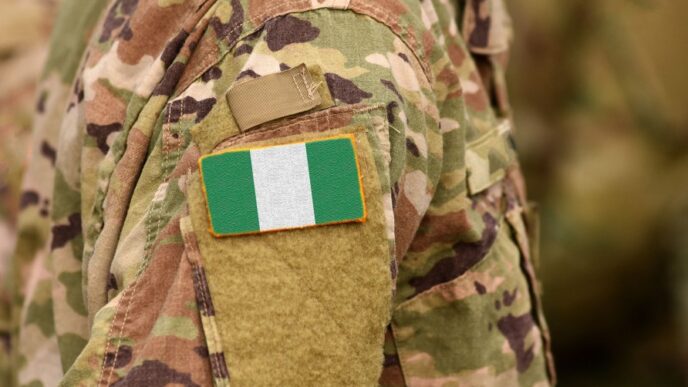


The Economic Community of West African States (ECOWAS) has applauded Nigeria for its rapid intervention in helping to thwart the attempted military coup in Benin Republic, describing the action as a model for protecting democracy in the region.
Gatekeepers News reports that speaking in Abuja on Tuesday at the opening of the 55th Ordinary Session of the ECOWAS Mediation and Security Council (MSC) at ministerial level, Dr. Omar Alieu Touray, President of the ECOWAS Commission, said Nigeria’s prompt deployment of support forces was crucial in preventing the ouster of President Patrice Talon.
Touray said the incident underscored the deepening political risks facing West Africa.
“Events of the last few weeks have shown the imperative of deep introspection on the future of our democracy and the urgent need to invest in the security of our community,” he said.
“For the speed and commitment shown, Nigeria deserves a standing ovation. This is what regional solidarity should look like if we are determined to protect democracy.”
His remarks come less than 48 hours after authorities in Benin arrested the ringleaders of Sunday’s failed coup attempt. As earlier reported, about 13 suspects were detained after a group of soldiers briefly seized the national television station and announced the removal of President Talon. Loyalist forces swiftly regained control, prompting ECOWAS to deploy elements of its Standby Force and surveillance assets to help stabilise the situation and track fleeing coup plotters.
The foiled takeover adds to growing concerns over the rise of military interventions across West Africa. Touray warned that the combination of political instability, terrorism, and banditry has plunged the region into what he described as a “state of emergency,” with severe humanitarian consequences.
Citing new figures from the United Nations High Commissioner for Refugees (UNHCR), he noted that 7.6 million people are internally displaced across West and Central Africa, while another 1,094,742 are refugees and asylum seekers—numbers he said highlight the gravity of the crisis.
Touray stressed that risk levels are rising, pointing to recent political upheavals in Guinea-Bissau and the attempted power grab in Benin as evidence of weakening democratic institutions. He also voiced concern over delayed transition timelines in countries under military rule and the erosion of electoral inclusivity in several member states.
Given the scale of the challenges, he urged that the Mediation and Security Council convene more frequently over the next year rather than limiting meetings to the standard two ordinary sessions.
“This Council needs to constantly monitor the political and security situation in our Community, to provide guidance and to enable regional action,” he said.