
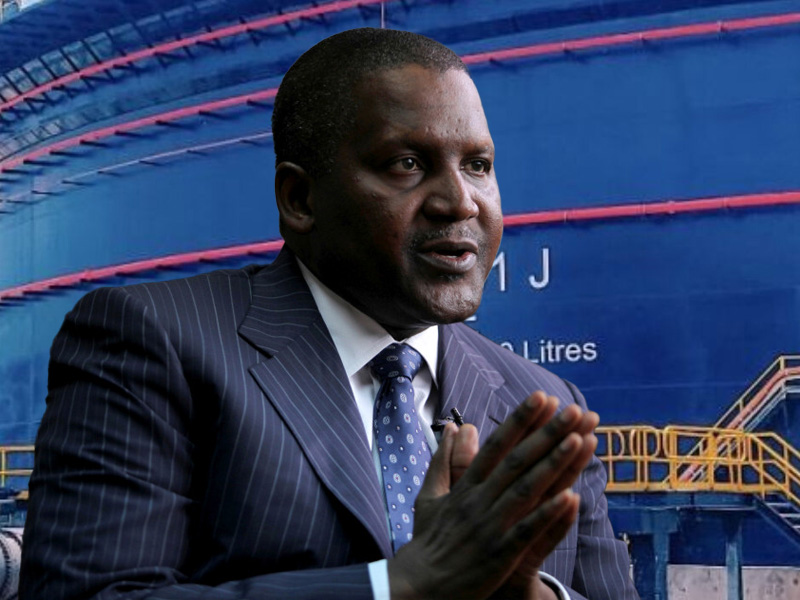
President of the Dangote Group, Aliko Dangote, has assured Nigerians of further reductions in the pump price of Premium Motor Spirit (PMS), also known as petrol, nationwide.
Gatekeepers News reports that the assurance comes less than 24 hours after Dangote announced an imminent price cut. In a statement issued on Monday, the company disclosed that MRS Oil, which operates more than 2,000 filling stations nationwide, has begun selling petrol at ₦739 per litre in Lagos, down from ₦885, offering immediate relief to commuters and businesses.
“Pump price of PMS would decline further,” the statement quoted Dangote as saying, adding that petrol would sell for no more than ₦740 per litre from Tuesday, starting in Lagos.
“From Tuesday, all MRS stations will sell PMS at prices not exceeding ₦740 per litre, beginning in Lagos,” Dangote said.
He also announced that the Dangote Petroleum Refinery had reduced its minimum purchase requirement from two million litres to 500,000 litres, a move aimed at enabling more marketers—including members of the Independent Petroleum Marketers Association of Nigeria (IPMAN)—to participate in product offtake.
“So if you come to the refinery today, you will get PMS at ₦699 per litre,” he stated.
Dangote maintained that Nigerians would be the ultimate beneficiaries of domestic refining, noting that the refinery is operating round the clock to ensure recent reductions in gantry prices are fully reflected at the retail level.
He further highlighted the quality difference between locally refined fuel and imported products, explaining that PMS supplied through MRS and other refinery offtakers is straight-run fuel, unlike blended products imported from overseas.
“Nigerians have a choice: to buy better-quality fuel at a more affordable price, or to buy blended PMS at a higher rate. Importers can continue to lose, as long as Nigerians benefit, I am happy,” Dangote said.
He disclosed that despite challenges, including resistance from vested interests, the refinery would soon deploy its fleet of Compressed Natural Gas (CNG) trucks and was prepared to acquire additional units beyond its existing 4,000 trucks to sustain affordable nationwide distribution.
Responding to concerns by some fuel importers that the price cuts could lead to losses, Dangote said the refinery was established primarily to serve Nigerians.
“Anyone who chooses to continue importing despite the availability of locally refined products should be prepared to face the consequences,” he said.
Dangote also reiterated his resolve to protect the refinery, describing it as a strategic national asset.
“A business of this magnitude must not be allowed to fail,” he said.
“If they want to import fuel, let them continue. We will meet in the market. If 4,000 CNG trucks are not enough, we will buy another 4,000. This is a logistics business.”