

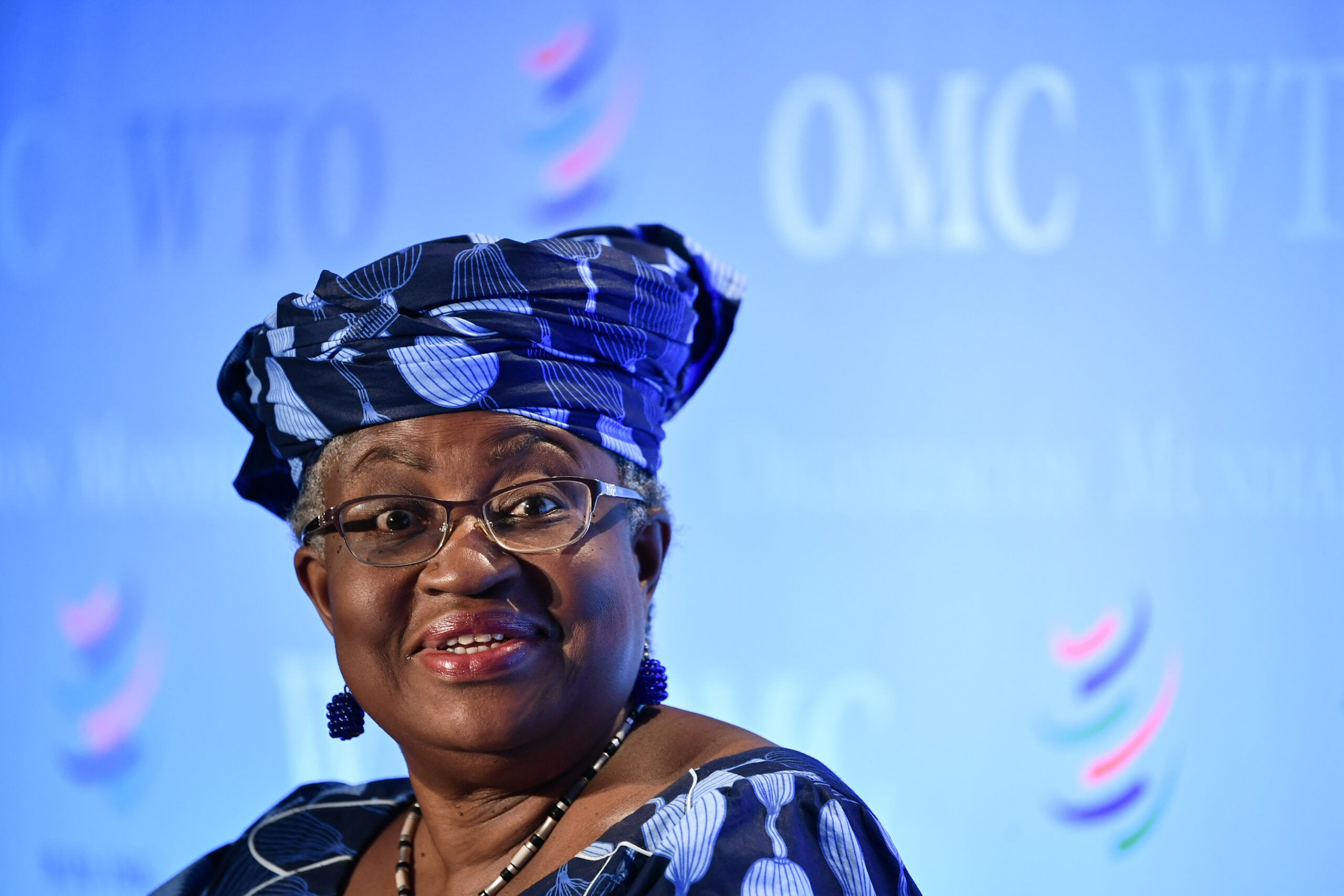
The Director-General of the World Trade Organisation (WTO), Ngozi Okonjo-Iweala, has warned that global trade will not revert to its pre-disruption state, urging governments and businesses to prepare for a future defined by uncertainty and resilience.
Gatekeepers News reports that Okonjo-Iweala made the remarks on Friday while speaking on a panel on the global economic outlook at the 2026 World Economic Forum (WEF) in Davos, Switzerland.
“I don’t think we will go back to where we were. If I were a business and a policymaker, I would be planning against the world that is not going to go back to where it was,” she said.
“A world that will have built-in uncertainties in it, and therefore I need to plan for how I am going to be resilient with my business or my country.”
She said governments must strengthen domestic and regional capacities, stressing that while global conditions may stabilise over time, the old global trade order will not fully return.
According to the WTO chief, the world is currently experiencing its most severe trade disruption in 80 years, driven by geopolitical tensions and growing unilateral actions that have weakened multilateral trade rules.
Despite the challenges, Okonjo-Iweala said the global trading system remains resilient, noting that the majority of world trade still operates within WTO frameworks.
“Seventy-two percent of world trade is still going on WTO terms. So, the system is resilient,” she said.
She, however, acknowledged that resilience does not mean the system is without flaws, emphasising the need for urgent reforms within the WTO.
“I may not agree with the unilateral actions on trade that have been taken. But I certainly agree with some of the diagnosis that things are not going well and things need to change, and that is why the WTO are very keen on reforming,” she said.
The WTO boss also advised policymakers to avoid overreacting to short-term developments, calling instead for what she described as “steady nerves.”
She further warned against over-dependence on major economies such as the United States and China, urging countries to diversify their trade relationships and supply chains to strengthen economic resilience.