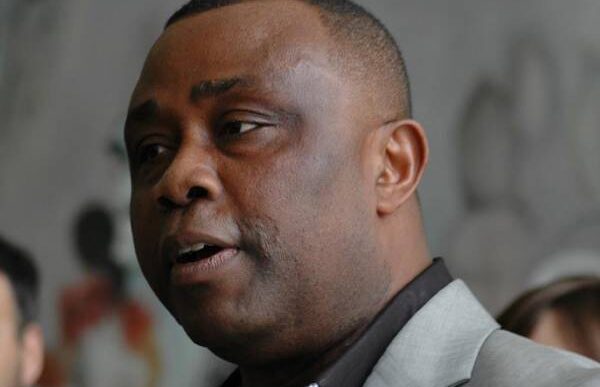

The recent commentary by Isa Mohammed Ashiru, the defeated Peoples Democratic Party governorship candidate in the 2015 and 2023 general elections, on the tragic events at Kurmin Wali, Afogo Ward, Kajuru LGA—where 177 innocent worshippers were abducted from their various places of worship —is stark and heart-wrenching. No one can deny the pain of that incident, and no one should try and minimize it. But it is precisely because of the gravity of this tragedy that one must ask: what is Ashiru’s motive in framing this human catastrophe as a political cudgel?
Let us be very candid. Kaduna State people—indeed, Nigerians—are tired of leaders who see every sorrow, every loss, every national wound as merely an opportunity to score cheap political gains. Ashiru was defeated by Governor Uba Sani in the 2023 governorship election. The people spoke clearly then and will do so again in the 2027 general elections because he hasn’t shown that he is better. It is unfortunate that he has yet to demonstrate the leadership capacity that would warrant a different outcome, which explains why he has been consistently rejected since 2015.
With utmost respect to the people of Kaduna State who are grieving and to those still in captivity, what is required now is solutions, collaboration, empathy, and leadership and not politics. The priority must be the safe return of every victim and the assurance that such tragedies do not recur.
This tragedy is real—and undeniably heartbreaking—but it is neither the creation nor the sole responsibility of the governor. Long before assuming office, Governor Uba Sani consistently engaged the nation’s security challenges, particularly during his time in the Senate, where he did not merely lament about the problem but advanced practical solutions. In response to the worsening security crisis, he sponsored four consequential bills aimed at decentralizing policing and enabling the creation of state police—reforms that, if adopted, would have significantly strengthened local security responses. The current wave of security breaches and mass abductions is not an isolated failure of his administration; it is the manifestation of a deep-seated national security crisis that predates Governor Uba Sani’s tenure by many years. Kaduna State, like several others, has grappled with banditry, kidnappings, and communal violence for over a decade. These challenges are structural in nature, rooted in an overcentralized and under- resourced federal security architecture, compounded by chronic manpower and funding constraints. To reduce such a complex and long-running crisis to partisan finger-pointing, without offering credible workable solutions, is dishonest and unhelpful.
To frame Governor Sani’s response as “denial” or “abdication,” without acknowledging the nationwide complexity of insecurity, is to oversimplify a far deeper national challenge.
When Governor Uba Sani assumed office, the security situation in Kaduna State was dire, much like that of several other states. The crisis was deep, multilayered, and pervasive. His administration adopted an approach that goes beyond brute force—a blend of community engagement, intelligence-led strategies, and the Kaduna Peace Model, which emphasizes early-warning systems, local mediation structures, and social cohesion alongside conventional security responses. This model, while imperfect—as all human efforts are—represents a deliberate shift from purely kinetic operations to people-centered peacebuilding. If Ashiru genuinely seeks peace for Kaduna State, he should engage these frameworks constructively and propose improvements, rather than merely assigning blame to a governor who is demonstrably making efforts. Leadership, ultimately, is about solving problems.
Ashiru has claimed that the governor has forfeited credibility. Yet several concrete actions challenge that assertion. Governor Sani presented a nearly ₦986 billion budget for 2026, prioritizing security, infrastructure, education, and inclusive growth, with an emphasis on transparency and community participation. The completion and commissioning of key road networks, the rollout of transport initiatives such as the Kaduna Bus Rapid Transit and Light Rail projects, and the reopening of schools previously shut due to insecurity mark measurable progress. The establishment of Vocational and Technology Skills Acquisition Cities is equipping thousands of youths with market-relevant skills, directly addressing unemployment-driven insecurity.
Executive actions have brought millions of unbanked citizens into the financial system, supported MSMEs through grants and targeted interventions, and introduced low-interest loan schemes for civil servants. Over 15,000 vulnerable persons have been enrolled in the state’s health insurance scheme, expanding access to essential healthcare for women and children. Victims of banditry have benefited from housing and social infrastructure delivered through strategic partnerships, offering stability to displaced communities. These efforts have not gone unnoticed; Governor Sani has received national recognition from independent bodies for infrastructural and rural development initiatives. To ignore these realities is to misrepresent the facts and further alienate the electorate.
It must also be emphasized that security is not the responsibility of a single individual, a governor, or one political party. It is a shared obligation involving federal authorities, state governments, local communities, and international partners. Notably, the United Kingdom, through its development and peacebuilding agencies, has acknowledged progress in Kaduna State and partnered with the government on conflict-prevention, community stabilization, and peacebuilding programmes. These collaborations focus on strengthening early-warning mechanisms, supporting dialogue in conflict-affected communities, and building institutional capacity to manage and prevent violence—an indication that Kaduna’s approach is gaining external confidence.
If Ashiru believes the current strategies are insufficient, the burden of leadership demands that he present alternatives. What specific security architecture would he implement differently? How would he strengthen intelligence gathering, community trust, or intergovernmental coordination? What legislative, fiscal, or operational measures does he propose beyond criticism? Constructive opposition requires ideas, not just outrage.
Ashiru’s statements reflect a familiar pattern: converting pain into political fodder. Grieving families do not need their suffering amplified for electoral advantage. They need action, coordination, and accountability from all security stakeholders. They do not need recycled campaign rhetoric. Kaduna State’s people are discerning; they recognize when politics is driven by self-interest rather than public interest. Politics of blame without solutions can only deepen despair.
Ashiru lost in 2023 because voters rejected negativity, division, and politics devoid of workable solutions. If he intends to approach 2027 with accusations unsupported by constructive alternatives, he risks not only another electoral defeat but a loss of moral credibility. Kaduna State voters see the ongoing infrastructure projects, skills-development centres, healthcare expansions, and economic-inclusion efforts. They also understand that insecurity is a national battle that no state can resolve in isolation.
Let us be clear: criticism becomes cheap politics when it weaponizes human suffering, ignores context and progress, and advances personal ambition over collective healing. Leadership that combines accountability with actionable ideas will always outshine leadership that offers blame alone.
Above all, we reaffirm our solidarity with the people of Kurmin Wali. Our thoughts and prayers remain with every family affected, and our demand is unequivocal, the safe return of all abducted worshippers and decisive, coordinated action by all responsible security agencies. Kaduna State deserves protection, and peace—and every leader, whether in government or opposition, bears a responsibility to rise above politics and stand firmly on the side of the victims.
Gatekeepers News is not liable for opinions expressed in this article; they’re strictly the writer’s