

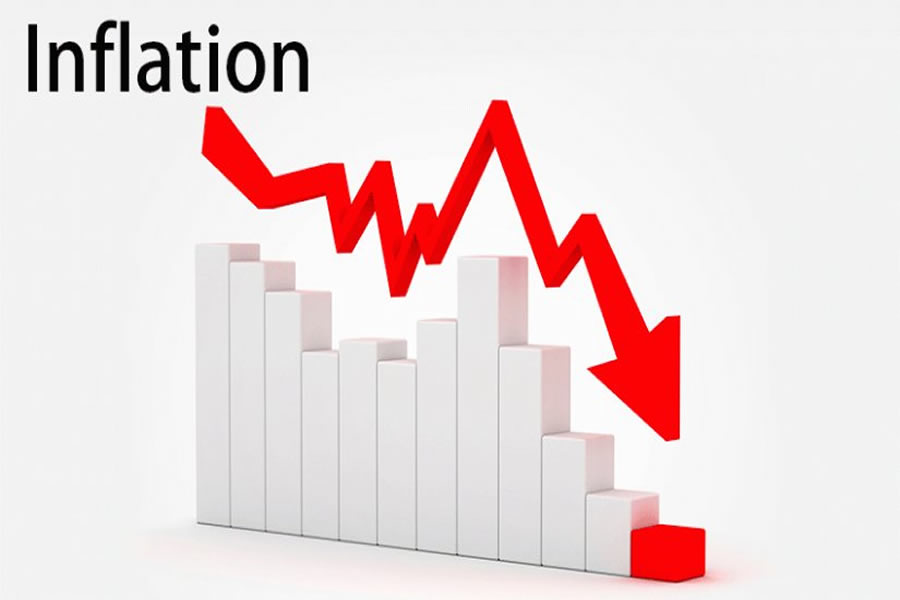
Nigeria recorded a significant slowdown in inflation in January 2026, with the headline rate dropping to 15.10 percent.
Gatekeepers News reports that according to the latest Consumer Price Index (CPI) report released by the National Bureau of Statistics (NBS), the new figure represents a slight decline from the 15.15 percent recorded in December 2025.
It also represents a sharp fall from the 27.61 percent posted in January 2025, reflecting the impact of the recent rebasing of the CPI, which adopted 2024 as the new base year and 2023 as the reference period for expenditure weights.
In a statement accompanying the report, the Statistician-General of the Federation and Chief Executive Officer of the NBS, Prince Adeyemi Adeniran, explained that the moderation in inflation was driven largely by a sharp reduction in food prices, which significantly eased pressure on household spending.
The data showed that the all-items CPI declined to 127.4 points in January, down by 3.8 points from December, while month-on-month inflation recorded a contraction of 2.88 percent, a major turnaround from the 0.54 percent increase recorded in the previous month.
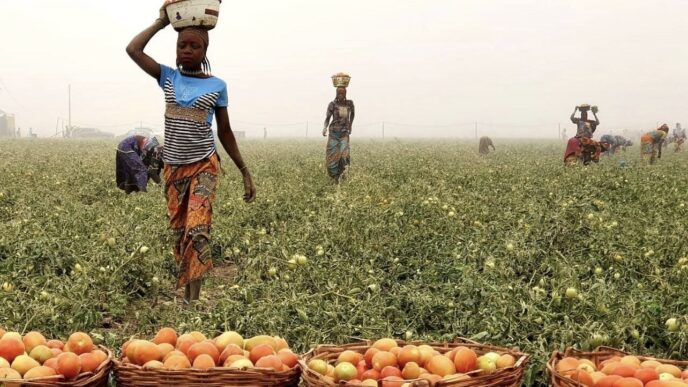
Food inflation emerged as the main driver of the overall decline, falling to 8.89 percent on a year-on-year basis and plunging by 6.02 percent month-on-month.
The bureau attributed the drop to lower prices of major staples and essential food items, including yams, eggs, maize, beans, cassava, beef, palm oil, groundnut oil, soybeans, melon seeds, guinea corn, and cowpeas.
According to the NBS, the broad-based price moderation reflects improved harvest output, easing transportation costs in some corridors, and relatively stable supply conditions across major food-producing regions.
Core inflation, which excludes volatile agricultural produce and energy prices, also showed a marginal improvement, indicating a gradual easing of underlying inflationary pressures in the economy.
However, the report revealed wide disparities across states. Benue recorded the highest year-on-year inflation at 22.48 percent, followed by Kogi at 20.98 percent and the Federal Capital Territory (Abuja) at 19.25 percent. In contrast, Ebonyi posted the lowest inflation rate at 8.72 percent, with Katsina at 8.94 percent and Imo at 10.61 percent, underscoring uneven price trends nationwide.