

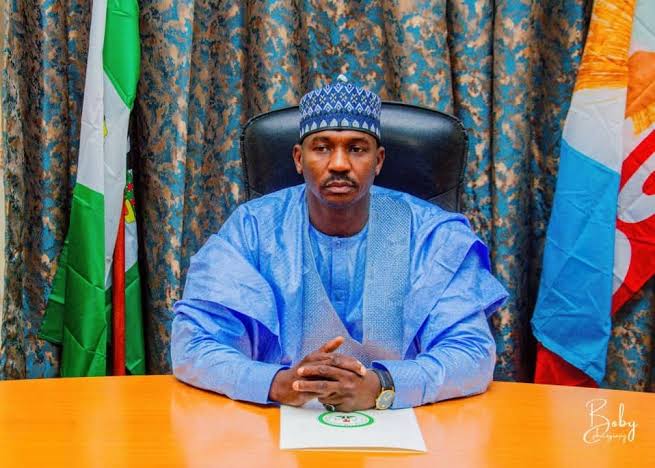
Since assuming office as Governor of Sokoto State, Dr. Ahmed Aliyu has pursued a governance agenda that deliberately balances his aggressive infrastructure and economic development with the conscious preservation of the state’s religious heritage. In a democratic society, governance largely involves responding to the aspirations and values of the people. Since faith remains central to how many citizens of Sokoto understand social and economic progress, Governor Aliyu has rightly given religion a place of prominence within his administration’s 9-Point Smart Agenda.
Rather than limiting religious engagement to routine sponsorship of pilgrimages, his administration has approached religion as an institutional component of governance. The objective is to use faith-based structures as instruments for social stability, civic responsibility, and community development.
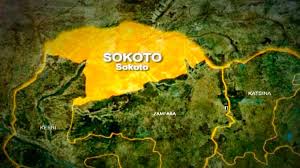
Sokoto State occupies a unique place in Nigeria’s history and in the wider West African region. As the centre of the nineteenth-century Islamic reform movement led by Sheikh Usmanu Danfodiyo, the state bears a distinct cultural and historical identity. Consequently, governance in Sokoto cannot easily separate social development from religious institutions. Governor Ahmed Aliyu fully grasps this historical reality, and he recognizes that to govern Sokoto State effectively, public policy must resonate with the spiritual identity of its people while simultaneously pushing the frontiers of material progress.
One of the clearest expressions of this approach is the re-establishment and strengthening of the Sokoto State Hisbah Corps. The initiative forms part of the administration’s efforts to address social challenges such as drug abuse, youth restiveness, crime, and family instability.
However, such institutions often raise concerns relating to human rights, civil liberties, and overlapping responsibilities with conventional security agencies.
The Aliyu administration has addressed these concerns by structuring the Hisbah as a complementary institution rather than as an independent enforcement body. The corps operates under a multi-agency oversight framework involving the Ministry of Justice, the Nigeria Police Force, and the Sultanate Council. Personnel are constantly receiving training in mediation, counseling, and human rights, emphasizing civic education over coercion. The corps remains unarmed and is expected to hand criminal matters to conventional law enforcement agencies. This focus on standard operating procedures has allowed the corps to integrate smoothly into urban and rural communities without generating the jurisdictional clashes or human rights controversies that often plague state-level voluntary enforcement bodies elsewhere.
Beyond moral policing, a truly comprehensive religious agenda cannot rely solely on physical infrastructure; it must actively address the human capital within traditional religious systems, particularly the vulnerable populations within the Almajiri system.
For decades, the Tsangaya or Almajiri schools have faced severe systemic neglect, leading to high rates of out-of-school children and socioeconomic vulnerabilities. Rather than ignoring these deep-seated challenges or treating them purely as a security concern, Governor Aliyu’s administration has taken a definitive step toward sustainable reform by establishing a dedicated Agency for Almajiri Matters, backed by targeted capital allocations in the state budget. The goal is to create a dual-curriculum structure that combines Quranic education with literacy, numeracy, science, and vocational training.
The intention behind the reform is to ensure that students graduating from the Tsangaya system are equipped not only with religious knowledge but also with practical skills that can improve economic opportunities and educational advancement. This approach has ensured that the graduands of the Tsangaya system are not economically marginalized but are equipped to participate in the modern economy or to transition into tertiary education. By establishing this formal, state-backed framework, the administration aims to address the systemic socio-economic vulnerabilities of youth while preserving the scholarly networks and spiritual traditions that have defined the state for centuries.
Religion has featured prominently in the administration’s welfare framework. The restoration of regular allowances for Imams, Deputy Imams, and Muazzins across the twenty-three local government areas reflects an effort to strengthen grassroots religious leadership.
Religious leaders frequently serve as mediators and stabilizing voices within communities. By ensuring their financial well-being, the government has strengthened their capacity to provide balanced guidance to their congregations while successfully insulating them from political exploitation and manipulation. Governor Aliyu has done fantastically well in providing for these religious leaders who often serve as the first line of defense against radicalization, communal conflict, and social breakdown.
The Aliyu administration has also worked closely with religious stakeholders to expand the reach of state safety-net programmes, deploying massive food and financial aid to orphans, widows, and vulnerable groups across the state. A critical engine driving this welfare distribution is the newly revitalized Sokoto State Zakat and Endowment (Waqf) Agency. By restructuring the agency and injecting institutional transparency into its operations, the government has transformed the collection and distribution of Zakat from a localized charity system into a highly efficient social safety net. Through the commission, billions of naira in cash, medical support, and agricultural inputs are systematically disbursed alongside thousands of bags of grains during critical seasons. By leveraging the grassroots networks of traditional rulers and Islamic scholars to identify those most in need, this institutionalized partnership ensures that help reaches the absolute poorest households. This systemic deployment of compassion directly reflects the Islamic tenets of wealth redistribution and community care, translating abstract religious values into measurable, life-saving social support for the most vulnerable citizens of the state.
The administration’s Ramadan feeding programme represents another component of its welfare strategy. During Ramadan, feeding centres are established across the twenty-three local government areas to provide meals to vulnerable residents and low-income earners.
The programme is intended not merely as seasonal charity but as an extension of social responsibility. In a period of economic difficulty for many households, such interventions seek to reduce hardship among vulnerable groups. For Governor Aliyu, ensuring that the poorest citizens are shielded from hunger during this sacred month is a profound expression of responsive governance, proving that institutionalizing Islamic tenets goes hand-in-hand with securing the immediate physical well-being of the people.
Visible physical infrastructure remains another critical element of Governor Aliyu’s governance strategy, highlighted by the administration’s significant investments in mosque construction and renovation projects, including the comprehensive reconstruction of the historic Buhari Dan Shehu Jumu’at Mosque. In the specific cultural context of Sokoto, a mosque is rarely just a building for prayer; it functions as a vibrant community center, a space for local consultation, a judicial mediation ground, and a central hub for neighborhood charity. By financing the installation of solar-powered utilities, drilling boreholes, and upgrading facilities in both urban centres and remote rural communities, the government has actively invested in vital civic infrastructure. Through these multi-purpose interventions, the governor has effectively hit multiple developmental targets at once; beyond creating befitting places of worship, the simultaneous provision of clean water and solar illumination has directly enhanced public health, improved local security, and energized community life.
Through these interventions, the administration seeks to combine religious infrastructure with wider development objectives. Access to clean water and improved public facilities may contribute to health outcomes, community security, and social interaction.
The administration also views religious institutions as important channels for public communication and mobilization. Religious and traditional leaders frequently play a role in public health campaigns and other community-based initiatives.
While these policies have attracted support, public spending on religious institutions naturally generates debate regarding financial priorities. Critics may argue that greater emphasis should be placed on sectors such as roads, healthcare, agriculture, and education.
The administration, however, approaches these sectors as complementary rather than competing priorities. The broader argument is that physical infrastructure alone may not guarantee long-term development without social values and community stability.
At the same time, the administration has maintained that religious development policies must operate within a framework of inclusivity and social harmony. Although Sokoto is predominantly Muslim, it remains home to citizens from different religious and cultural backgrounds.
This approach is reflected in broader welfare programmes that extend beyond religious identity, including support initiatives available to qualified residents irrespective of background.
Through the Ministry of Religious Affairs, the government maintains engagement with Islamic scholars, traditional rulers, and representatives of other communities. Such dialogue has helped strengthen peaceful coexistence and reduce social tensions.
As Sokoto continues to navigate modern development challenges, preserving its historical identity remains an important consideration. Governor Ahmed Aliyu’s administration has shown that it is committed to building the state based on a model that combines faith with governance through institutional reforms, social welfare initiatives, and community-based structures.
By strengthening institutions such as the Hisbah Corps, reforming the Almajiri system, expanding welfare structures, and treating religious centres as elements of civic infrastructure, the administration is seeking to create a framework that merges religious values with developmental objectives. Going by the successes recorded so far, the success of the model in sustaining social cohesion and delivering tangible improvements in the lives of citizens shows that Governor Aliyu is absolutely right in including religion in his 9-Point Smart Agenda. Governor Ahmed Aliyu’s administration has demonstrated that a religious development drive can expand into a balanced, comprehensive model of governance. It has also demonstrated that grounding public policy in the shared values of the people will provide the exact social cohesion, mutual trust, and stability required to ensure sustainable, long-term development for all citizens of Sokoto State.
Gatekeepers News is not liable for opinions expressed in this article; they’re strictly the writer’s