

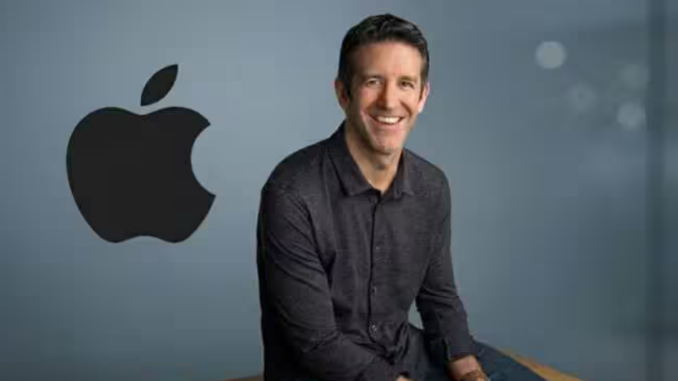
John Ternus has assumed the role of chief executive officer of Apple, succeeding Tim Cook after the latter’s 15-year tenure at the helm of the technology giant.
Gatekeepers News reports that Ternus, 51, takes charge of a company that continues to dominate the global smartphone market but faces growing pressure to close the gap with rivals in artificial intelligence.
His immediate challenges include accelerating Apple’s AI strategy while maintaining the company’s complex dependence on China and navigating mounting political pressure from the White House.
The leadership transition marks a shift from Cook, an operations expert who built Apple’s global supply chain, to Ternus, an engineer who has spent much of his career overseeing the company’s hardware development.
Ternus joined Apple’s design team in 2001 and rose to become senior vice president of hardware engineering, reporting directly to Cook. He has overseen the engineering teams responsible for Apple’s product lineup, including the iPhone, which remains the company’s biggest revenue generator.
He will have little time to settle into the new role, with Apple scheduled to hold its annual iPhone event on September 9, where the company is widely expected to unveil its first foldable iPhone.
“Tim Cook left the house in phenomenal order,” said Dan Ives, partner and senior managing director at Yorkville Ives & Co.
“But now it’s about Ternus defining the AI chapter.”
Ives said Ternus is likely to focus on areas where he has extensive experience, particularly hardware innovation, while maintaining the supply-chain strategy established under Cook.
“There’s no reason to fix what’s already working,” Ives said.
Some analysts had previously suggested that software chief Craig Federighi would have been a more natural choice to lead Apple as the company seeks to catch up with competitors in AI.
However, Carolina Milanesi, an analyst at Creative Strategies, argued that the focus on hardware remains critical because consumers typically experience new technologies through devices.
“Consumers are still buying hardware first, and it’s going to be like that for a long time,” she said. “You’re not going to discover the value of AI if you’re not interested in the hardware.”
Cook also highlighted Ternus’ product expertise in a final memo to Apple employees on Monday.
“Few people understand what it takes to build products that change the world the way John does,” Cook wrote.
Ternus holds a bachelor’s degree in mechanical engineering from the University of Pennsylvania and previously worked as an engineer at Virtual Research Systems before joining Apple.
Within Apple, he has been credited with helping make the company’s products more durable, reliable and resilient, as well as contributing to designs aimed at reducing their environmental impact.
The bigger question, however, is how Ternus will adapt from leading an engineering division to running one of the world’s most valuable companies.
“Even people that know him now don’t know him as a CEO,” Milanesi said.
“You might know him as the head of engineering, but once you’re CEO, things change. Your responsibility is bigger, your power is bigger. You’re dancing a different kind of dance.”
‘Learn on the job’
Ternus’ biggest learning curve could come outside product development, particularly in the geopolitical arena where Cook played a central role in protecting Apple’s global supply chain.
Apple’s manufacturing network is one of the most complex in the corporate world, involving hundreds of suppliers and assembly operations, many of which are concentrated in China.
Although Cook began diversifying production in recent years by moving iPhone assembly to India and other manufacturing to Vietnam, China remains central to Apple’s manufacturing system and is also one of its biggest consumer markets.
The situation has become more complicated under US President Donald Trump, who has repeatedly called on Apple to manufacture iPhones in the United States and threatened tariffs on products made overseas.
Cook managed to navigate much of the pressure by maintaining direct engagement with Trump, announcing US investment commitments and political contributions while also preserving Apple’s relationship with Beijing.
That diplomatic balancing act will be new territory for Ternus.
“He knows Apple Park like the back of his pocket in terms of hardware,” Ives said. “But on the global stage — that’s probably one of the biggest areas where he’s going to have to learn on the job.”
Cook, however, will remain closely involved with the company. He becomes executive chairman of Apple’s board, a position that includes engaging policymakers around the world.
Milanesi described the arrangement as a strategic move that allows Ternus to focus on his new responsibilities while Cook continues to handle an area in which he has considerable experience.
The September 9 iPhone event will provide Ternus with his first major public test as CEO.
If Apple unveils a foldable iPhone as expected, the device would represent the company’s most significant iPhone redesign in years — putting Ternus at the centre of attention just eight days into his tenure.
“This is a moment that they created for him,” Milanesi said.