

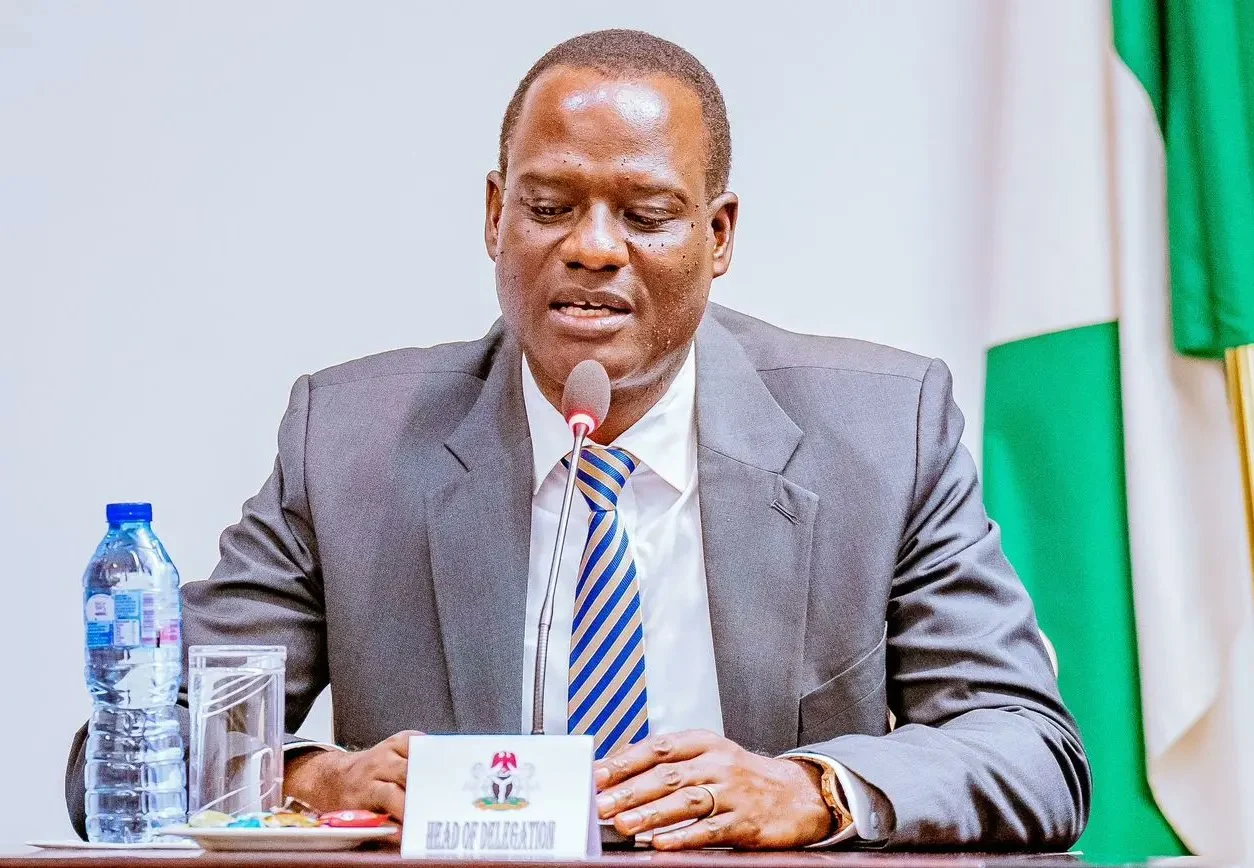
Taiwo Oyedele, Minister of Finance and Coordinating Minister of the Economy, says Nigeria’s recent economic performance has strengthened the country’s prospects of achieving a $1 trillion gross domestic product (GDP) by 2030.
Gatekeepers News reports that Oyedele made the statement on Tuesday in a post on X following the release of Nigeria’s second-quarter 2026 GDP figures.
The minister said economic growth had become more broad-based, with 27 economic subsectors recording real growth of more than three percent in the second quarter, compared with 23 subsectors in the same period of 2025.
He said the improvement was evident across the country’s major productive sectors.
“The productive sectors led the way. Manufacturing grew by 3.24 per cent, more than double the 1.60 per cent recorded in Q2 2025, reflecting improved industrial output. Agriculture expanded by 4.39 per cent, up from 2.82 per cent, underscoring stronger production and value-chain performance. Services, the largest driver of growth, expanded by 4.60 per cent, up from 3.94 per cent,” Oyedele said.
The minister also highlighted the appreciation of the naira as a factor contributing to the increase in the size of Nigeria’s economy when measured in US dollar terms.
“The naira appreciated by more than 12 per cent between H1 2025 and H1 2026, resulting in an expansion of the economy by approximately 17 per cent in U.S dollar terms over the period,” he said.
Oyedele said sustaining the economic trend, alongside government social programmes, could “meaningfully strengthen dollar incomes, improve purchasing power and lift millions of Nigerians out of poverty”.
“Given this momentum, Nigeria is well positioned to consolidate its standing among Africa’s largest economies and to advance toward the Government’s target of a USD 1 trillion economy by 2030,” he said.
Nigeria could become Africa’s largest economy by 2028
Oyedele also said sustained economic improvements could help Nigeria move closer to becoming Africa’s largest economy.
“Continued macroeconomic stability, sustained growth across productive sectors, and improving investor confidence would accelerate Nigeria’s progression toward becoming Africa’s largest economy by 2028,” he said.
The minister further cited an International Monetary Fund (IMF) projection which placed Nigeria among the top 10 contributors to global real GDP growth in 2026.
“The International Monetary Fund has already ranked Nigeria among the top 10 contributors to global real GDP growth in 2026, projecting the country to account for roughly 1.5 per cent of world growth this year, ahead of several advanced and emerging economies,” Oyedele said.
According to him, the latest GDP performance reinforces the need for the government to maintain its economic reforms and ensure policy consistency as the benefits of the recovery gradually reach households.
Oyedele said the government remained focused on ensuring that economic growth translates into broader improvements in living standards for Nigerians.
President Bola Tinubu has also welcomed the latest GDP figures, describing Nigeria’s economy as being on an “irreversible path” to stronger growth.
Tinubu said the figures demonstrated that his administration’s economic reforms were producing results, adding that the government would now focus on translating improved economic performance into better living conditions for Nigerians.