

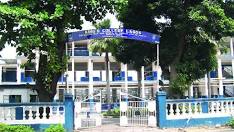
Nigeria’s Federal Unity Colleges stand as enduring symbols of national unity, academic excellence, and equal opportunity. Among them, King’s College, Lagos, founded in 1909, and Queen’s College, Lagos, established in 1927, occupy a special place. These institutions have produced generations of leaders, professionals, and patriots from every corner of the country. They were deliberately designed as public assets, open to meritorious students regardless of wealth, ethnicity, or social status, funded and overseen by the Federal Government on behalf of all Nigerians. The recent decision to concession the management, rehabilitation, and operation of King’s College to the King’s College Old Boys’ Association (KCOBA) under a long-term public-private partnership arrangement, and the clear risk that Queen’s College and other Unity Colleges could follow the same path, represents a profound betrayal of that public trust. It must be firmly condemned and reversed.
The Federal Government has insisted that the arrangement is not a sale or privatisation. Legal title, it says, remains with the state; the old boys’ association will merely finance, modernise, operate, and maintain the school for a period reported to be around 35 years, after which federal funding is expected to cease following a short transition. Admissions, officials claim, will continue to respect Unity College principles of merit, equity, and national representation. These assurances are inadequate and unconvincing. A 35-year concession that transfers operational control, financial responsibility, and day-to-day decision-making to a private association, however well-intentioned or alumni-driven, fundamentally alters the character of a national public institution. It introduces private interests into the heart of a school that belongs to the Nigerian people. Once control is ceded, accountability becomes diluted, commercial pressures intensify, and the original public mission is placed at risk.
Parents, students, teachers’ unions, and civil society groups have rightly protested. They understand what is at stake. King’s College and Queen’s College were never meant to become projects of elite alumni networks or vehicles for private management experiments. They were created as federal institutions precisely to transcend sectional interests and provide high-quality education accessible to children from ordinary families. Handing operational authority to an old boys’ association, even one that has pledged a large endowment fund, creates an appearance and potentially a reality, of capture by a privileged group. The association may include distinguished and patriotic individuals, yet it remains a private body accountable primarily to its members rather than to the broader Nigerian public or to elected representatives. When federal funding is scheduled to stop after a transition period, the incentive structure shifts decisively toward cost recovery and selective investment. History shows that such shifts rarely leave fees and access untouched for long.
The danger extends far beyond one school. The concession of King’s College has already rekindled fears about the future of the entire network of Unity Colleges. Unions representing education workers have warned that this model could become a template for other federal secondary schools. Queen’s College parents and stakeholders have expressed similar unease. Once the principle is accepted that a prestigious public school can be placed under long-term private operational control, the precedent is set. What begins as a “renaissance” partnership for one historic institution can quickly become a quiet privatisation-by-instalments for many others. Nigeria has already witnessed the gradual erosion of public education quality through chronic underfunding, infrastructure decay, and policy inconsistency. Concessioning flagship schools to private managers does not solve those systemic failures; it merely transfers the symptoms while abandoning the principle that quality secondary education is a public good. Proponents argue that government has failed to maintain these schools adequately and that private capital and alumni commitment are necessary to reverse decline. That diagnosis of neglect contains truth.
Decades of insufficient investment have left many Unity Colleges with deteriorating hostels, laboratories, and teaching facilities. Yet the proper response to governmental failure is not the abdication of governmental responsibility. It is the demand for better public management, transparent budgeting, stronger accountability, and sustained federal investment. Alumni associations already play valuable roles through voluntary contributions, mentoring, and advocacy. Those roles can and should continue without the state surrendering operational control for a generation. A public school can receive private support without becoming privately run.
The social consequences of this shift are equally troubling. Unity Colleges were engineered to mix students from different states, backgrounds, and income levels. That deliberate social engineering has been one of their greatest strengths, fostering national cohesion and giving talented children from modest homes a genuine pathway to advancement. When management passes to entities that must raise substantial private funds, the risk of fee escalation, preferential treatment, or subtle gatekeeping grows. Even if formal admission rules remain unchanged in the short term, the culture of the institution can change. The message sent to ordinary Nigerian families is that the most prestigious public secondary schools are drifting beyond their reach or under the practical influence of those who can mobilise large private resources. That message is corrosive to social mobility and national unity.
Moreover, the process itself has generated legitimate suspicion. The speed of the concession, the limited public consultation with current parents and staff before formal handover arrangements began, and the subsequent defensive clarifications from government all suggest an initiative driven more by elite consensus than by broad democratic consent. Education workers have raised concerns about their employment status and the long-term implications for the federal civil service structure within these schools. Students and parents have staged protests, insisting that the colleges belong to the nation, not to any alumni network. These voices deserve to be heard and heeded, not dismissed as misunderstanding a sophisticated Public-Private-Parternership model.
Public education is not a commercial franchise. King’s College and Queen’s College are not underperforming assets to be optimised by private operators. They are living institutions of national memory and purpose. Their buildings, traditions, and student bodies embody a compact between the Nigerian state and its citizens: that talent will be nurtured at public expense for the common good. Conceding their management to private individuals or associations, however packaged, weakens that compact. It signals that when government finds an institution difficult or expensive to run well, the solution is to hand it over rather than reform its own capacity.
There is a better path. The Federal Government should reverse the concession of King’s College and categorically rule out similar arrangements for Queen’s College and other Unity Colleges. It should instead launch a transparent, adequately funded rehabilitation programme for these historic schools, involving alumni, parents, teachers, and independent education experts in advisory rather than controlling roles. Federal funding must be restored and increased on a sustainable basis. Performance benchmarks, infrastructure standards, and academic outcomes should be publicly monitored. Alumni associations should be encouraged to contribute resources and expertise without acquiring managerial rights that last for decades. If genuine public-private collaboration is desired, it should take the form of time-bound, ring-fenced project support under full public control, not the transfer of operational sovereignty.
The concession of King’s College is not merely an administrative experiment. It is a test of whether Nigeria still believes that its finest public schools should remain public in substance as well as in name. Allowing private individuals or associations to run these colleges for a generation fails that test. It risks turning symbols of national opportunity into preserves of those with the means and connections to manage them. Parents, students, teachers, and citizens who have protested are defending something larger than one school: the principle that education of this calibre is a collective responsibility and a collective inheritance. That principle must not be conceded. King’s College and Queen’s College belong to the Nigerian people. They must be retained, restored, and run as public institutions for the benefit of all.
Dr Frederick Imuebe Braimah is a senior lecturer, Department of Political Science, Elizade University, Ilara-Mokin. Ondo State. Nigeria.