

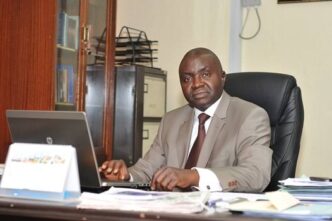
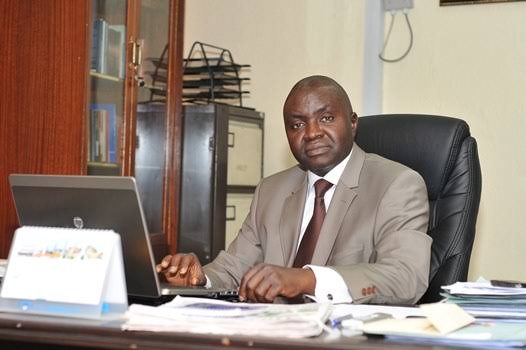
The Centre for the Promotion of Private Enterprise (CPPE) has called on the Federal Government to shift its focus from economic stabilisation to boosting productivity, saying this is critical to improving living standards and raising real incomes across the country.
Gatekeepers News reports that the Chief Executive Officer of CPPE, Muda Yusuf, made the call in a statement on Tuesday to mark Nigeria’s forthcoming 66th Independence Anniversary, noting that recent macroeconomic reforms had laid a stronger foundation for economic growth.
Yusuf said the removal of petrol subsidy, foreign exchange reforms and revenue measures had addressed longstanding fiscal and foreign exchange distortions.
He said Nigeria’s real Gross Domestic Product (GDP) growth rose from 3.38 per cent in 2024 to 3.87 per cent in 2025, reaching 4.43 per cent year-on-year in the second quarter of 2026.
According to him, headline inflation stood at 15.39 per cent in August 2026, while the Central Bank of Nigeria (CBN) reduced its monetary policy rate to 23 per cent in September.
“Revenues, reserves and exchange rate stability have also improved markedly,” he said.
“These gains provide a stronger foundation, but they are yet to translate sufficiently into relief for households and firms.”
The CPPE chief said that despite the easing of inflation, prices remained significantly higher than their previous levels, while increased petrol prices, exchange rate adjustments and global food and energy shocks had weakened purchasing power.
He noted that households were spending a larger proportion of their incomes on transportation, food, electricity and other essential needs.
“Businesses face the same pressures through higher input, distribution and financing costs,” Yusuf said.
He argued that the country’s economic stabilisation efforts should now give way to a “determined productivity agenda” aimed at removing structural constraints confronting farmers, manufacturers and small businesses.
“A farmer needs security, irrigation, storage, and access roads to increase output,” he said.
“A manufacturer needs reliable electricity, efficient ports and predictable regulation to compete. A small business needs affordable working capital and customers with spending power.”
Yusuf warned that without addressing these challenges, economic growth would remain too weak to significantly improve employment and real incomes, regardless of improvements in headline economic indicators.
He urged the government to prioritise electricity supply, security along farming and commercial corridors, efficient ports and logistics, improved agricultural yields, industrial competitiveness and skills development relevant to businesses.
He also called for public support for industries to be tied to investment, efficiency and export performance.
“The objective is to lower the cost of producing in Nigeria and expand the supply of goods and services that citizens can afford,” Yusuf said.
CPPE Urges All Tiers of Government to Deliver Measurable Outcomes
Yusuf said the benefits of national economic reforms would largely be realised in communities where Nigerians live and businesses operate, stressing the need for coordinated action across all three tiers of government.
He said the Federal Government should sustain macroeconomic stability while delivering on national security, electricity and transportation priorities.
According to him, state governments should improve land administration, roads, investment approvals, schools and healthcare, while local governments should maintain community infrastructure and provide effective basic services.
The CPPE chief also urged local governments to eliminate arbitrary levies that place additional burdens on small businesses.
“These responsibilities are connected,” Yusuf said.
“A federal highway cannot unlock agricultural production if state and local roads leave farms inaccessible.”
He warned that increased public revenue would have limited impact if clinics remained understaffed, schools lacked teachers and businesses continued to provide their own electricity and water.
Yusuf called for clearer spending priorities and stronger public accountability alongside increased resources across the federation.
He said the three tiers of government should focus on delivering measurable outcomes, including lower transportation and production costs, higher agricultural yields, more reliable public services, improved educational and health outcomes, and more productive jobs.
“Citizens should be able to see where additional public resources went and what improved as a result,” he said.
The CPPE chief maintained that Nigeria had the enterprise and resources to achieve greater economic progress but stressed the need to translate the gains from economic reforms into higher productivity and improved living standards for Nigerians.