

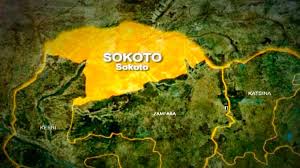
The renewed debate over the potable water “crisis” in Sokoto State deserves to be examined beyond political accusations and counteraccusations. Residents have a legitimate right to ask why reliable water remains difficult to obtain in parts of Sokoto metropolis. But they also have a right to know what the administration of Governor Ahmed Aliyu has been doing to address the problem, how much has actually been spent, what infrastructure has been completed, and when the current investments will translate into dependable household supply.
It is against this background that the recent criticism by the African Democratic Congress governorship candidate, Hon. Manir Muhammad Dan’iya, should be considered alongside the documented interventions of the Ahmed Aliyu administration. The question is not whether Sokoto still has a water problem—it clearly does—but whether the evidence supports the suggestion that the government has failed to confront it. The record points to a work in progress, including the rehabilitation of major water schemes, investment in the Sokoto Water Works, solarisation and the expansion of water infrastructure across the metropolis.
Through his media aide, Aminu Abdullahi, Dan’iya raised concerns about persistent water shortages and the burden on residents who have to buy water for drinking, cooking and other domestic needs. His concerns cannot simply be dismissed, because the water problem is real and residents have every right to demand answers. But any assessment of the situation must also consider the role of the Aminu Tambuwal-Dan’iya administration in the state’s water infrastructure and, more importantly, what the present administration of Governor Ahmed Aliyu has done to address the inherited challenges. In that sense, the criticism provides an opportunity to examine the record and to debunk the falsehood.
The more important question, however, is whether the present situation can reasonably be presented as evidence that the administration has done little or is doing nothing to address the problem. Available records give a clear answer: a big no.
One of the administration’s major interventions has been the revival and completion of critical water schemes in Tamaje, Old Airport, Mana, Gagi, Runjin Sambo and Ruga Liman. Initiated under former Governor Aliyu Wamakko and abandoned by the Aminu Tambuwal administration, the six schemes are expected, according to the state government, to provide a combined capacity of more than 40 million gallons per day when fully operational.
The Tamaje scheme was commissioned in July 2025. The Old Airport scheme has also been commissioned.
The history of these projects is relevant. They were originally initiated during the administration of former Governor Aliyu Magatakarda Wamakko. The present administration inherited it and subsequently reviewed, re-awarded the contracts for their completion. The records show that the current administration has committed resources to bringing several of them back into operation.
The financial record reinforces that point. Sokoto’s 2025 budget provided allocations for water-supply construction at Mana, Tamaje, Old Airport and Ruga Liman, alongside ₦500 million each for iron-removal plants at Asari and Ruga Liman. In September 2026, the government also announced a broader metropolitan water-supply revitalisation project.
But this is where the debate needs greater precision. A budget appropriation is not the same as expenditure; a contract award is not the same as completion; and a commissioned water plant is of limited value if the distribution network cannot carry the water to households. Governor Ahmed Aliyu recognises this fact, with investment extending beyond water production to the infrastructure required to move treated water through the system and ultimately to the tap in Mallam Dan Asabe’s house.
The state government itself recently clarified the position. It explained that the ₦25 billion provision for township water-works rehabilitation and the ₦5 billion provision for solarisation in the 2026 Citizens Budget are multi-year appropriations, not money already spent in full. It reported ₦64.09 million in first-quarter expenditure, describing the spending as early-stage mobilisation and consultancy payments. The opposition should therefore focus less on the size of the appropriation and more on what has actually been delivered, the infrastructure under construction and the efforts being made to ensure that water ultimately reaches households.
That is why the wider fiscal record matters in this debate. The administration has paid ₦14 billion in inherited pension arrears, constructed and is still constructing and rehabilitating hundreds of kilometres of roads and completing major projects across education, healthcare, housing and water supply. These represent public resources fully committed into physical infrastructure and services.
The opposition should therefore focus less on the size of individual appropriations and more on what has actually been delivered, what remains under construction and the efforts being made to ensure that water ultimately reaches households. Government deserves recognition for infrastructure it has demonstrably delivered, just as it should be held accountable for projects that remain incomplete. The broader record also provides an important context for assessing the administration’s approach to public finance: its ability to clear inherited liabilities while continuing to fund major capital projects suggests a deliberate emphasis on managing public resources in a way that prioritises development expenditure.
Governor Aliyu’s emphasis on restoring reliable water supply also reflects an understanding that the cost of water scarcity extends far beyond the inconvenience. When supply fails, residents are forced to turn to tanker operators, water vendors—mai ruwa. For low-income households, this can mean spending a disproportionate share of household income on an essential commodity, but the real problem is the doubtful sources of the water and the consequences for health. Where households are forced to rely on untreated or poorly stored water, the risk of water-borne diseases increases, particularly among children and vulnerable communities.
Sokoto State’s experience with cholera underlines the point. UNICEF has documented cholera-response activities in the state involving water testing, chlorination and the distribution of water-treatment supplies. Reliable access to safe water is, for the Aliyu administration, therefore not simply a matter of infrastructure; it is an important part of disease prevention and public health.
This explains why the Aliyu administration’s approach goes beyond increasing production capacity. Reviving water schemes, improving treatment facilities, investing in pumping and distribution infrastructure and exploring solar power for the Water Works are all aimed at addressing different parts of the problem: and getting safe and affordable water from the different sources to the household.
This is why the administration has not relied solely on the rehabilitation of the major water schemes. The deployment of solar-powered boreholes across Sokoto metropolis has provided additional sources of water to communities and helped reduce pressure on the existing network. These interventions matter because they have brought water closer to the people while the larger production and distribution infrastructure is being rehabilitated.
The success of the water programme should therefore be assessed on several fronts: the additional millions of gallons of water brought into production, the frequency and reliability of public supply, the number of communities gaining access to alternative sources such as boreholes, and the extent to which these investments are actually translating into water reaching households. On these measures, the effort is not simply about announcing projects; it is about addressing the different points at which the water system has failed—from production and power to distribution and last-mile access.
Power Is Part of the Water Problem. The administration’s emphasis on solarisation of the essential water supply chain also deserves attention because electricity is central to water production and distribution.
In May 2026, the government awarded a contract for the installation of 10,000 solar panels at the Sokoto Water Works, which is expected to generate 4.2 megawatts. The objective is to reduce dependence on the national grid and provide a more reliable source of power for pumping and distribution.
The intervention addresses a genuine operational problem. There is no way that the Sokoto State water system can function consistently when the pumping stations cannot operate reliably.
But solarisation alone will not solve the problem. The water supply system still requires adequate treatment facilities, pumping capacity, storage, pressure management, backup arrangements and maintenance. It’s important to stress that the governor has not spared any effort to fundamentally address the problem.
There is another aspect of the water challenge to which the Aliyu administration has paid particular attention: quality. For the governor, increasing the volume of water available is not enough if the water reaching residents is unsafe. He has made it clear that untreated water should not be supplied to the public under his administration. Under Aminu Tambuwal, it was normal for untreated water to be supplied to the people.
Consequently, the intervention has gone beyond the construction and rehabilitation of water schemes. Attention has also been directed to the treatment, filtration, iron removal, source protection, pipeline integrity and regular water testing. The objective is straightforward: to ensure that the additional water being produced and distributed is not merely available, but safe for the people who depend on it.
This is an important distinction in assessing the water crisis. The measure of success is not simply whether water is flowing through the system, but whether residents can rely on that water for their daily needs without being exposed to avoidable health risks.
Sokoto’s water challenge is not exclusively a state-government responsibility. The Sokoto-Rima River Basin Development Authority has a federal mandate covering the development and management of surface and groundwater resources within its area of operation. They are also to oversee major dams and irrigation infrastructure in the basin.
A durable solution will therefore require coordination between the state government, federal institutions, local communities and development partners.
The assessment of the current unnecessary controversy is that something is being done. The record shows substantial intervention. Major schemes have been revived; Tamaje and Old Airport have been commissioned; budgetary provisions have been made for additional schemes; solar-powered boreholes have been deployed; and the government is pursuing a 4.2MW solar solution for the Water Works.
Ultimately, the test of the Aliyu administration’s water programme is not the size of the budget or the number of projects under construction, but how safe and affordable the water reaching the people is. That is the outcome that matters.
Gatekeepers News is not liable for opinions expressed in this article; they’re strictly the writer’s.