

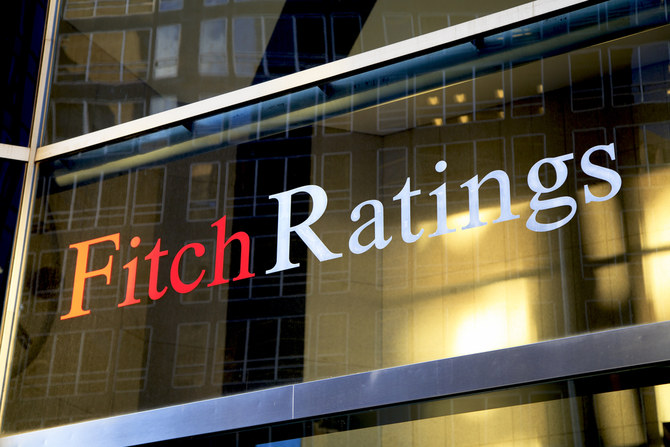
Fitch Ratings has revised Nigeria’s credit outlook from stable to positive, citing improved foreign exchange reserves, ongoing economic reforms and the country’s increased capacity to withstand external economic shocks.
Gatekeepers News reports that the international credit rating agency, in a report released on Friday, October 9, retained Nigeria’s long-term issuer default ratings at ‘B’ while changing the outlook to positive.
According to Fitch, the decision reflects progress in Nigeria’s monetary and exchange rate policies, alongside growing confidence that the current reform momentum will continue despite the general elections scheduled for early 2027.
The agency said the reforms had supported greater flexibility in the naira’s exchange rate, easing inflationary pressures and a faster-than-expected accumulation of foreign exchange reserves.
Fitch noted that Nigeria’s gross foreign exchange reserves increased to $54.9 billion as of September 25, 2026, from $32 billion in mid-April 2024.
It attributed the increase to the formalisation of foreign exchange transactions, strong portfolio investment inflows, higher export earnings and remittances from Nigerians abroad.
The agency added that improved reserve quality had strengthened the country’s ability to withstand external shocks, while continued policy implementation was expected to improve monetary policy transmission and support further moderation in inflation.
“Nigeria’s ratings reflect its large economy, a relatively developed and liquid domestic debt market, large oil and gas reserves and an improved macroeconomic policy framework,” Fitch said.
However, the agency identified weak governance indicators, high dependence on oil and gas, elevated inflation, security challenges and low government revenue relative to comparable countries as factors constraining Nigeria’s credit rating.
Fitch projected that Nigeria’s current account surplus would widen to 6.4 per cent of gross domestic product in 2026 before narrowing in 2027, partly due to an expected decline in global oil prices.
It also forecast that foreign exchange reserves would cover 6.3 months of current external payments by the end of 2026, with coverage expected to remain above that of comparable countries in 2027 and 2028.
On inflation, the agency projected an average annual rate of 15.4 per cent in 2026, less than half the level recorded in 2024. However, it noted that the forecast remained considerably higher than the 5.6 per cent median for countries with a ‘B’ rating.
Fitch also highlighted improvements in Nigeria’s oil production, noting that crude oil output, excluding condensates, increased by 10 per cent quarter-on-quarter in the second quarter of 2026.
According to the agency, production had met Nigeria’s Organisation of the Petroleum Exporting Countries target of 1.5 million barrels per day since May, averaging 1.52 million barrels per day.
It said increased domestic refining capacity, driven by the ramp-up of the Dangote refinery and the rehabilitation of other facilities, had reduced imports of refined petroleum products and eased demand for foreign exchange.
Despite these improvements, Fitch projected that Nigeria’s general government fiscal deficit would widen to 3.6 per cent of GDP in 2026, reflecting increased spending on security, personnel, social programmes, capital projects and state government expenditure.
The agency also noted that tax reforms could increase non-oil revenue mobilisation, although implementation challenges were expected to limit the gains.
Reacting to the revised outlook, the Minister of Finance and Coordinating Minister of the Economy, Taiwo Oyedele, said the development validated the Federal Government’s economic reform programme.
Oyedele said the government remained committed to sustaining reforms, improving revenue collection, maintaining a transparent foreign exchange regime and strengthening fiscal management.
He added that the administration aimed to translate improved macroeconomic stability into increased investment, job creation, food security and better living standards.
Fitch, however, warned that significant policy reversals, weaker capital inflows, looser fiscal policies or major social instability could undermine the country’s improved outlook.
The positive outlook signals the possibility of a future credit rating upgrade if Nigeria sustains its economic reforms and strengthens its fiscal and external positions. It does not mean that the country’s ‘B’ credit rating has already been upgraded.