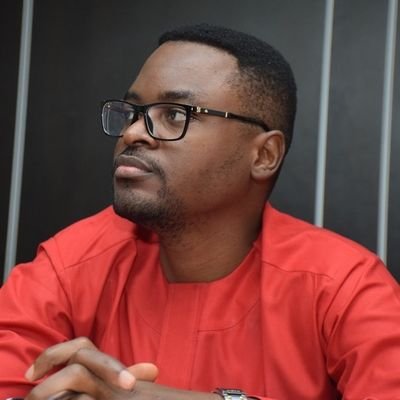


It is one of life’s ironies that Governor Dauda Lawal of Zamfara State, who spent many years in banking chasing deposits from federal and state governments and structuring credit facilities for their mega projects, would become a governor and choose to pursue his state’s development without taking commercial bank loans to finance his administration’s projects. How do his former colleagues in the banking industry view this remarkable change? Has Governor Lawal, like Saul on the road to Damascus, experienced a conversion that has made him deny the banks the very lucrative business he once helped facilitate? This is the fiscal paradox surrounding the former banker who now governs Zamfara State.
As Executive Director, Public Sector North, at First Bank of Nigeria, Lawal understood the business of chasing government deposits and packaging credit facilities from the other side of the table. That was his job. He dealt with state governments and public institutions, many of which depended on bank financing to meet their obligations and to execute major projects.Where would a bank be without mobilising deposits and extending credit? Yet, since assuming office in May 2023, Lawal has bluntly refused to finance projects with loans preferring to mobilize revenue, and expenditure discipline without compromising on quality.
Consider Gusau International Airport, a major infrastructure project built at a cost of about ₦75 billion, alongside the construction of roads, schools and hospitals. How has Lawal financed projects of such magnitude without resorting to bank borrowing? More importantly, what has his experience in banking taught him about the risks of public debt, the burden of debt servicing and the importance of fiscal discipline? While borrowing is not inherently wrong, its sustainability depends on the cost of credit, the government’s capacity to repay and the economic returns on the investments financed. Has Lawal’s banking experience shaped his approach to these considerations?
The question becomes even more compelling when his administration’s responsibilities are considered in their entirety. Since assuming office in May 2023, Governor Lawal has had to confront a huge infrastructure deficit, address insecurity, revitalize the public service which had been neglected and settled inherited financial obligations, including outstanding pension liabilities and salary arrears. These are competing demands on public resources, with each requiring sustained financial commitment and careful prioritisation.
In the security sector, Governor Lawal’s administration has invested heavily in strengthening the capacity of the security forces response to confront the terrorists, including the establishment of Community Protection Guards. In infrastructure, it has aggressively pursued road construction, urban renewal and the development of markets, including 70 kilometres of feeder roads and 40 new markets comprising approximately 4,000 shops. In education, the administration has worked to restore functionality to a system burdened by inherited obligations, including ₦1.4 billion in WAEC debts accumulated between 2018 and 2022, alongside other liabilities. In healthcare, the administration has moved beyond increased budgetary allocations to tangible projects and interventions, including the upgrading of Yariman Bakura Specialist Hospital, rehabilitation and equipping of primary healthcare centres across the state’s 147 wards, installation of solar power systems in health facilities, and recruitment of healthcare personnel. These interventions are backed by an increase in budgetary commitments, from ₦31.92 billion in 2024 to ₦64.12 billion in 2025 and ₦87.46 billion in 2026. Beyond healthcare, the Rescue Mission has also prioritised agricultural development, economic expansion and women’s empowerment through practical interventions designed to improve livelihoods, strengthen local enterprise and expand economic opportunities.
Beyond these sectoral investments, the administration has also addressed accumulated liabilities, including inherited pension and salary arrears. Settling these obligations while simultaneously financing new infrastructure and essential public services inevitably placed considerable pressure on the state’s finances. Without prudent management of its finances, the government would have resorted borrowing to meet its recurrent expenditure obligations, clear inherited liabilities and sustain new capital investments without compromising its capacity to deliver on other commitments.
What, then, did Governor Lawal learn from decades in high-stakes banking about the dangers of borrowing? As the former Executive Director of Public Sector North at First Bank of Nigeria, he had had to deal with state financial distress from the lender’s vantage point—witnessing firsthand how aggressive borrowing leads to grueling loan reschedulings, squeezed cash flows, and suffocating servicing burdens. Today, that insider perspective has directly shaped his fiscal strategy: a strict commitment to living within the state’s actual means.
Zamfara State has clearly benefited from that professional experience. This underscores an important lesson about leadership: elections should not be determined solely by political affiliation, but by the competence, and the capacity of candidates to manage public resources responsibly. Governing a state requires more than political ambition; it demands the financial literacy to make difficult choices, the discipline to live within available means and the foresight to avoid decisions that will mortgage the future of the state.
Borrowing is not inherently flawed; when properly structured, loans serves as a catalyst for high-yield economic and social investments. The true test of fiscal leadership lies in debt affordability, long-term repayment sustainability, and whether the funded initiatives yielded results. For a state like Zamfara—confronting severe insecurity, infrastructure deficits, and massive inherited liabilities—the imperative is to meet urgent needs without triggering financial distress. Rather than relying on costly commercial banks loans, Governor Lawal’s administration has prioritized strategic partnerships with multilateral institutions. By leveraging concessionary, low-interest funding from bodies like the World Bank—such as the AGILE project to rehabilitate educational infrastructure, ACReSAL for agricultural and climate resilience, and RAAMP for rural road connectivity—the state secures capital tied directly to high-impact projects while preserving fiscal stability.
Fiscal discipline should not be measured solely by a government’s complete avoidance of debt, but by how prudently it manages its liabilities. Data from BudgIT’s State of States report provides compelling evidence of Zamfara’s debt reduction trajectory: total public debt dropped from ₦136.70 billion at the end of 2023 to ₦104.42 billion by December 2024—a significant 23.6% reduction, driven largely by a sharp decline in domestic obligations.
Furthermore, the administration clarified that the recorded ₦14.26 billion in borrowing does not represent new debt, but rather the outstanding from the
N20 billion bond issued by the previous administration specifically for the cargo airport project.
The funding behind Governor Lawal’s ambitious project portfolio reflects a fundamental shift in fiscal strategy, anchored by a dramatic expansion in Zamfara State’s Internally Generated Revenue (IGR). According to BudgIT data, IGR surged by approximately 240 percent—rising from ₦6.51 billion in 2022 to ₦22.16 billion in 2023—driven largely by personal income tax collections doubling to ₦12.18 billion. This upward trajectory propelled the state’s national IGR ranking from 36th to 26th while expanding total revenue from ₦87.68 billion to ₦144.95 billion over the same period. The IGR sustained further growth to approximately ₦25.46 billion in 2024.
Although Zamfara State’s revenue trajectory is improving, Governor Lawal’s determination is to break the state’s deep dependence on the Federation Account. His playbook extends beyond belt-tightening: it relies on attracting private capital into agriculture, manufacturing, and solid minerals, leveraged by strategic risk-sharing instruments from development institutions. The cornerstone of this strategy was signaled in July 2026 with the announcement of a $200 million private-sector lithium mining and processing project in Zurmi—an initiative designed to capture in-state value addition and create local employment rather than exporting raw ores. The investment holds genuine potential to diversify the economy and expand the tax base.
Governor Dauda Lawal’s fiscal approach offers a compelling blueprint for sub-national governance across Nigeria. The most credible assessment of his tenure thus far is that Zamfara State has achieved measurable progress in both revenue mobilization, debt reduction and project execution. Crucially, his strategy is not defined by a rigid refusal to borrow, but by a commitment to progressive self-reliance through disciplined spending, strategic concessionary financing, and high-return investments.
The seasoned banker has successfully bridged financial discipline and executive leadership. While he understands that money carries a cost, as a visionary governor he demonstrates something more: that public expenditure can yield tangible results, infrastructure can stimulate real economic activity, and essential state services can expand without burdening future generations with unsustainable debt.
Gatekeepers News is not liable for opinions expressed in this article; they’re strictly the writer’s.