

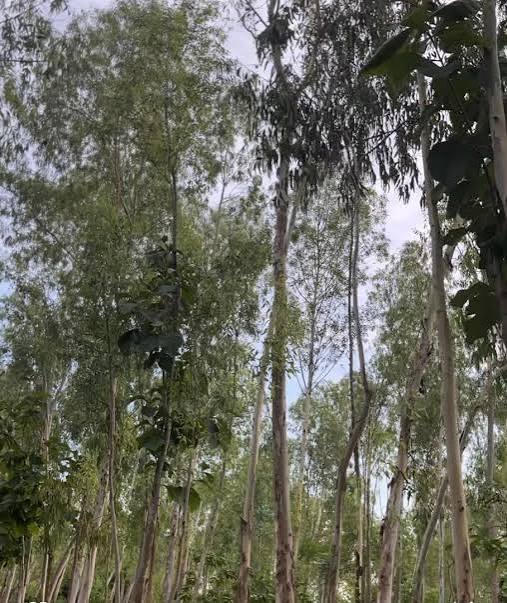
Ghana has become the first African country to access climate finance through an international initiative that rewards nations for reducing deforestation and protecting forests, potentially unlocking millions of dollars for forest conservation and community development.
Gatekeepers News reports that the development follows the issuance of 6.57 million TREES credits to Ghana by the Architecture for REDD+ Transactions (ART), the organisation responsible for verifying emissions reductions under the programme.
The credits qualify Ghana to begin transactions with buyers under the Lowering Emissions by Accelerating Forest Finance (LEAF) Coalition, which includes the governments of the United Kingdom and Norway, as well as corporate participants such as Amazon, Bayer, PwC and Walmart Foundation.
The credits represent verified reductions in greenhouse gas emissions achieved through efforts to prevent deforestation and forest degradation.
Under the arrangement, countries that demonstrate measurable progress in protecting forests can generate carbon credits, which governments and companies purchase to support verified emissions reductions. Proceeds from the transactions are subsequently channelled into forest conservation initiatives and communities participating in the programme.
Background to the Agreement
Ghana joined the LEAF Coalition in 2021, when governments and private-sector organisations began exploring ways to mobilise large-scale funding for the protection of tropical forests.
At the 2023 United Nations Climate Change Conference (COP28) in Dubai, the country finalised an agreement to supply forest carbon credits to buyers under the coalition.
However, the agreement was subject to Ghana demonstrating measurable reductions in emissions from deforestation and meeting environmental and social safeguards established under the TREES standard, developed by ART.
The latest issuance confirms that Ghana has completed the verification process for the credits covered by the programme.
With the development, Ghana becomes the third country globally to have TREES credits issued under the ART programme, following Guyana and Costa Rica.
It is also the first country to receive TREES credits that meet the Core Carbon Principles of the Integrity Council for the Voluntary Carbon Market, an international initiative established to promote high-integrity carbon credits.
Ghana’s jurisdictional REDD+ programme covers approximately 2.5 million hectares of forest across 10 regions in the southern and central parts of the country.
The initiative focuses primarily on the High Forest Zone, where agricultural expansion, illegal logging, mining and wildfires continue to threaten forest cover.
Cocoa production is a major focus of the programme because the expansion of cocoa farms has contributed to deforestation in some areas.
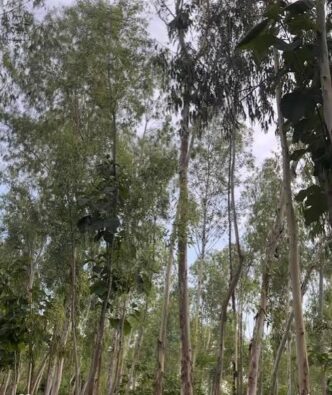
To address the challenge, Ghana has promoted agroforestry, which involves growing crops alongside trees to enable farmers to maintain agricultural production while preserving and restoring forest cover.
Other interventions include strengthening forest governance and law enforcement, promoting community-based forest management and restoring degraded forest areas.
The programme also encourages cocoa farmers to plant and maintain shade trees, which can improve forest cover while supporting cocoa production and farmers’ livelihoods.
How the Funds Will Be Distributed
Proceeds from the sale of the carbon credits will be distributed through an independent financial intermediary under a benefit-sharing framework developed in consultation with relevant stakeholders.
More than two-thirds of the net proceeds are expected to go directly to local stakeholders, including farmers, host communities and traditional authorities.
The funds will support sustainable agroforestry, forest restoration and community development projects.
Daniel Amponsah, a farmer and chairman of the Asunafo-Asutifi HIA Management Board in Ghana, said the financing would help communities plant shade trees and improve cocoa production.
He added that the funds would also support the construction of boreholes and the provision of schools and healthcare facilities in forest communities.
Ghana’s Minister of Lands and Natural Resources, Emmanuel Armah-Kofi Buah, described the development as a landmark achievement, saying the financing would help communities expand agroforestry, improve livelihoods and demonstrate that economic growth could coexist with forest conservation.
Similarly, Katie White, the United Kingdom’s Minister for Climate Transition, said Ghana’s achievement demonstrated how financial incentives could help countries expand forest protection efforts.
Eron Bloomgarden, chief executive officer of Emergent, the organisation facilitating LEAF transactions, said the development showed that sustainable agroforestry and forest conservation could be pursued together on a landscape scale.
Despite the development, the effectiveness of carbon credits as a climate solution remains contested.
Critics argue that the system could allow major polluters to continue releasing greenhouse gases by purchasing credits for emissions reductions elsewhere, rather than making deeper cuts to their own emissions.